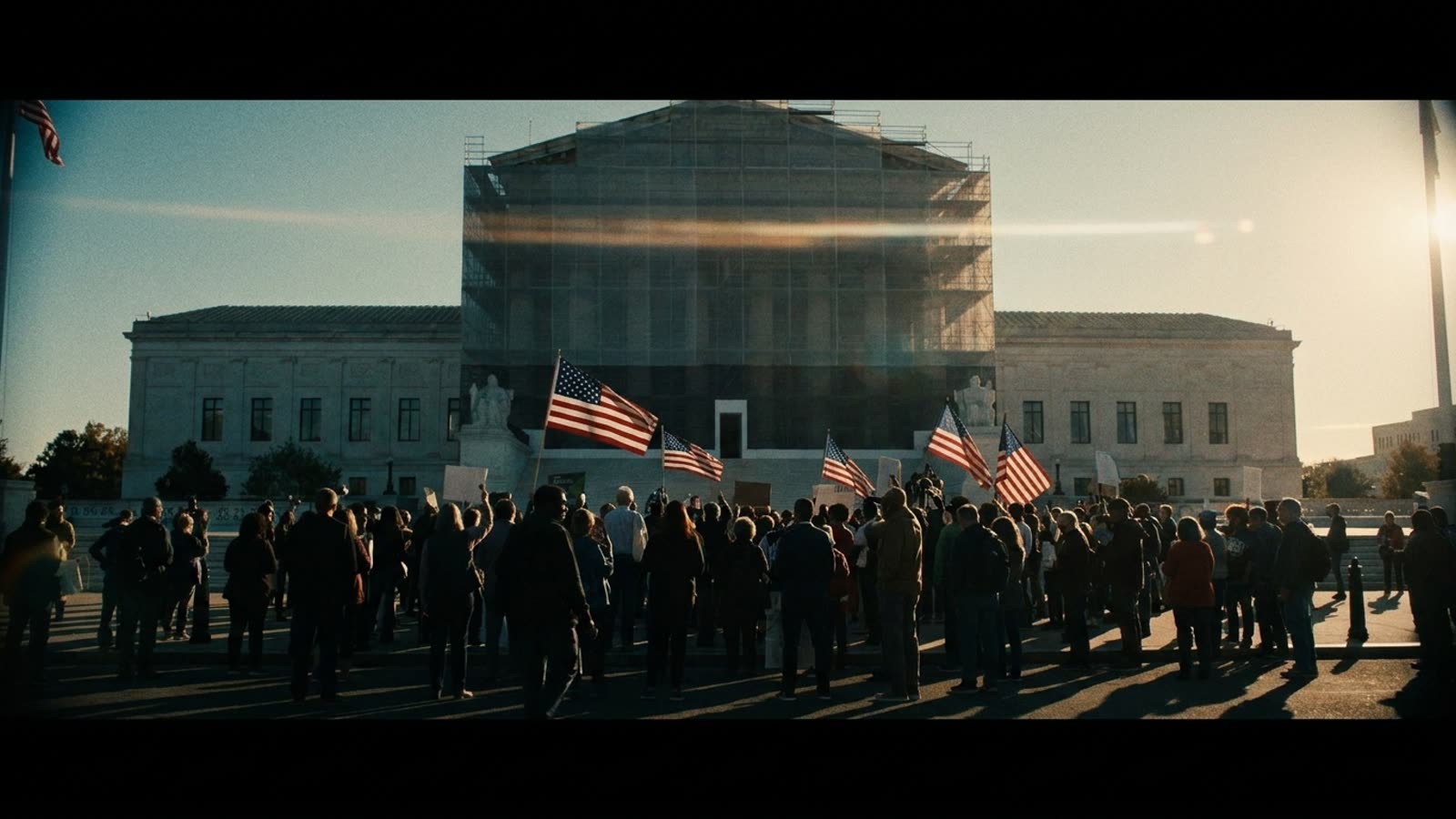
The Supreme Court has completed what it started three years ago. In a 6-3 decision handed down this week, the conservative majority effectively gutted Section 2 of the Voting Rights Act, the last remaining pillar of the landmark 1965 law that survived the Court's 2013 demolition of its preclearance provisions. The practical result: states may now redraw congressional districts in ways that dilute minority voting power, provided they offer any race-neutral justification whatsoever. Alabama, Georgia, Louisiana, and Texas have already signaled they will move to eliminate majority-Black districts before the 2028 elections.
The numbers are stark. According to analyses from the Brennan Center and the NAACP Legal Defense Fund, the ruling could reduce Black representation in Congress by as many as thirteen seats over the next two redistricting cycles. That would represent the largest single contraction of Black political power since Reconstruction, erasing gains that took generations of litigation, organizing, and bloodshed to secure.
The legal architecture
The majority opinion, authored by Justice Clarence Thomas, argues that Section 2's requirement to consider race in drawing district lines is itself a form of racial discrimination prohibited by the Equal Protection Clause. This reasoning inverts the original purpose of the Voting Rights Act, which was designed to remedy centuries of exclusion, not to treat Black and white voters as if history never happened. The opinion leans heavily on the Court's recent colorblind jurisprudence, extending the logic of its 2023 affirmative action ruling into electoral law.
Justice Ketanji Brown Jackson's dissent runs to ninety-seven pages and reads like a eulogy. She traces the history of Black disenfranchisement from poll taxes to literacy tests to the sophisticated racial gerrymanders of the present day, arguing that the majority has chosen to be blind precisely where sight is most needed.
The political fallout
Republican state legislatures are already preparing new maps. In Alabama, where a lower court had ordered the creation of a second majority-Black district just last year, the attorney general announced within hours of the ruling that the state would revert to its previous configuration. Similar moves are expected in Louisiana, where a federal court had mandated a new Black-majority seat, and in Georgia, where suburban Atlanta districts could be redrawn to fragment growing Black and Asian populations.
Democrats face a grim arithmetic. The party's House caucus currently includes fifty-eight Black members, many of whom represent districts that exist only because of Section 2 protections. Without those legal guardrails, some of those seats become competitive or outright Republican-leaning. The Congressional Black Caucus has called for emergency legislation to restore voting rights protections, but any such bill would require sixty Senate votes—a threshold that appears insurmountable in the current political environment.
Our take
The Voting Rights Act was the crown jewel of American civil rights law, the statute that finally made the Fifteenth Amendment mean something. The Supreme Court has now reduced it to a historical artifact, a monument to a commitment the nation no longer wishes to honor. The majority insists it is merely applying neutral constitutional principles. But neutrality in the face of entrenched inequality is not neutrality at all—it is a choice to let the powerful remain powerful. The Court has not removed race from American politics; it has simply removed the remedies.