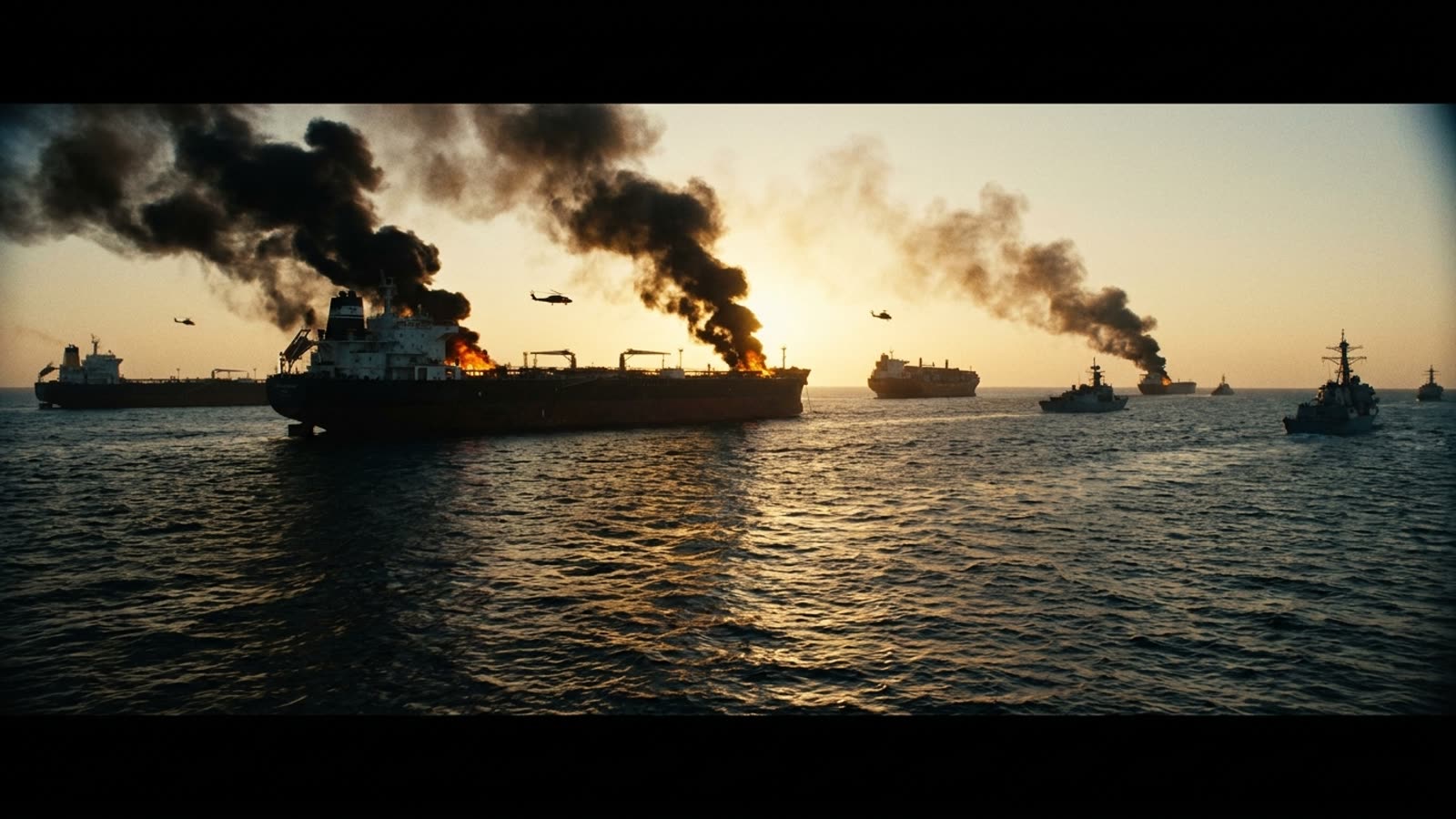
The Strait of Hormuz, that narrow sleeve of water through which roughly a fifth of the world's petroleum passes daily, is once again on fire — this time literally. Iran's Islamic Revolutionary Guard Corps confirmed overnight that four oil tankers were struck in the strait, an escalation that transforms what had been a contained regional conflict into a direct threat to global energy supply chains.
The timing is exquisite in its awfulness. Brent crude, already jittery from three weeks of tech-sector contagion bleeding into broader markets, now faces the kind of supply-side shock that central bankers dread. The Strait of Hormuz handles some 17 million barrels per day in normal times; even a temporary disruption sends ripples through every economy that runs on imported oil — which is to say, most of them.
The chokepoint problem
Energy strategists have war-gamed Hormuz scenarios for decades, and the conclusions are always grim. There is no adequate alternative route. The Suez Canal, already strained, cannot absorb redirected Gulf traffic. Pipeline capacity through Saudi Arabia and the UAE exists but falls far short of replacing maritime flows. Insurance premiums for tankers transiting the strait will spike immediately, adding costs that flow directly to consumers at the pump.
The IRGC's willingness to strike commercial vessels — rather than confining hostilities to military targets — signals a calculated bet that economic pain will force a faster negotiated settlement. It is a dangerous gamble. The last time tankers burned in the Gulf, in 2019, oil briefly spiked above $70 before markets convinced themselves the damage was contained. This time, with an active shooting war as backdrop, containment is a harder sell.
Trump's confidence, markets' skepticism
President Trump's assertion that the conflict will "get wrapped up soon" offers little comfort to traders pricing in tail risk. The administration has made similar predictions before, and the war's trajectory has consistently defied optimistic timelines. Markets tend to discount political reassurances during active hostilities, preferring to price in worst-case scenarios until evidence of de-escalation materializes.
The Federal Reserve, already navigating a delicate path between stubborn inflation and softening growth, now faces the prospect of an energy-driven price shock layered atop existing pressures. A sustained rise in oil prices would complicate any plans to ease rates, potentially extending the higher-for-longer regime that has already battered equity valuations.
Our take
The Hormuz strikes are a reminder that geopolitical risk never truly disappears from the global economy — it merely hibernates between crises. For months, markets have been consumed by AI capex anxieties and tech earnings disappointments, treating the Iran conflict as background noise. That luxury is over. Energy security, the unglamorous foundation upon which modern economies rest, has reasserted its primacy. Expect oil to dominate headlines until either diplomacy succeeds or the strait is secured — neither of which appears imminent.