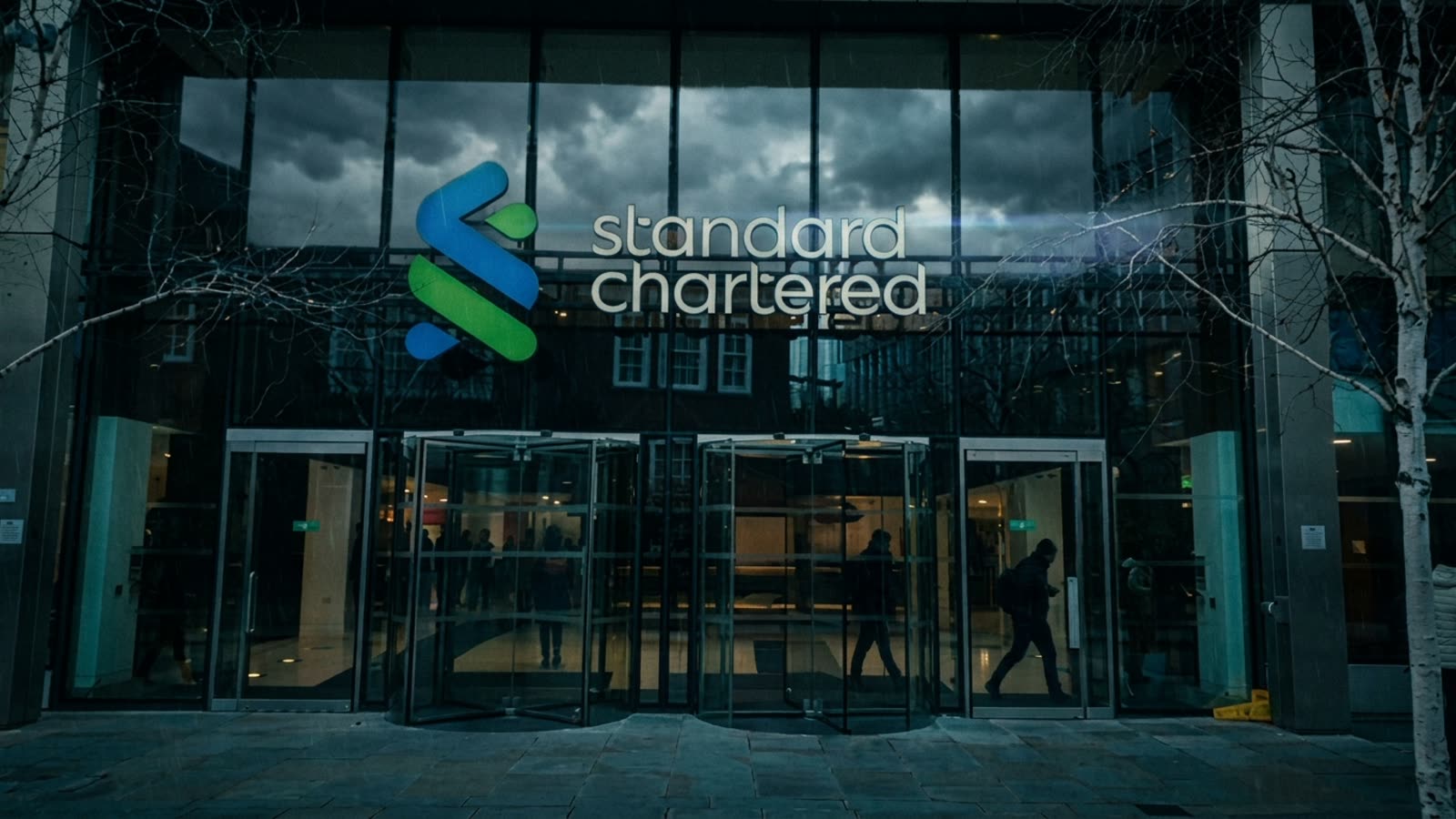
For years, banking executives have spoken about artificial intelligence in the careful, euphemistic language of "augmentation" and "efficiency gains." Standard Chartered's Bill Winters has now dispensed with the pleasantries. The Asia-focused lender will eliminate fifteen percent of its back-office workforce as part of a new strategy explicitly tied to AI deployment, making it the first major international bank to put a hard number on what the technology means for headcount.
The announcement, framed as part of a broader push to "drive sustainable growth," represents a watershed moment for the financial services industry. Not because the cuts themselves are surprising—anyone paying attention knew they were coming—but because a sitting CEO has finally said the quiet part out loud.
The arithmetic of automation
Standard Chartered's back-office operations span trade finance processing, compliance monitoring, transaction reconciliation, and customer service support across its Asian footprint. These are precisely the functions where large language models and automated workflows have demonstrated the clearest productivity gains. The fifteen percent figure suggests the bank has completed internal assessments showing these tools can now reliably replace, rather than merely assist, human workers in defined task categories.
The timing matters. Winters has spent months watching competitors make vague commitments to AI investment while carefully avoiding workforce implications. By moving first with specific numbers, Standard Chartered gains several advantages: it can begin restructuring costs immediately, it signals technological seriousness to investors, and it forces rivals into reactive positions where their own workforce plans will be measured against this benchmark.
The contagion effect
Expect the next six months to bring a cascade of similar announcements. JPMorgan, HSBC, Citigroup, and Deutsche Bank have all made substantial AI investments; their boards will now face pointed questions about why they haven't articulated comparable efficiency targets. The competitive dynamics of banking make silence increasingly untenable—if Standard Chartered can service the same client base with fewer operations staff, institutions that don't follow will face margin pressure.
The geographic concentration adds another dimension. Standard Chartered's operations are heavily weighted toward Singapore, Hong Kong, India, and the UAE—jurisdictions with varying labor protections and different political sensitivities around automation. How the bank executes these cuts across its footprint will provide a template for multinational workforce restructuring in the AI era.
Our take
Winters deserves credit for honesty, even if the honesty is brutal. The financial industry has spent two years in a strange limbo, simultaneously racing to deploy AI while pretending the technology wouldn't fundamentally reshape employment. That pretense is now over. The question facing every bank employee in operations, compliance, and middle-office functions is no longer whether their role will be affected, but when—and whether their institution will be forthright enough to tell them before it happens.