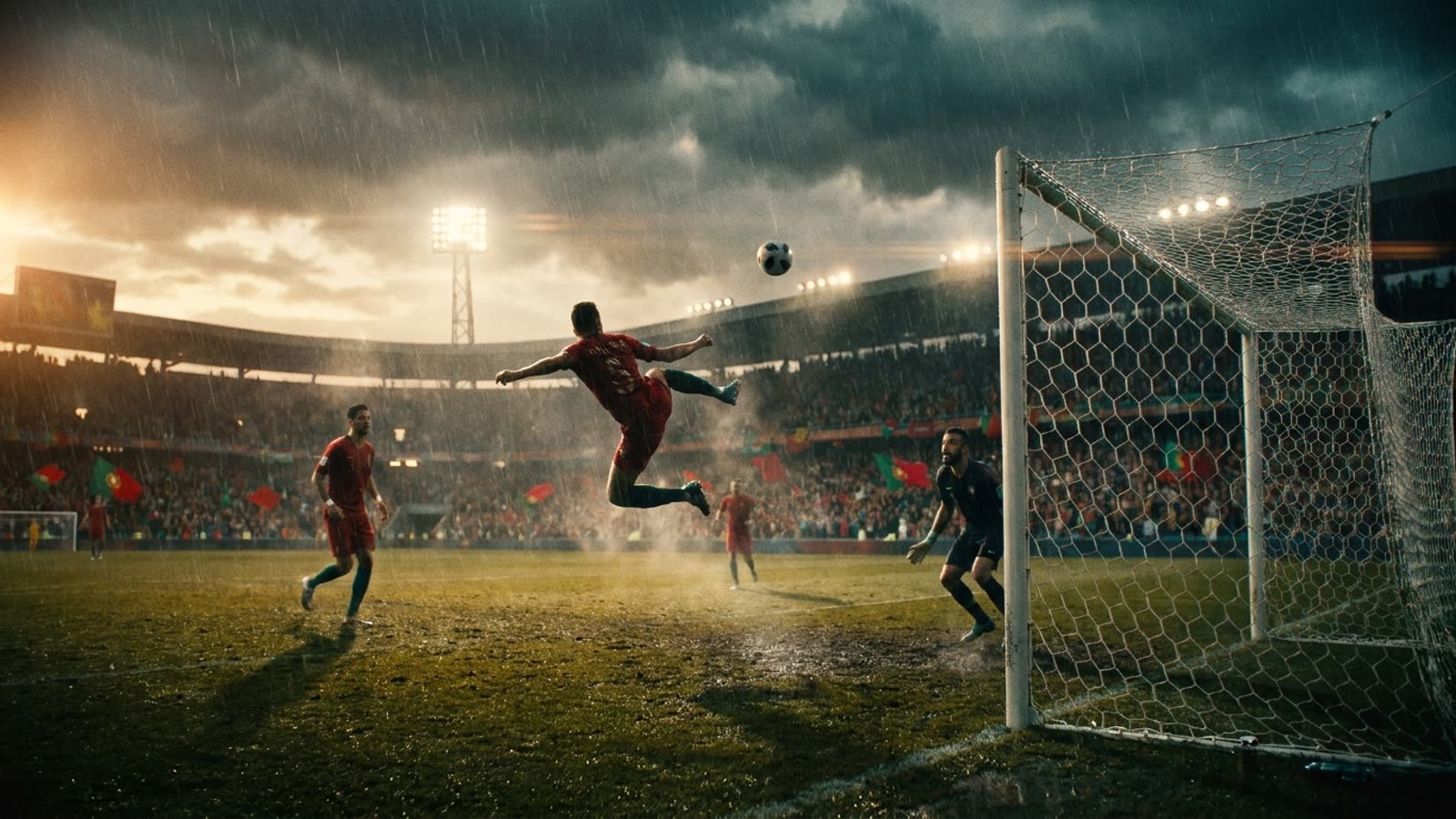
The quarterfinal draw could not have scripted a more poignant collision. Spain, the tournament's most fluid attacking side, faces Portugal in a match that doubles as a referendum on two divergent national projects — and almost certainly marks the last World Cup knockout game for Cristiano Ronaldo, now 41 and playing on borrowed time.
The symmetry is almost too neat. Both nations share a peninsula, a complicated history, and a habit of underperforming at major tournaments relative to their talent pools. But where Spain has rebuilt around a generation of technically gifted midfielders — Pedri, Gavi, and the revelatory Lamine Yamal — Portugal has spent the better part of a decade trying to figure out how to honor Ronaldo without becoming hostage to him.
The tactical mismatch
Spain's positional play under Luis de la Fuente has been the tournament's most watchable project. La Roja have completed more passes in the final third than any other side and conceded just once in four matches. Their 4-3-3 is less a formation than a philosophy: constant movement, relentless ball circulation, and a refusal to play direct when a more elegant option exists.
Portugal, by contrast, remain a team built around moments rather than systems. Roberto Martínez has tried to impose structure, but the gravitational pull of Ronaldo's presence — his need for service, his positioning in the box, his reluctance to press — inevitably shapes everything around him. When it works, Portugal look like world-beaters. When it doesn't, they look like a collection of talented individuals waiting for something to happen.
The Ronaldo question
No player in history has scored more international goals. No player has appeared at more European Championships or World Cups. And yet Ronaldo arrives at this quarterfinal without a knockout-stage goal in his last three major tournaments, a drought that has become impossible to ignore.
The Portuguese federation faces an impossible calculation. Ronaldo remains the country's most marketable asset, its most decorated player, and — by his own account — still its best option. But the eye test suggests otherwise. His movement has slowed, his first touch has become heavier, and his defensive contribution has dwindled to the point of statistical irrelevance. Younger forwards like Rafael Leão and Gonçalo Ramos have been forced into supporting roles that limit their effectiveness.
Spain will not be sentimental. They will press high, deny Ronaldo service, and force Portugal's aging legs to cover ground they can no longer cover comfortably.
Our take
This is the kind of match that makes World Cups worth watching — not because the outcome is uncertain, but because the stakes transcend the scoreboard. Spain should win, and probably will. But the real story is whether Ronaldo can summon one final moment of magic against his oldest rivals, or whether his last act on the world's biggest stage will be a quiet, dignified exit. Either way, we are watching the end of something that will not come again.