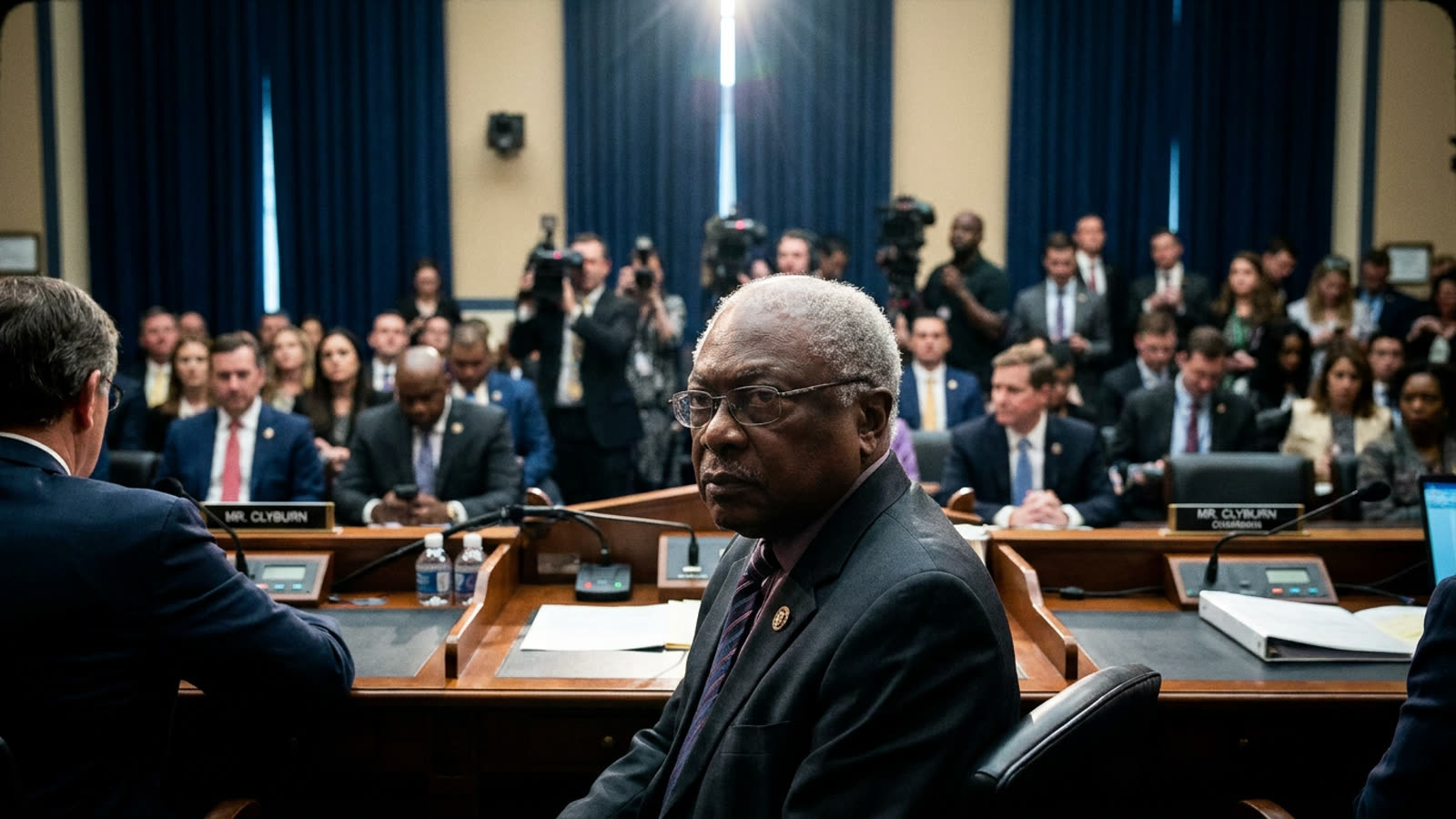
The South Carolina Senate has rejected President Trump's demand to redraw the state's congressional districts in a way that would have dismantled Representative Jim Clyburn's majority-Black seat, marking one of the clearest instances of Republican lawmakers refusing a direct presidential directive on partisan advantage.
The rebuff is notable not for its policy substance — Clyburn's 6th District will remain intact, at least for now — but for what it reveals about the structural limits of gerrymandering even when one party controls all the relevant levers. Trump had publicly called for South Carolina to join the post-2024 wave of aggressive redistricting efforts, framing the elimination of Clyburn's seat as both payback for the veteran Democrat's role in consolidating Black political power and a straightforward pickup opportunity. The state Senate, controlled by Republicans, declined.
Why the Senate balked
The calculus was less about principle than litigation risk. South Carolina's congressional map has already survived one trip to the Supreme Court, and state senators expressed concern that a mid-decade redraw targeting the state's only majority-minority district would invite immediate legal challenge under Section 2 of the Voting Rights Act. Federal courts have shown increasing skepticism of racial gerrymandering claims, but they have not abandoned them entirely — and the prospect of years of legal fees and potential court-imposed maps evidently outweighed the appeal of a seventh Republican seat.
There is also the matter of incumbency protection. Several Republican state senators represent districts that overlap with the current congressional boundaries, and any significant reshuffling would have downstream effects on their own electoral fortunes. The Trump ask required them to accept uncertainty in exchange for a national political goal.
The Clyburn factor
Jim Clyburn, now 85 and the third-ranking House Democrat, has represented some version of this district since 1993. His endorsement of Joe Biden in the 2020 South Carolina primary is widely credited with resurrecting Biden's campaign, making him a particular target for Trump-era Republicans. But Clyburn's longevity also means he has spent three decades cultivating relationships across the state's political establishment, including with Republicans who prefer a known quantity to the chaos of a redrawn map.
The rejection does not mean Clyburn's seat is permanently safe. The state House has not yet voted, and Trump allies are already pressuring wavering members. But the Senate's defiance suggests that even in a state Trump carried by double digits, there are limits to how far legislators will go to accommodate presidential whims.
Our take
This is less a profile in courage than a profile in self-interest, but the outcome is instructive regardless. Gerrymandering works best when it is done quietly and durably; mid-decade redraws at presidential insistence invite scrutiny, litigation, and the kind of intraparty friction that South Carolina Republicans have now put on public display. Trump wanted a scalp. The state Senate wanted to keep its maps out of federal court. For now, caution won.