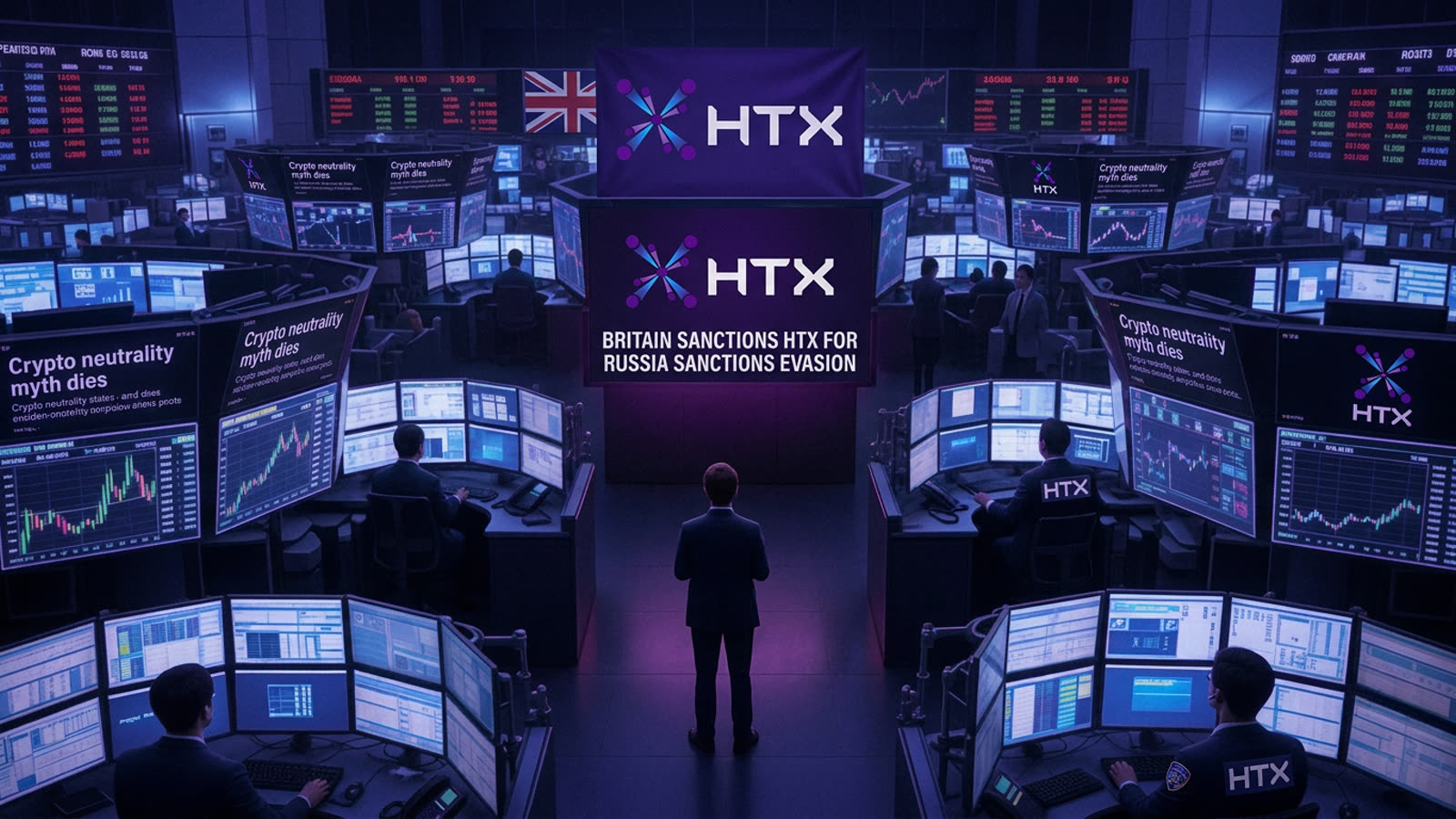
The United Kingdom has sanctioned HTX—the exchange formerly known as Huobi—for allegedly facilitating Russian evasion of Western financial controls, a sweeping action that represents the most aggressive move yet by a major economy against a mainstream cryptocurrency platform over wartime conduct.
The sanctions, announced Monday as part of a broader crackdown on crypto infrastructure supporting Moscow, freeze HTX's UK-accessible assets and prohibit British persons and entities from transacting with the exchange. The action comes as Western governments have grown increasingly frustrated with the cryptocurrency industry's reluctance to pick sides in the economic war against Russia, even as traditional financial institutions have largely complied with sanctions regimes.
The neutrality problem
Cryptocurrency exchanges have long marketed themselves as politically neutral infrastructure—digital Switzerland, open to all comers regardless of nationality or geopolitical alignment. HTX, which rebranded from Huobi in 2023 after Justin Sun's acquisition, has maintained significant operations serving Russian users even as other major platforms pulled back following the 2022 invasion of Ukraine.
The UK's action suggests that Western patience with this positioning has run out. British officials cited evidence that HTX processed transactions for sanctioned Russian entities and individuals, effectively providing a financial lifeline that undermined the coordinated Western effort to isolate Moscow economically. The exchange has denied wrongdoing and called the sanctions politically motivated.
Precedent and contagion
What makes the HTX action significant is not the exchange's size—it ranks outside the top five globally—but the precedent it establishes. Until now, Western sanctions on crypto infrastructure have largely targeted smaller, obviously illicit operations: mixers, darknet-adjacent platforms, and entities with clear criminal ties. HTX, whatever its compliance failures, is a mainstream exchange with millions of users and a recognizable brand.
The question now is whether the United States and European Union will follow London's lead. American regulators have taken an increasingly aggressive posture toward crypto generally, but have stopped short of sanctioning major exchanges over Russia-related conduct. The UK action may provide political cover—or competitive pressure—for Washington to act.
Our take
The crypto industry spent years insisting it could be both globally accessible and legally compliant, that decentralization meant never having to choose sides. That was always somewhat naive, but the war in Ukraine has made it untenable. Britain's HTX sanctions are a shot across the bow for every exchange still trying to serve both Western markets and sanctioned jurisdictions. The industry can complain about overreach, but the underlying message is clear: in a world of great-power conflict, neutrality is a luxury that regulated financial infrastructure—which is what these exchanges have become—cannot afford.