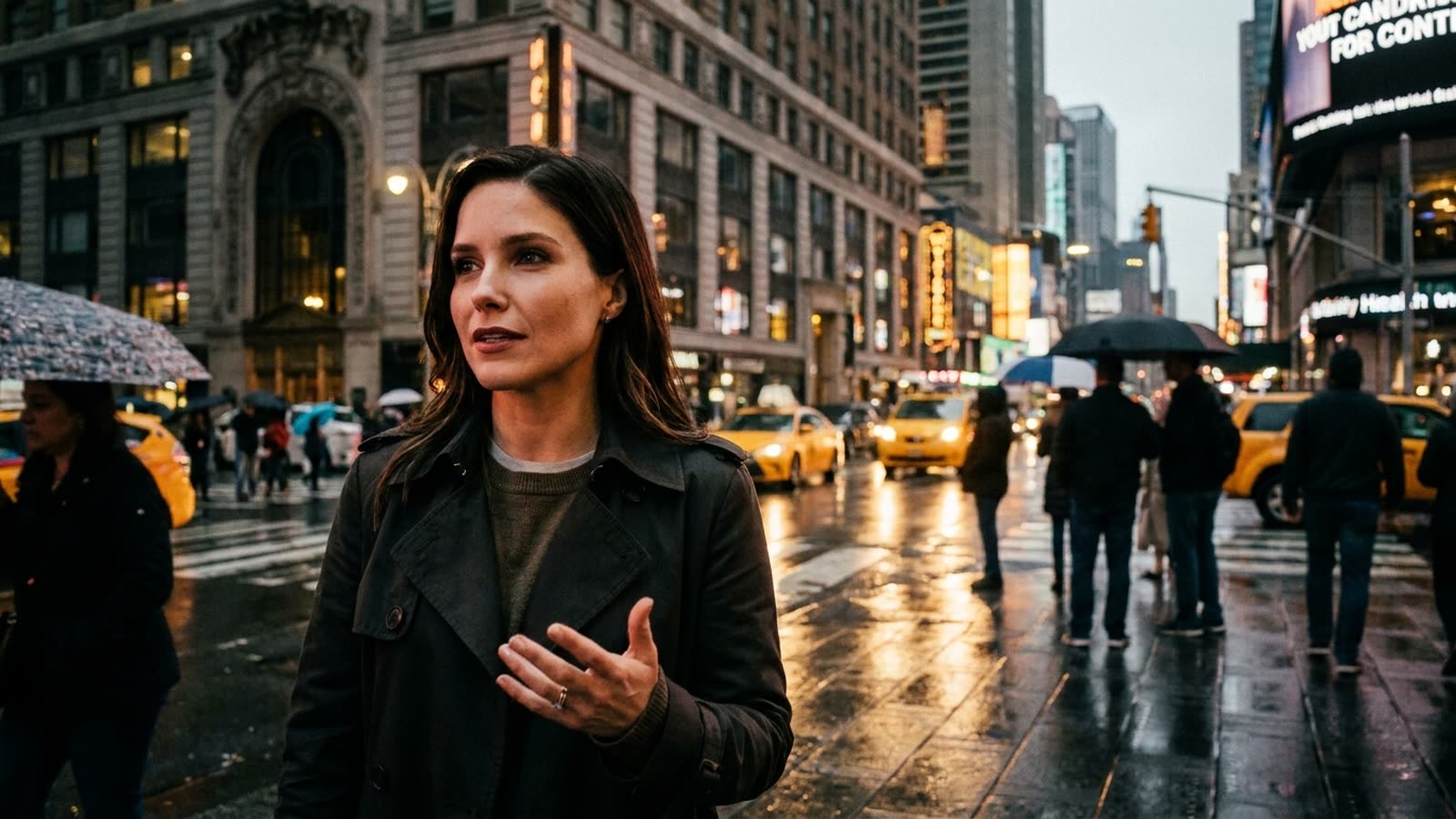
The audition room has always been a place where actors surrender their dignity in exchange for the slim chance of employment, but Sophia Bush's recollection of her One Tree Hill casting experience lands with particular force. In her forthcoming memoir, And I Will Tell You Mine: Notes From a Life in Progress, the actress reveals that after her first audition for the role of Brooke Davis, she was deemed insufficiently sexy. After her callback, the verdict shifted: now she was "too much." She got the part anyway, played it for nine seasons, and became one of the defining faces of mid-2000s teen television.
The anecdote is absurd on its face—a young woman told she simultaneously lacks and possesses too much of the same ineffable quality—but it captures something essential about the era's approach to casting women. The early 2000s operated on a peculiar logic where actresses were expected to embody contradictions: approachable but aspirational, sexy but not threatening, confident but never difficult. Bush, who was in her early twenties when One Tree Hill premiered in 2003, navigated this terrain while the industry's most corrosive habits went largely unexamined.
The memoir as industry document
Bush's book arrives at an interesting moment. The post-#MeToo entertainment industry has developed a vocabulary for discussing workplace misconduct, but the more diffuse cruelties—the body commentary, the impossible standards, the casual dehumanization of audition feedback—remain harder to address. They leave no paper trail and involve no single villain. Bush's account suggests that even successful outcomes carried their own psychic costs. She won the role, yes, but only after being told her body and presence were fundamentally wrong in two opposing directions.
The actress has been increasingly candid in recent years about her experiences on set and in the industry more broadly. Her willingness to speak publicly has made her something of a barometer for how much space exists for actresses to tell complicated truths about their careers without being labeled difficult or ungrateful.
What's changed, what hasn't
Intimacy coordinators now populate sets. HR departments have expanded. Studios have implemented reporting mechanisms. Yet the audition room remains a space of profound power imbalance, where young performers are evaluated on criteria that often have little to do with their actual abilities. The feedback Bush received—contradictory, body-focused, impossible to satisfy—would likely still be delivered today, just perhaps with slightly more diplomatic phrasing.
The memoir format allows Bush to contextualize these experiences within a broader narrative of professional survival and personal growth. But the specificity of her recollections serves a documentary function, preserving the texture of an industry that prefers to forget its recent past.
Our take
There's something almost too perfect about Bush's audition story: the woman who wasn't sexy enough and was also too much went on to define a generation's idea of the popular girl. The casting directors were wrong in every measurable way, yet their wrongness didn't prevent them from holding power over her career. That's the real lesson here—not that the system occasionally produces correct outcomes despite itself, but that it continues to operate on criteria that have nothing to do with talent and everything to do with the comfort levels of the people in the room. Bush got the job. Thousands of equally capable actresses didn't, for reasons just as arbitrary.