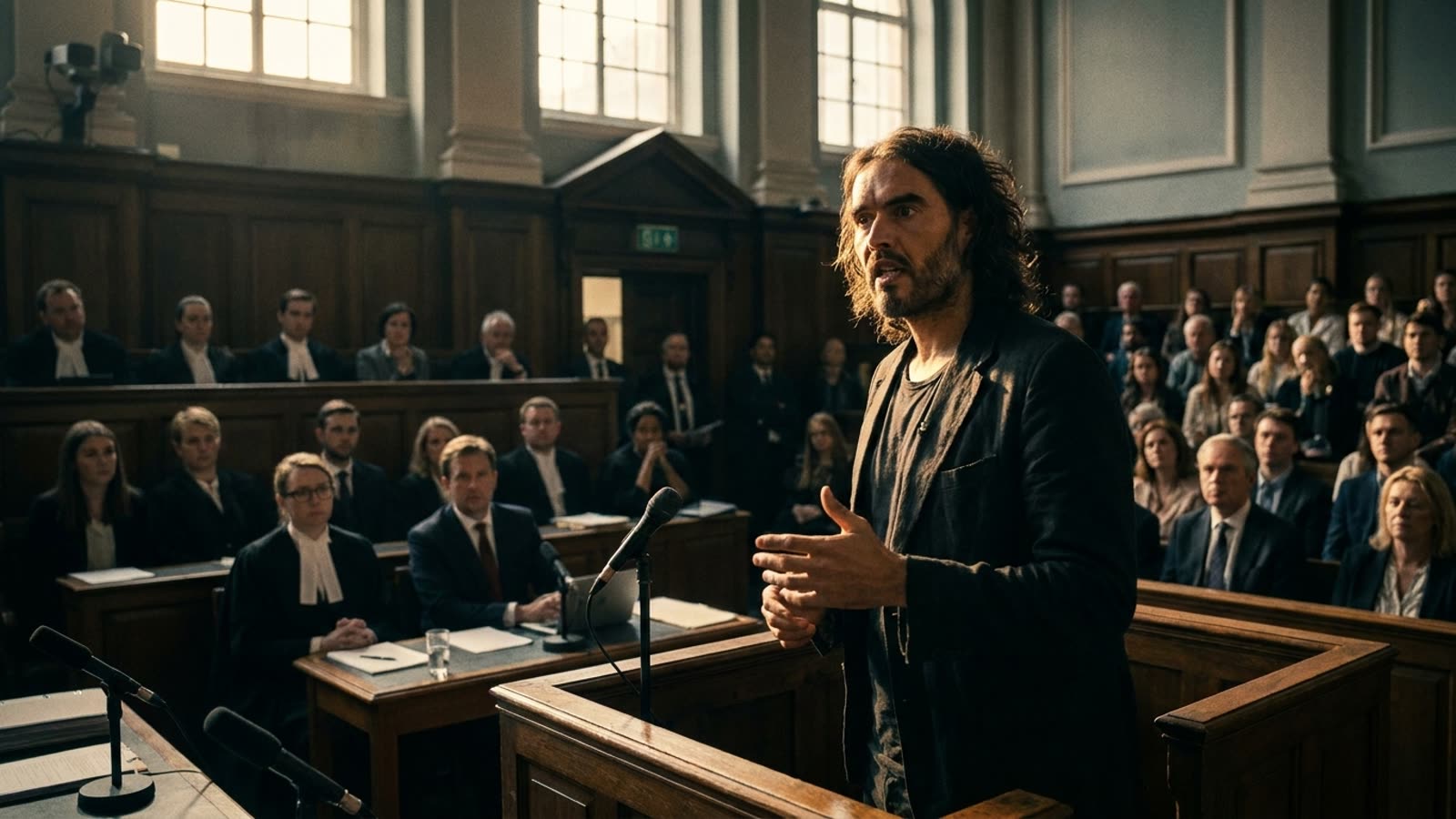
Russell Brand arrived at Southwark Crown Court on Thursday for the second day of his criminal trial, facing allegations that span a quarter-century of his career. The first complainant detailed an alleged rape at the 1999 Labour Party conference in Bournemouth, a moment when Brand was still climbing the ladder of British comedy. The testimony—graphic, specific—described an encounter that began with a request for photographs and ended in alleged assault. Brand has pleaded not guilty to all charges.
The trial is not merely a legal proceeding; it is a cultural reckoning with a figure who embodied a particular strain of early-2000s celebrity: the enfant terrible who traded outrage for attention, who built a brand on sexual braggadocio and then attempted to rebrand as a spiritual guru. Brand's trajectory—from MTV host to Hollywood actor to YouTube conspiracy theorist—has always been slippery, but the charges now before the court are concrete. They accuse him of crimes, not just poor taste.
The allegations and the timeline
The prosecution's case spans from 1999 to the mid-2010s, a period that encompasses Brand's rise from standup comic to international star. He hosted Big Brother's Big Mouth, appeared in films like Forgetting Sarah Marshall, and married (then divorced) Katy Perry. His public persona was aggressively sexual, often to the point of discomfort; his 2008 prank call to Andrew Sachs, in which he boasted of sleeping with Sachs's granddaughter, led to his resignation from the BBC. At the time, it was treated as a scandal of taste. The current trial reframes that era as something darker.
The complainants—whose identities are protected—allege a pattern of coercion and assault. Brand's defense has not yet presented its case, but his legal team has signaled it will challenge the credibility and consistency of the accounts. The trial is expected to last several weeks.
The post-fame pivot
By the time the allegations became public in 2023, Brand had already reinvented himself as a political commentator and wellness advocate, amassing millions of followers on YouTube with videos questioning mainstream narratives on everything from COVID-19 to Ukraine. His audience, largely male and skeptical of institutional authority, has remained loyal. But streaming platforms—including YouTube, which demonetized his channel—have distanced themselves. The trial will determine whether that distance becomes permanent exile.
Brand's case arrives at a moment when the entertainment industry is still processing the convictions of Harvey Weinstein, Bill Cosby, and others. The question is no longer whether powerful men can be held accountable, but whether the machinery of celebrity—the publicists, the lawyers, the fan bases—can delay that accountability indefinitely. Brand's trial will test the limits.
Our take
The Russell Brand trial is a test of whether reinvention can outrun reckoning. For years, Brand has been a shape-shifter, moving from one persona to the next before any single identity could define him. But criminal trials do not allow for ambiguity. The jury will be asked to decide not whether Brand is likable or whether his politics are sound, but whether he committed specific acts on specific dates. That is a harder question to dodge. If the prosecution succeeds, Brand will join a growing list of men whose fame could not save them. If he is acquitted, the trial will still have done its work: it will have forced a public accounting of behavior that was once dismissed as merely edgy. Either way, the enfant terrible era is over.