Masayoshi Son has found a new way to spend money that doesn't involve WeWork or autonomous driving: he's betting that European governments will pay almost any price to host their own AI infrastructure rather than rent it from Silicon Valley.
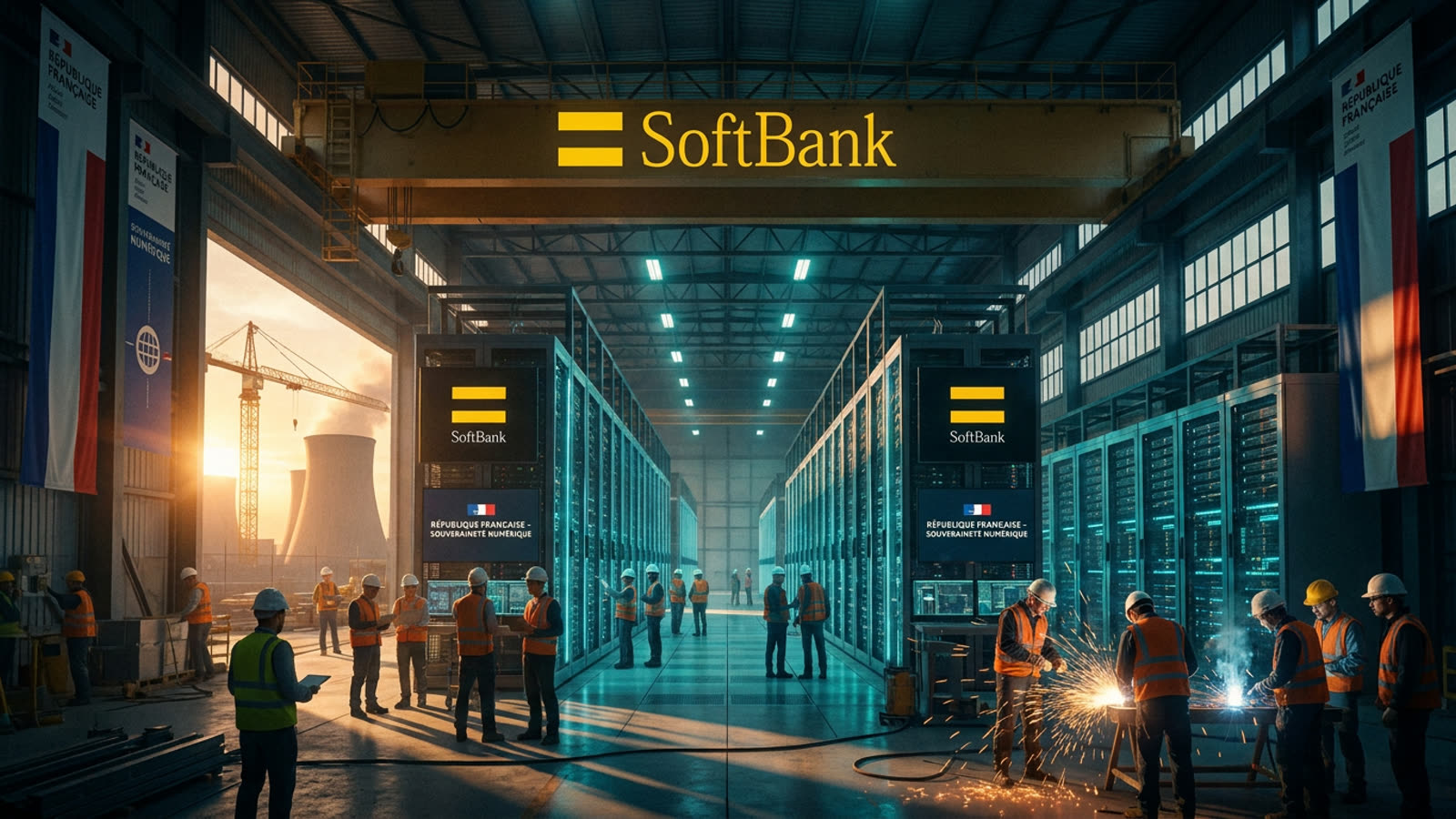
SoftBank's announcement that it will invest up to €75 billion in French data centers over the coming years represents the largest single foreign infrastructure commitment in French history. The deal, negotiated directly with the Élysée Palace, positions France as the potential hub for European AI compute—a status that Germany, the Netherlands, and the Nordic countries have all coveted. For Son, it's a chance to rehabilitate his reputation after the Vision Fund's spectacular implosions. For France, it's a chance to claim technological relevance in an era when relevance is measured in GPU clusters.
The sovereignty premium
The timing is not accidental. European regulators have spent the past three years tightening restrictions on where sensitive data can be processed, and the EU's AI Act has created compliance headaches for companies relying on American cloud providers. French officials have been particularly vocal about "digital sovereignty"—a term that conveniently translates to "subsidies for whoever builds locally."
SoftBank is positioning itself as the answer to a question European policymakers have been asking with increasing urgency: where will the continent's AI workloads actually run? Microsoft, Google, and Amazon dominate European cloud computing, and their AI services are increasingly integrated with their infrastructure offerings. A SoftBank-backed alternative, even one that ultimately relies on Nvidia chips like everyone else, gives European governments a talking point about independence.
The €75 billion figure, spread over an unspecified timeline, should be understood as an upper bound contingent on regulatory approvals, energy availability, and continued political enthusiasm. SoftBank's history suggests the final number could be substantially lower—or, if Son's enthusiasm runs unchecked, substantially higher.
France's convenient crisis
President Macron's government has struggled to deliver economic wins ahead of legislative elections, and a headline-grabbing foreign investment announcement provides welcome distraction from domestic discontent. The deal reportedly includes commitments on French employment, though the data center industry is notoriously capital-intensive rather than labor-intensive. A facility that processes billions in AI workloads might employ a few hundred technicians.
The energy question looms larger. France's nuclear fleet gives it relatively clean baseload power, but the grid is already strained, and data centers are among the most power-hungry facilities on earth. SoftBank's plans will require either significant grid upgrades or dedicated power arrangements—costs that may ultimately fall on French taxpayers and ratepayers rather than the Japanese conglomerate.
Son's redemption arc
For Masayoshi Son, the French bet represents a strategic pivot. The Vision Fund's startup investments turned him into a cautionary tale about hubris and hype cycles. Infrastructure is different: slower, more predictable, less dependent on finding the next unicorn. If European AI demand materializes as projected, SoftBank could earn steady returns for decades. If it doesn't, the company will have built very expensive buildings in a country with strong tenant protection laws.
The deal also reflects SoftBank's broader reorientation toward AI infrastructure following its complicated relationship with Arm and its investments in various AI chip ventures. Son has repeatedly declared that artificial intelligence will be the defining technology of the century; France is his latest vehicle for that conviction.
Our take
SoftBank's €75 billion headline is part aspiration, part negotiating leverage, and part Masayoshi Son's irrepressible need to announce the biggest number in any room. But the underlying logic is sound: Europe wants AI infrastructure it can call its own, and someone will profit from building it. Whether that someone is SoftBank depends on execution—a word that has not historically appeared in the same sentence as "SoftBank" and "success." Still, betting on sovereignty anxiety is shrewder than betting on Adam Neumann. The bar, admittedly, was low.