The year 2016 was supposed to be the beginning of the end for human drivers. Dozens of startups raised billions promising that within five years, steering wheels would be as obsolete as rotary phones. A decade later, most of those companies have either collapsed or quietly reinvented themselves—and the transformation reveals something important about how breakthrough technologies actually mature.
The sensor systems, machine-learning stacks, and lidar arrays originally designed to help cars navigate suburban streets are now earning their keep in decidedly less glamorous settings: container ports, mining operations, factory floors, and municipal traffic-management centers. It's a pivot born of necessity, but one that may prove more durable than the original dream.
The economics of controlled chaos
The fundamental problem with autonomous passenger vehicles was always environmental complexity. A car navigating rush-hour traffic in Mumbai or a school zone in Minneapolis faces an essentially infinite variety of scenarios—jaywalking children, construction detours, aggressive motorcyclists, weather anomalies. Training systems to handle every edge case proved orders of magnitude harder than early optimists predicted.
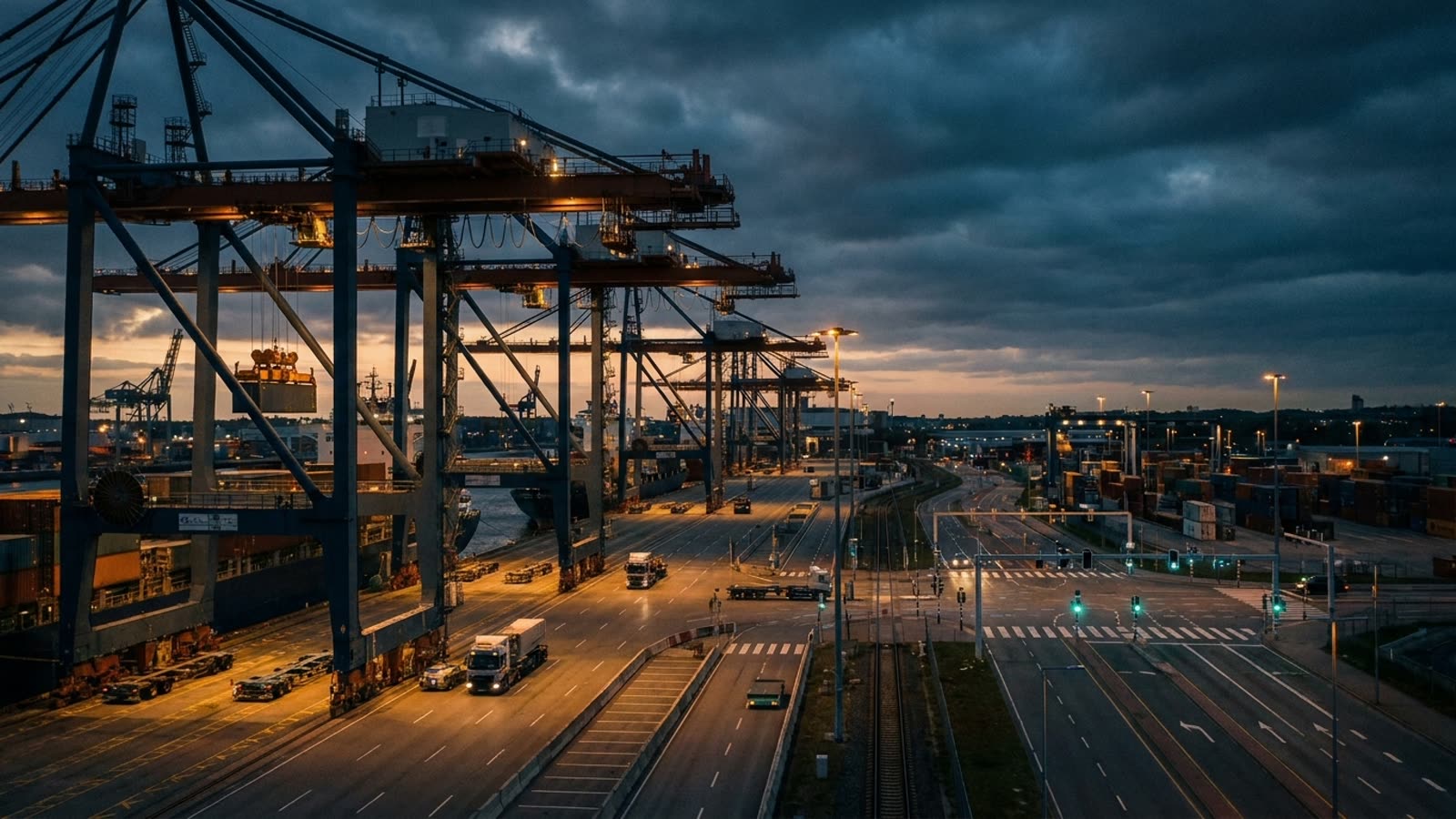
Shipyards and warehouses, by contrast, offer what engineers call "structured environments." The variables are constrained. Cargo containers arrive on predictable schedules. Forklifts follow designated lanes. Humans are either absent or wearing tracking beacons. The same perception technology that struggled with a cyclist making an unexpected turn performs brilliantly when the task is stacking forty-foot shipping containers with centimeter precision.
Companies like Luminar, Velodyne's successors, and a constellation of smaller players have discovered that industrial customers will pay premium prices for systems that improve throughput by even single-digit percentages. A port operator moving an additional fifty containers per hour doesn't generate headlines, but it generates margin.
Traffic lights learn to think
Municipal governments have emerged as unlikely beneficiaries of the autonomous-vehicle bust. Cities from Los Angeles to Singapore are deploying intersection-management systems built on repurposed self-driving technology. Cameras and sensors originally designed to help cars see pedestrians now help traffic lights see cars—adjusting signal timing in real time based on actual vehicle flow rather than pre-programmed cycles.
The results are measurable if unglamorous: reduced idling time, lower emissions, fewer rear-end collisions at yellow lights. Pittsburgh's system, built partly on technology from the defunct Argo AI, claims a 25 percent reduction in travel time along its busiest corridors. For city planners facing climate mandates and aging infrastructure, these incremental gains matter more than moonshot promises.
Our take
There's a lesson here that extends beyond transportation. The most transformative technologies rarely arrive as advertised. They overpromise, underdeliver, disappoint their earliest backers—and then find their footing in applications nobody initially imagined. The entrepreneurs who raised billions to eliminate taxi drivers are now selling to logistics managers and traffic engineers. It's less cinematic, but it's real. The autonomous future didn't die; it just got a job at the shipyard.