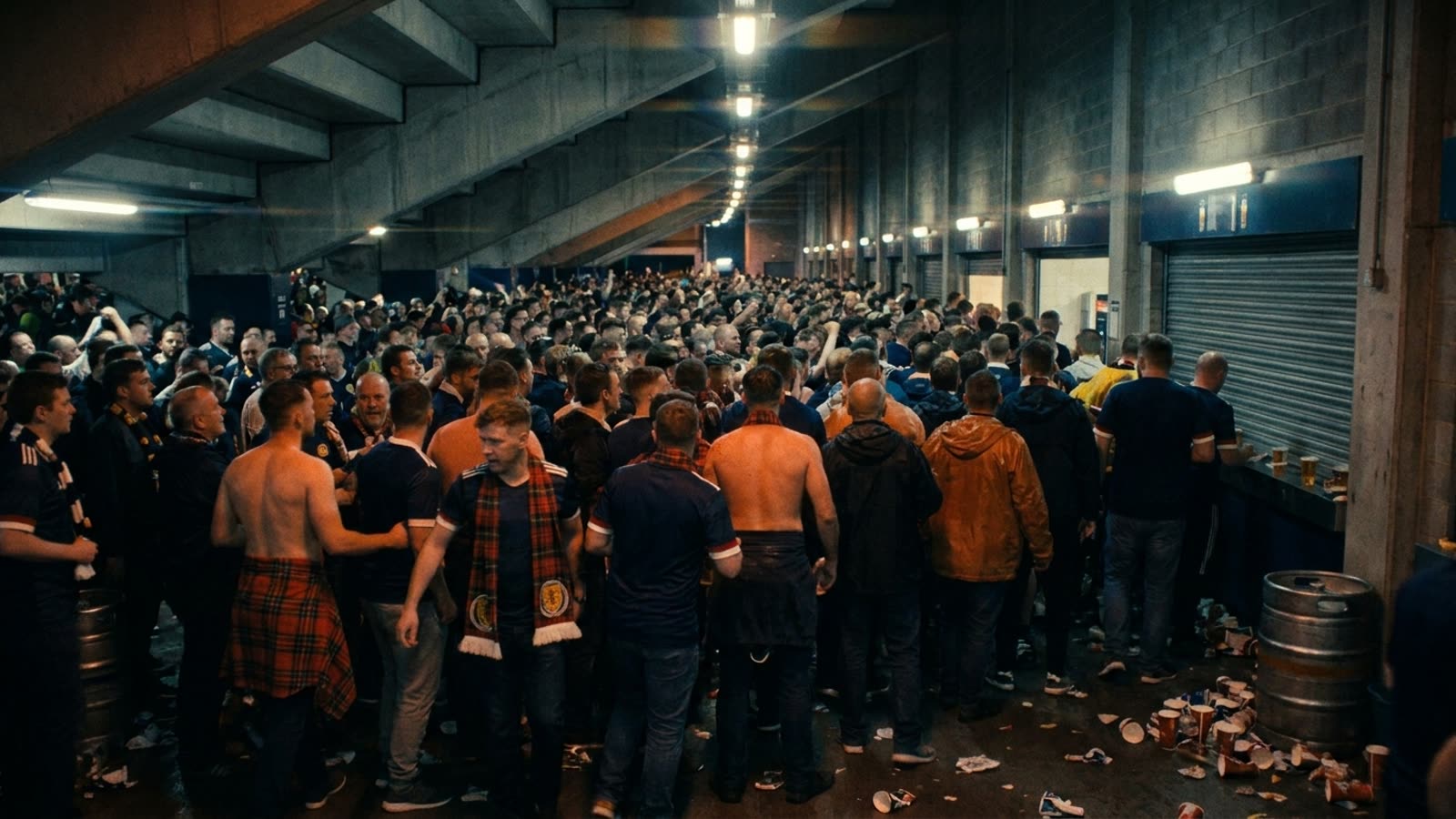
The most revealing statistic from the first full day of 2026 World Cup group-stage action was not a scoreline or a possession percentage. It was a logistics failure: bars in downtown Toronto reported running dry of beer before Scotland's match against an opponent even reached the interval. The Tartan Army, that roving nation of kilt-wearing, anthem-belting supporters who follow their perennially heartbreaking national team to every corner of the globe, had arrived in such force that supply chains buckled.
This is what FIFA was betting on when it awarded the tournament to the United States, Canada, and Mexico. Not just the stadiums — those were always going to be cavernous and modern — but the sheer absorptive capacity of a continent built around cars, sprawl, and an almost pathological enthusiasm for large-scale gatherings. The early evidence suggests the bet is hitting.
The atmosphere question, answered
Skeptics of the North American World Cup always circled the same concern: could a region without entrenched football culture manufacture the atmosphere that makes the tournament singular? The answer, it turns out, was never about the locals. It was about the diaspora.
Toronto is not a Scottish city, but on match day it became one. The same phenomenon played out in Houston for the United States opener, where a crowd that skewed heavily toward first- and second-generation Americans roared with an intensity that surprised even the players. Folarin Balogun, the USMNT's breakout star, noted afterward that the noise was unlike anything he had experienced in European club football.
This is the hidden advantage of hosting in immigrant nations. Every group-stage match becomes a de facto home game for someone. Argentina will pack MetLife Stadium with porteños from Queens. Mexico will turn AT&T Stadium into the Azteca's northern annex. Even smaller footballing nations — Bosnia, whose diaspora is concentrated in St. Louis; Iran, with its Los Angeles contingent — can summon crowds that dwarf what they would draw in, say, Qatar or Russia.
The logistical stress test
Beer shortages are funny until they become a symptom. The first days of any World Cup expose the gaps between planning and reality, and North America's version is no exception. Transit systems in host cities are already straining. Toronto's PATH network, designed for commuters, was overwhelmed by supporters unfamiliar with its labyrinthine corridors. Houston's lack of public transit forced thousands into rideshare queues that stretched for hours.
These are solvable problems, but they require the kind of real-time adaptation that bureaucracies struggle to execute. FIFA and its local organizing committees have three weeks of group play to figure it out before the knockout rounds raise the stakes — and the crowds — further.
Our take
The Scotland beer crisis is a punchline, but it is also a proof of concept. The World Cup works when it feels like a carnival, not a corporate showcase. North America, for all its infrastructural quirks, is delivering on the carnival. The question now is whether the hosts can keep the taps flowing — literally and figuratively — as the tournament deepens. If the first 48 hours are any guide, this World Cup will be remembered less for its football than for its sheer, chaotic, continental-scale spectacle. That is not a complaint.