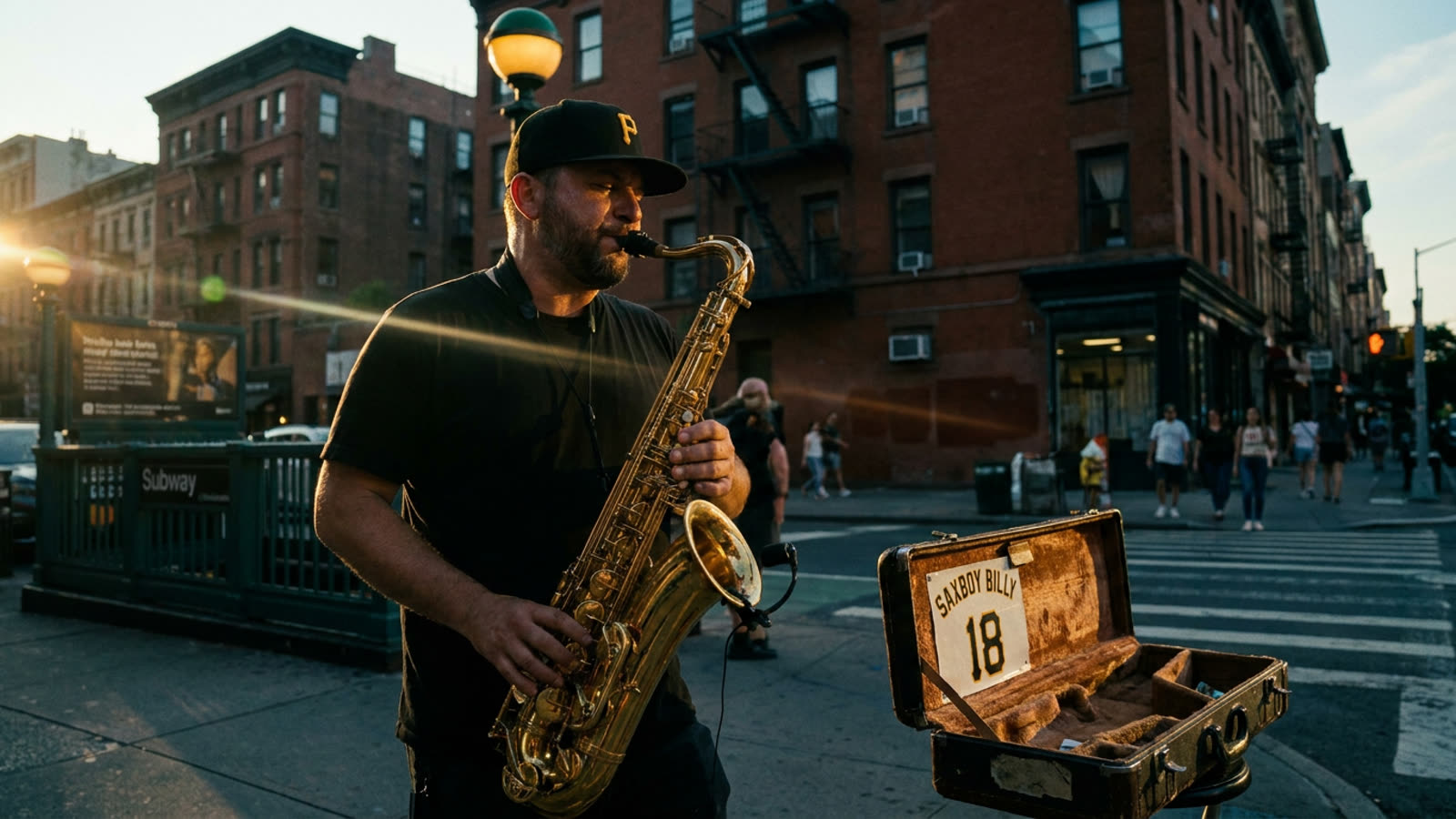
The saxophone, that most cinematic of instruments, has found its natural habitat: the vertical video frame. SaxBoy Billy, the TikTok busker whose subway performances have accumulated hundreds of millions of views, represents something more interesting than another influencer origin story. He's the logical endpoint of a cultural shift that's been building for years—the transformation of street performance from spontaneous urban encounter into optimized content production.
The formula is now well-established. Find a photogenic location with good acoustics and natural foot traffic. Play recognizable songs that trigger algorithmic favor. Wait for the reaction shots—the commuter who stops mid-stride, the child who dances, the couple who kisses. Package it all in sixty seconds or less. Repeat until the brand deals arrive.
The busker-to-brand pipeline
What makes Billy's trajectory notable isn't its uniqueness but its replicability. A generation of street musicians has now internalized the platform's logic. They're not performing for the crowd in front of them; they're performing for the camera positioned to capture both themselves and that crowd's reaction. The audience becomes set dressing, unwitting extras in someone else's content strategy.
This isn't inherently cynical—Billy appears to be a genuinely skilled musician, and there's nothing wrong with leveraging talent into income. But the economics have inverted the traditional busker model. The coins in the saxophone case matter less than the engagement metrics that attract sponsorship. The performance's primary audience isn't present; they're scrolling.
Authenticity as aesthetic
The platforms have created a paradox: the more "authentic" a moment appears, the more likely it was engineered for virality. That spontaneous dance from a stranger? Increasingly, it's a friend or hired participant. That perfect acoustic environment? Scouted in advance. The raw, unfiltered street performance is now as carefully produced as a studio recording, just with different production values.
This isn't a secret. Audiences largely understand the game and don't seem to mind. The appeal of busker content isn't documentary realism—it's the fantasy of serendipity, the idea that magic can still happen in public spaces, even if that magic is now scheduled between 2 and 4 PM for optimal lighting.
Our take
SaxBoy Billy isn't killing street performance; he's simply making visible what was always true—that public musicianship has always been partly theatrical, always involved reading the room and playing to the crowd. The difference is that the room is now infinite and the crowd is algorithmically sorted. Whether this represents democratization or homogenization probably depends on whether you're the one holding the saxophone or just walking past, wondering if you're about to become someone's B-roll.