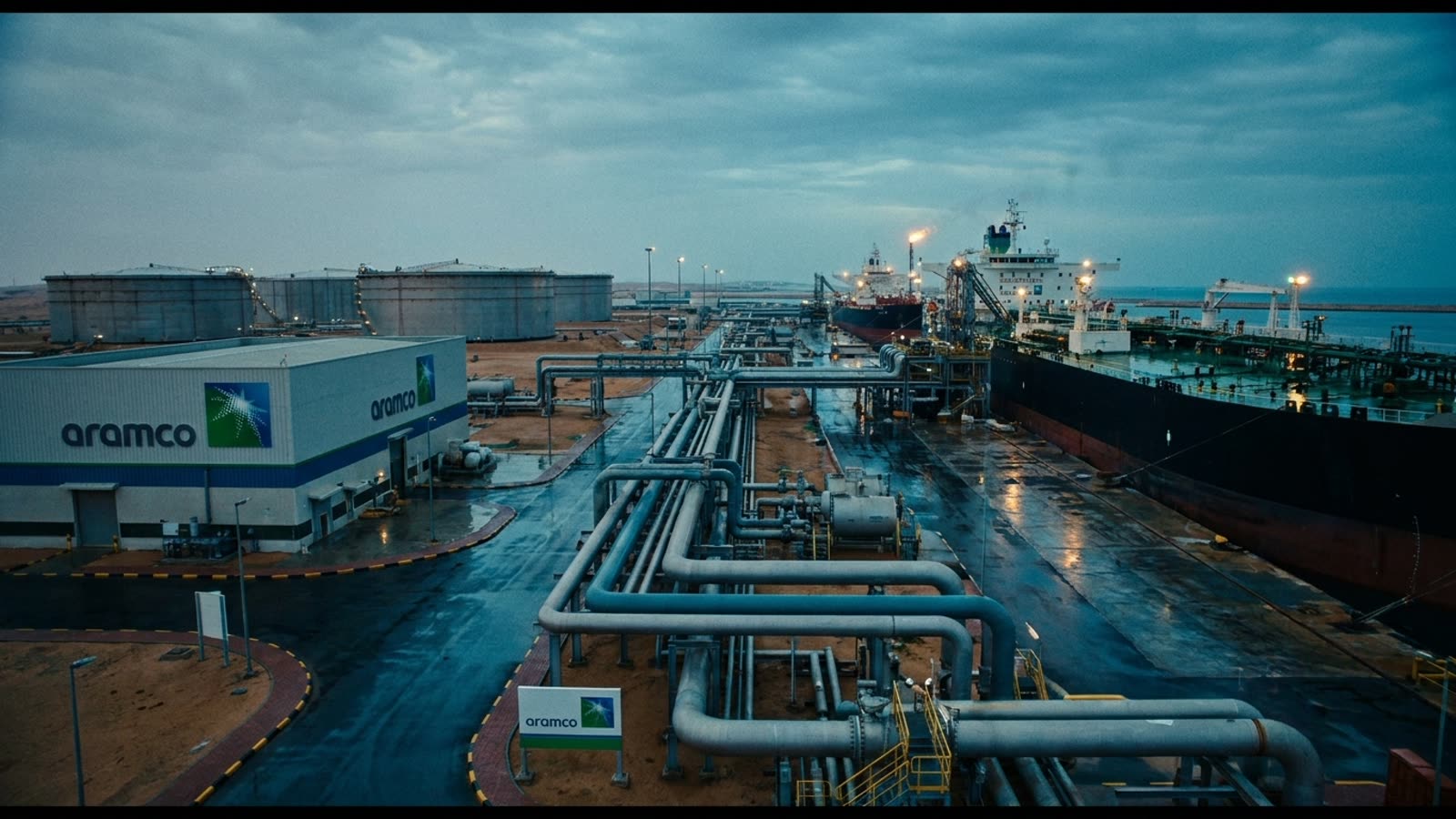
While the Iran conflict has sent insurance premiums soaring and tanker captains scrambling, Saudi Aramco just posted another quarter of robust profits. The reason is infrastructure that most analysts had written off as a Cold War relic: the 1,200-kilometer East-West Pipeline, which can move nearly five million barrels a day from the kingdom's eastern fields to Red Sea export terminals, bypassing the Strait of Hormuz entirely.
The strait, through which roughly a fifth of the world's seaborne oil normally transits, has become a de facto war zone. Iranian naval mines, drone harassment, and the ever-present threat of missile strikes have made the passage uninsurable for many underwriters. Brent crude has spiked above $110 on disruption fears. Yet Aramco's latest earnings suggest the company is not merely surviving the crisis—it is capitalising on it.
The pipeline advantage
Built in the 1980s during the Iran-Iraq war and expanded several times since, the Petroline system was long considered a strategic hedge rather than a primary export route. Operating it at full capacity is more expensive than loading supertankers at Ras Tanura. But when the alternative is paying war-risk premiums that can exceed $2 million per voyage, the calculus shifts. Aramco has quietly ramped throughput to near-maximum levels, routing an increasing share of Asian-bound crude through the Red Sea port of Yanbu.
The result is a two-tier market. Saudi barrels arrive with relative predictability; Iraqi, Kuwaiti, and Emirati cargoes face delays, diversions, and eye-watering freight costs. Buyers in India and China, desperate for supply certainty, are paying premiums for Saudi crude that would have been unthinkable a year ago.
Riyadh's strategic patience
Crown Prince Mohammed bin Salman has spent a decade diversifying the Saudi economy away from oil. Yet the current windfall is a reminder that hydrocarbons remain the kingdom's ultimate trump card. Aramco's profits flow directly into sovereign coffers, funding everything from Neom's construction crews to the Public Investment Fund's global shopping spree.
Critics argue Riyadh is benefiting from a conflict it has done little to de-escalate. Saudi officials counter that they have no control over Iranian provocations and that reliable supply is a service to the global economy. Both points contain truth; neither fully captures the opportunism at play.
What it means for prices
For consumers, the news is mixed. Saudi capacity is keeping the market from a 1970s-style shock, but it cannot fully replace disrupted flows from neighbours. Analysts at Goldman Sachs now forecast Brent averaging $105 for the year, up from $92 before hostilities intensified. Gasoline prices in the United States have climbed past $4.50 a gallon in most states, adding fuel—literally—to voter discontent ahead of the midterms.
Our take
Aramco's pipeline pivot is less a masterstroke than a vindication of old-fashioned redundancy. The kingdom invested in infrastructure for a worst-case scenario, and the worst case arrived. That is not genius; it is prudence. The more interesting question is whether this moment accelerates or delays the energy transition. High prices punish consumers and boost renewables economics, but they also fill the coffers of petrostates with every incentive to keep the world hooked. For now, the Saudis are threading the needle: climate summits in Riyadh, record crude shipments out of Yanbu. The contradiction is sustainable only as long as the world keeps buying.