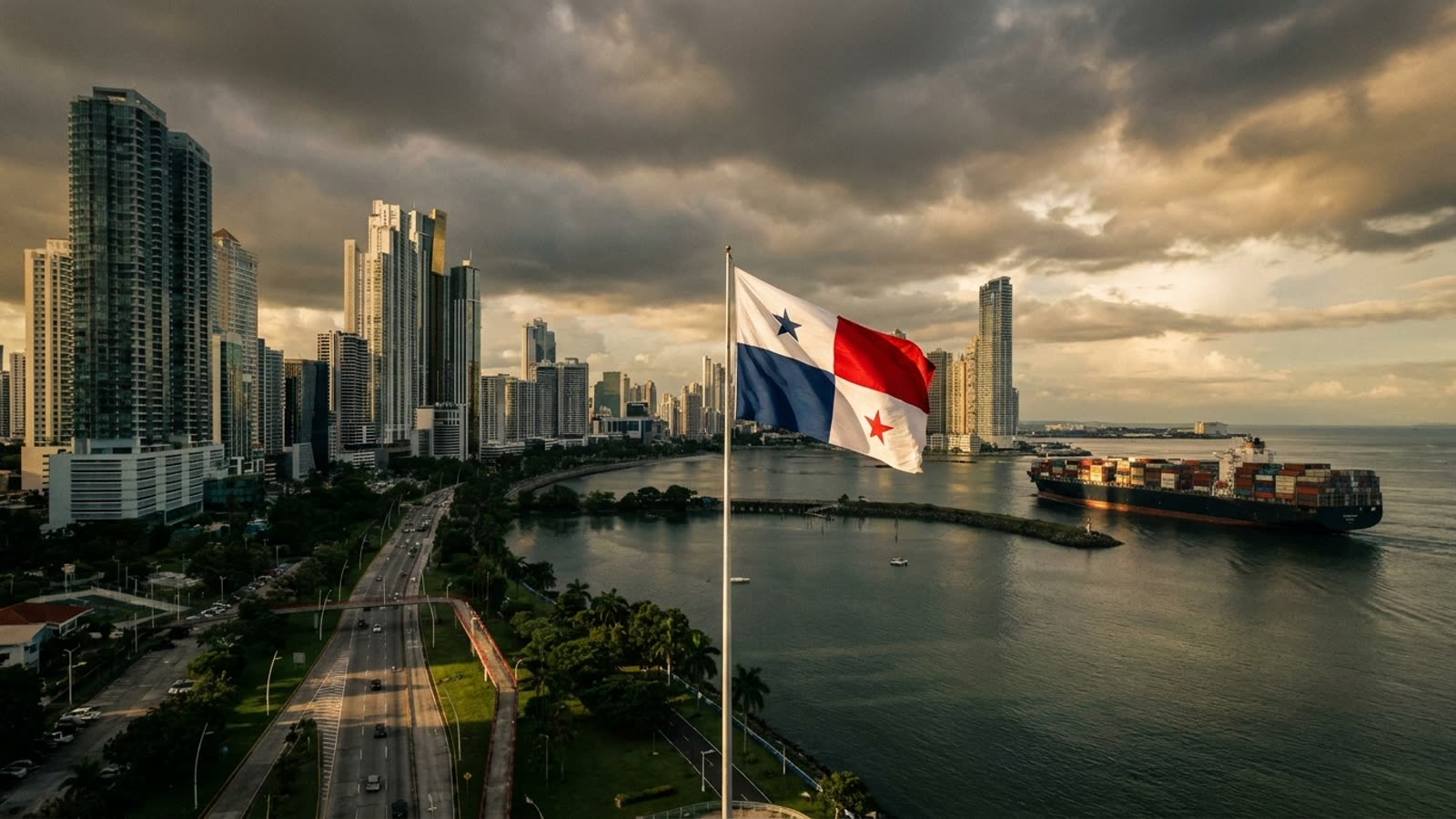
Wars reshape trade routes faster than any policy ever could. The conflict in Iran, now grinding through its fourth month, has delivered an unexpected windfall to one of the world's oldest chokepoints: the Panama Canal is reporting revenue increases of up to 15 percent as shippers abandon the Suez route and the treacherous waters near the Strait of Hormuz.
Victor Vial, the Canal Authority's chief financial officer, put it bluntly in an interview with the Financial Times: the world's trading arteries are being "permanently reshaped." That is not the language of a temporary bump.
The geography of avoidance
The logic is straightforward. Container ships and tankers that once passed through Suez to reach Asian markets are now circumnavigating Africa or, increasingly, opting for the longer Pacific crossing via Panama. Insurance premiums for vessels transiting the Persian Gulf have tripled since February. War-risk surcharges on cargo have followed. For many shippers, the calculus has flipped: the Panama route, once dismissed as the slower option for Europe-Asia trade, now looks like the safer bet.
This is not Panama's first geopolitical windfall. The canal benefited modestly from Houthi attacks on Red Sea shipping in 2024, though drought-related transit restrictions limited its capacity to absorb diverted traffic. This year, water levels have recovered, and the Authority has lifted most restrictions. The timing, from Panama's perspective, could not be better.
Winners and losers in the new map
Egypt, which depends on Suez Canal revenues for roughly 2 percent of GDP, is watching nervously. Suez traffic was already under pressure before the Iran conflict; a sustained diversion to Panama would accelerate a painful structural shift. For American exporters, the picture is more mixed. Gulf Coast agricultural shippers—soybeans, corn, wheat—are enjoying shorter transit times to Asian buyers. West Coast ports, already struggling with labor disputes and infrastructure bottlenecks, face renewed competition.
The real question is whether Vial's prediction of permanence holds. Trade routes have a stubborn inertia; once logistics chains reorganize around new pathways, they rarely snap back entirely. The Suez Canal's dominance was built over a century. It will not evaporate in a single conflict. But the edges are fraying.
Our take
Panama is not celebrating the war, but it is certainly cashing the checks. The canal's windfall is a reminder that global commerce is a zero-sum game played on a physical map—and that map is being redrawn in real time. If the Iran conflict drags into autumn, as most analysts expect, the temporary rerouting will calcify into habit. Suez will remain vital, but its monopoly on East-West trade is over. The canal that Teddy Roosevelt muscled into existence is, improbably, having a second act.