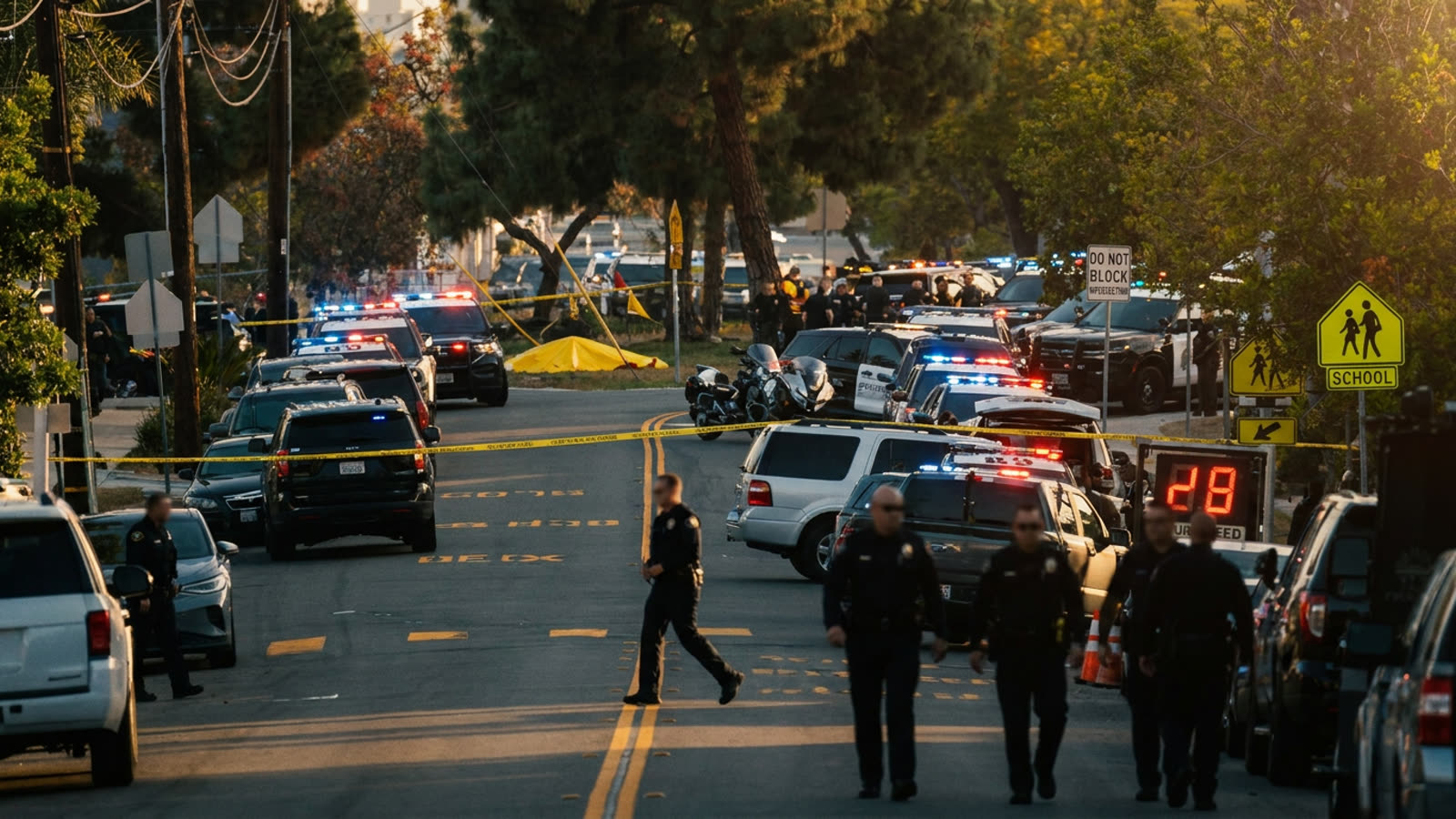
A security guard at a San Diego-area mosque is dead because he did what security guards at American houses of worship are now trained to do: absorb bullets meant for people at prayer.
The details emerging from Sunday's attack follow a grimly familiar script. A gunman arrived at the mosque. A guard intervened. The guard died. Worshippers survived because someone whose job description now includes "human shield" fulfilled that unspoken obligation. Law enforcement praised his sacrifice. Politicians issued statements. And by Monday morning, the story had already begun its slide down the news hierarchy, crowded out by celebrity gossip and political theater.
The new normal of armed faith
That a mosque, synagogue, church, gurdwara, or temple requires armed security is no longer remarkable in America. It is simply operational reality. After the 2019 Christchurch massacre, after Pittsburgh's Tree of Life shooting, after the Sutherland Springs church attack, religious communities have quietly militarized their Sabbaths. Security consultants specializing in house-of-worship protection have become a growth industry. Insurance policies now routinely inquire about armed response protocols.
The San Diego guard—whose name authorities have yet to release publicly—represents the logical endpoint of this adaptation. He was not a soldier or a police officer. He was a civilian who accepted a job knowing that its core function might require him to die. That such positions exist, that they are filled, and that the people who fill them occasionally do die, has become background noise in American life.
The attention economy's triage
The shooting occurred on a Sunday. By Monday, it had already been displaced in algorithmic priority by reality-television disputes and athlete sightings. This is not a media conspiracy; it is a market outcome. Audiences have demonstrated, through clicks and engagement, that mosque shootings without triple-digit casualties no longer command sustained attention. The security guard's death is tragic but not novel, and novelty is the currency of the attention economy.
This creates a perverse incentive structure. For an attack on a religious site to break through, it must be spectacular. A single death, even a heroic one, barely registers. The guard's sacrifice saved lives—possibly dozens—but because those lives were saved, the story lacks the body count that would have made it inescapable.
Our take
There is something obscene about a society that employs people to die at prayer services and then forgets them within a news cycle. The San Diego guard deserves more than a brief mention and a flag at half-staff. He deserves a country that finds his job description intolerable rather than inevitable. Until Americans decide that armed sentries at mosques and synagogues and churches represent a failure rather than a solution, more guards will die, and fewer people will notice.