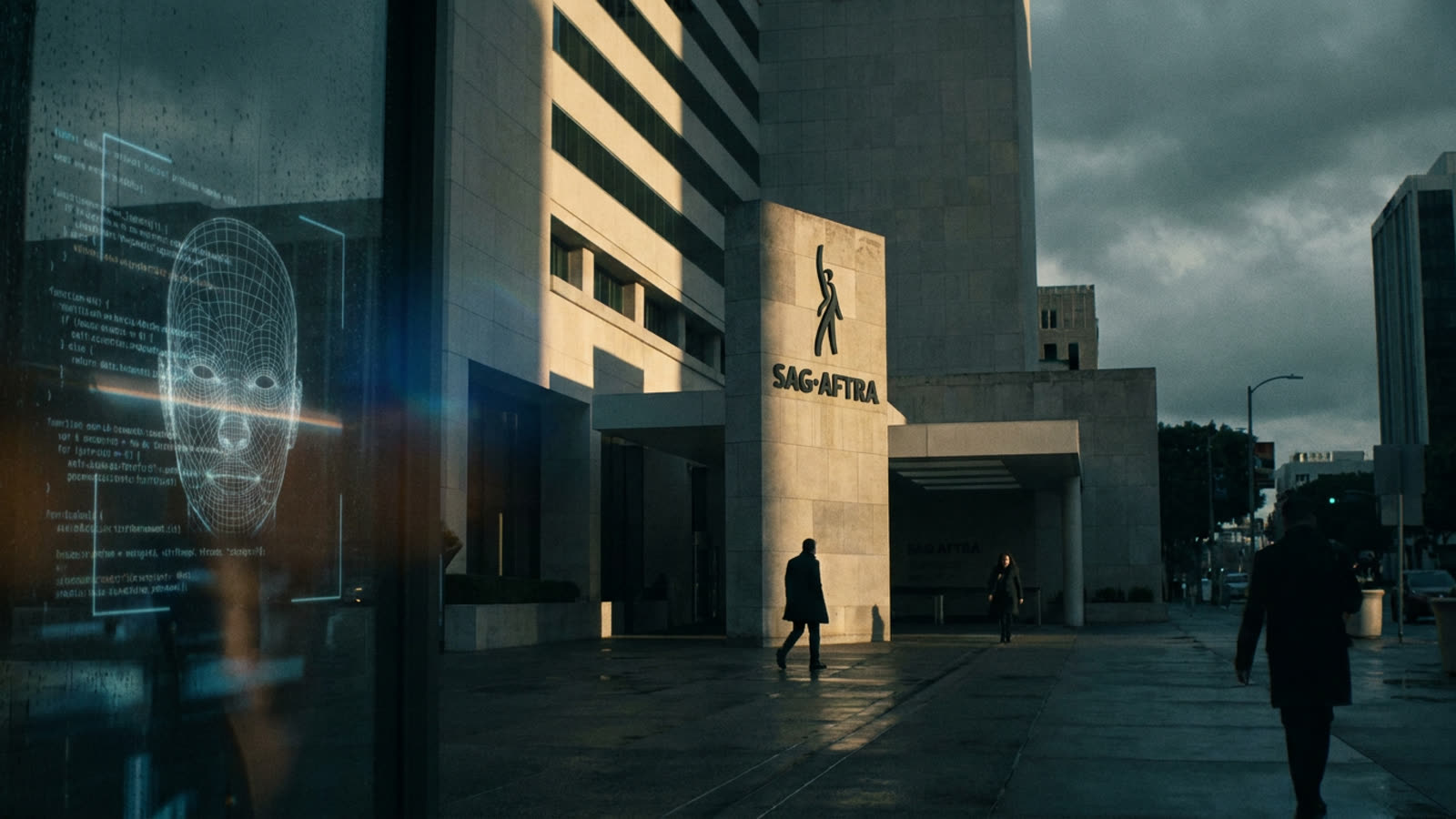
The Screen Actors Guild has spent three years positioning itself as the firewall between Hollywood performers and the algorithmic abyss. The new studio contract unveiled this week suggests the firewall has become a turnstile.
SAG-AFTRA's tentative agreement with the Alliance of Motion Picture and Television Producers includes the expected gains: wage increases, streaming residual improvements, and expanded health fund contributions. But buried in the AI provisions is a clause that allows studios to use actor likenesses for AI training purposes with consent—consent that, in practice, will be baked into standard employment contracts most working actors cannot afford to reject.
The consent problem
The union frames this as a victory for performer agency. Studios must now obtain explicit permission before feeding an actor's image, voice, or movement data into generative models. What the announcement glosses over is the leverage asymmetry. A day player on a streaming series is not negotiating from the same position as a franchise lead. When signing away AI rights becomes a de facto condition of employment—even if technically optional—consent becomes a formality dressed in legal language.
Studio executives have privately indicated that actors who decline AI consent clauses will simply be passed over for roles where such consent is deemed necessary. The union's own negotiators acknowledged in internal calls that enforcement will depend heavily on members reporting violations, a mechanism that has historically favored established talent over the rank and file.
The pension merger complication
Compounding member anxiety is the proposed merger of SAG-AFTRA's two pension plans into a single fund. Proponents argue consolidation will improve administrative efficiency and long-term solvency. Critics within the membership worry that combining the healthier SAG plan with AFTRA's more troubled fund amounts to a bailout that dilutes benefits for legacy SAG members.
The timing is not coincidental. Union leadership needed a comprehensive package that could absorb controversy on multiple fronts. By bundling AI provisions with pension restructuring and headline-friendly wage gains, negotiators are betting that members will swallow the bitter with the sweet rather than risk another protracted strike.
What studios actually won
The real prize for studios is not the ability to replace actors wholesale—that remains technologically and legally fraught. It is the right to extend, modify, and repurpose performances indefinitely. An actor who films a scene in 2026 may find their digital likeness appearing in derivative content, video games, or international advertising campaigns for decades, all under the umbrella of a single consent agreement signed at the start of production.
This is the model the music industry wished it had established before streaming atomized recorded revenue. Studios have learned from that chaos. They are locking in rights architecture now, while the technology is still maturing and the legal landscape remains malleable.
Our take
SAG-AFTRA's leadership is not naive. They understand the deal's limitations and are gambling that incremental protections today are preferable to a strike that might yield nothing better tomorrow. That calculus may prove correct. But the contract also reveals a labor movement struggling to keep pace with capital that moves faster, thinks longer-term, and treats consent as a checkbox rather than a principle. Hollywood performers won a seat at the table. Whether they will still recognize themselves in the product that table produces is another question entirely.