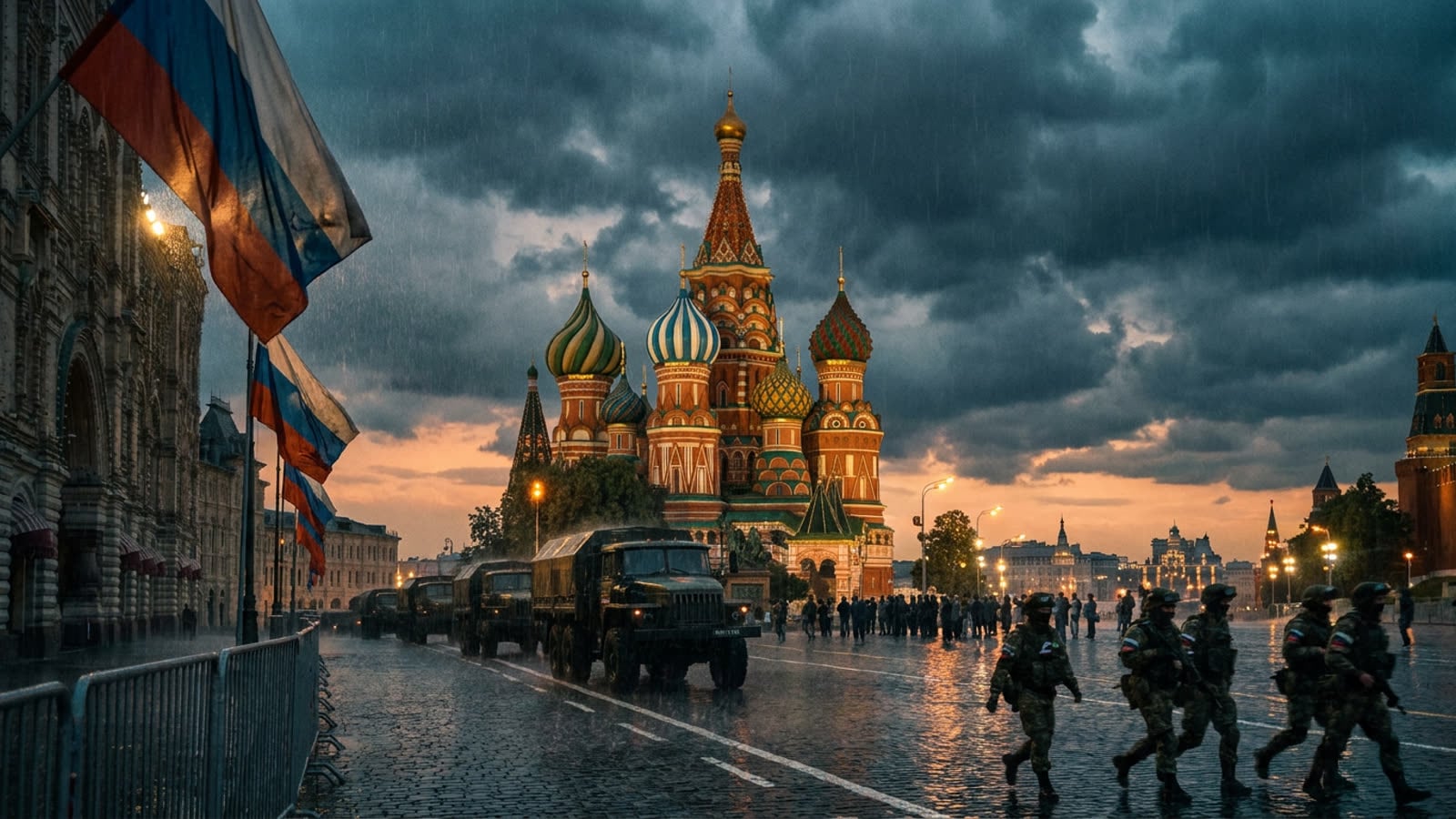
The war in Ukraine has entered a phase where Vladimir Putin's most dangerous opponents may not be in Kyiv or Washington, but in Moscow's own corridors of power. Russian hawks—military bloggers, nationalist politicians, and hardline security officials—are openly pressuring the president to abandon any pretense of negotiation with the United States and dramatically escalate the conflict. Their argument is brutally simple: Ukraine's recent deep strikes into Russian territory prove that half-measures have failed.
This internal pressure campaign matters because it constrains Putin's options in ways Western analysts often underestimate. The Russian president has spent three years calibrating escalation, always leaving himself room to negotiate, always maintaining the fiction that this is a "special military operation" rather than an existential war. That calibration is becoming politically untenable.
The deep-strike problem
Ukraine's ability to hit targets hundreds of kilometers inside Russia has transformed the domestic politics of the war. For ordinary Russians who were promised a quick operation against a weak neighbor, drone strikes on Moscow suburbs and attacks on military infrastructure deep in the heartland are impossible to ignore. The hawks argue, with considerable logic, that Russia's restraint has been repaid with humiliation.
The hardliners want mobilization expanded, defense production accelerated, and—most dangerously—the rules of engagement loosened to include strikes on NATO logistics hubs in Poland and Romania. Some are calling for tactical nuclear demonstrations. These are not fringe voices; they include members of the Duma's defense committee and commentators with millions of followers on Russian social media.
Why Putin hesitates
The president's reluctance to fully embrace escalation stems from rational calculation, not weakness. A general mobilization would shatter the social contract that has kept Russian cities quiet: you ignore the war, and the war ignores you. Strikes on NATO territory would risk Article 5 invocation and potential direct conflict with the world's most powerful military alliance. Nuclear use would make Russia a permanent pariah and likely trigger devastating secondary sanctions from China and India.
But rationality has limits when domestic political survival is at stake. Putin has built his legitimacy on strength and victory. A frozen conflict that leaves Ukraine independent, Western-aligned, and capable of striking Russia at will is not a story he can sell to his base. The hawks know this, and they are exploiting it.
The American variable
The Trump administration's on-again, off-again diplomatic overtures have complicated Putin's position further. Every time Washington signals willingness to negotiate, the hawks accuse Putin of being manipulated. The recent Iranian strikes and Trump's angry response have only muddied the waters, making it harder for anyone in Moscow to read American intentions clearly.
For the hawks, this uncertainty is itself an argument for escalation: if you cannot trust the Americans to negotiate in good faith, why offer them anything?
Our take
The most dangerous moments in any war come when leaders lose control of their own narratives. Putin built a system designed to concentrate power in his hands, but that system now amplifies voices demanding actions he knows are reckless. The West should watch Moscow's internal debates as closely as it watches the front lines. Wars end when leaders decide they can survive peace. Right now, Putin's hawks are making that calculation harder every day.