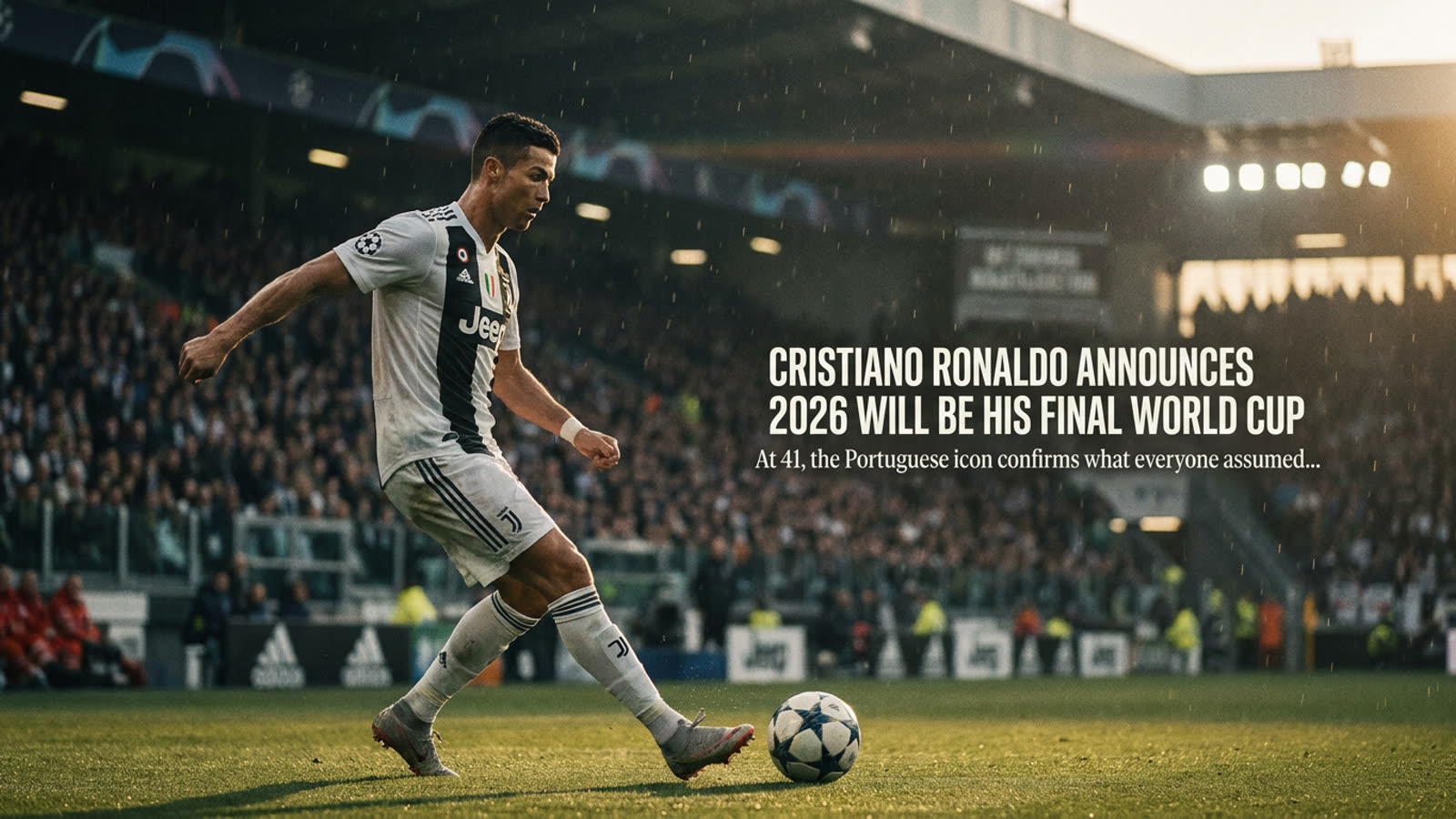
Cristiano Ronaldo has never done anything quietly, so his announcement that the 2026 World Cup will be his last carries all the weight of a man who has spent two decades refusing to accept that time applies to him. The confirmation, delivered with characteristic certainty, transforms Portugal's remaining tournament run into something between a victory lap and a desperate final exam.
The timing is vintage Ronaldo: just as the knockout rounds intensify and attention might drift toward younger stars or rival nations' drama, he reasserts himself as the main character. Whether this is strategic genius or compulsive narcissism—or both, as it usually is with him—the effect is the same. Every Portugal match from here forward becomes a referendum on legacy.
The numbers that haunt him
Ronaldo's international career is a statistical marvel wrapped in a competitive tragedy. He holds the men's record for international goals, has appeared in more European Championships and World Cups than any outfield player in history, and has scored in five consecutive World Cups. What he does not have is a World Cup trophy, or even a final appearance. His sole major international title, Euro 2016, came in a match he left injured after 25 minutes.
This asymmetry between individual achievement and team success has defined the Ronaldo discourse for a decade. At club level, he has won everything multiple times. With Portugal, he has won once and watched from the sidelines. The 2026 World Cup represents his last opportunity to resolve this imbalance, and he knows it.
Portugal's delicate calculation
Manager Roberto Martínez faces the most thankless task in international football: managing Ronaldo's minutes, ego, and declining mobility while keeping Portugal competitive against younger, faster opponents. The squad around him is genuinely excellent—Bruno Fernandes, Rafael Leão, and João Félix provide creative firepower that previous Portuguese generations lacked. But integrating a 41-year-old striker who expects to start every meaningful match requires diplomatic skills that most UN negotiators would envy.
The announcement adds pressure to an already fraught situation. If Martínez benches Ronaldo in a crucial knockout match, he risks being blamed for denying a legend his farewell. If he starts him and Portugal loses, he risks being blamed for sentimentality over pragmatism. There is no winning move, only degrees of losing.
Our take
Ronaldo's announcement is both sincere and calculated, which is to say it is perfectly Ronaldo. He genuinely believes he can lead Portugal to glory at 41, and he genuinely understands that framing this as his final chapter maximizes attention, sympathy, and narrative stakes. The football world will spend the next few weeks debating whether he deserves a storybook ending or whether his refusal to gracefully step aside has held Portugal back. Both things can be true. Greatness at this level has always required a certain blindness to one's own limitations—the same quality that made Ronaldo extraordinary now makes his exit feel slightly too prolonged. But if he somehow lifts that trophy in New Jersey next month, none of this will matter. History remembers winners, not process.