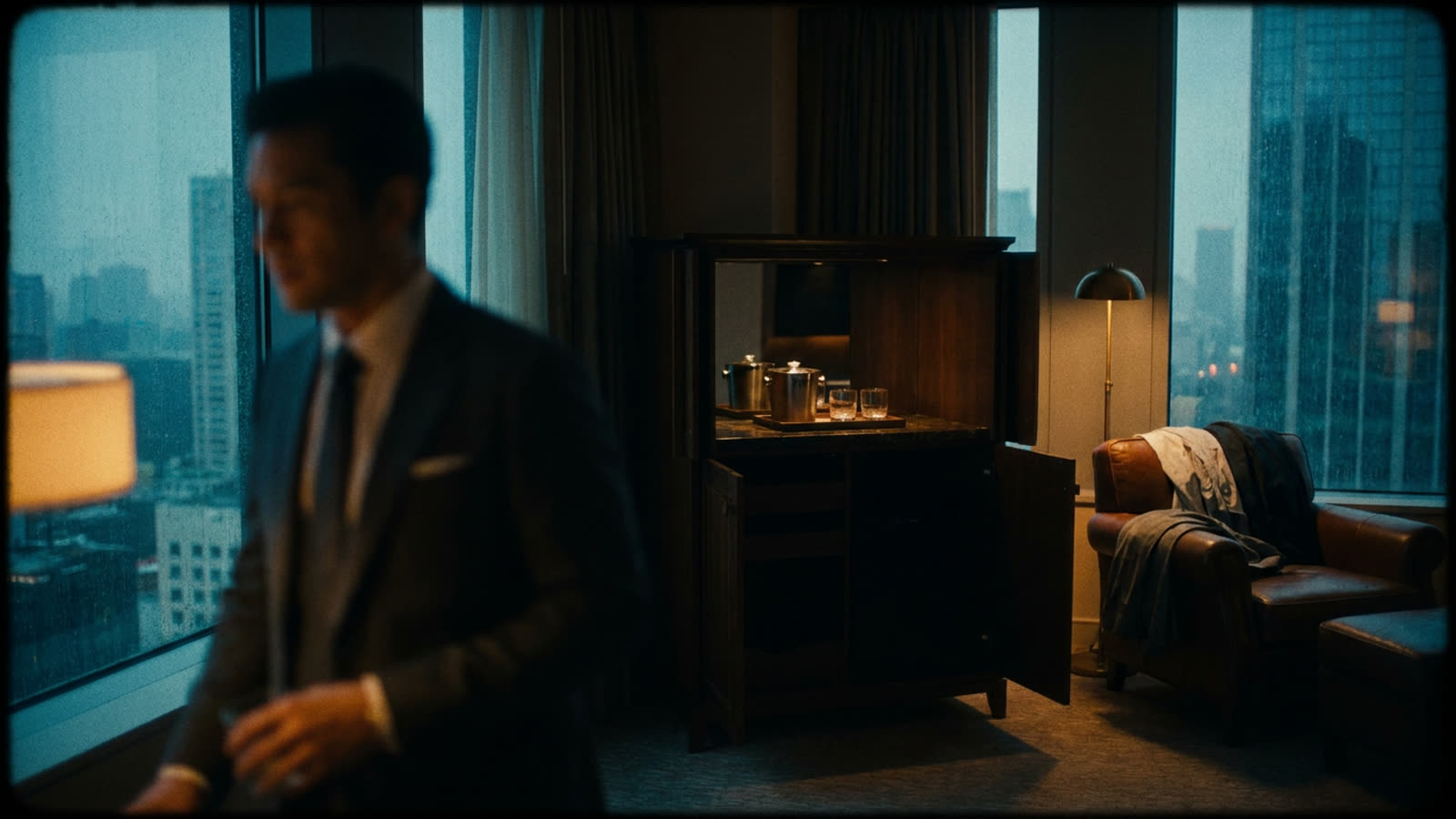
The minibar was once the pinnacle of hotel sophistication — a private refrigerator stocked with temptations, available at any hour, requiring no human interaction. It promised freedom and indulgence. It delivered neither, and the hospitality industry has spent decades trying to figure out what to do about it.
The concept emerged in the 1970s, pioneered by Hong Kong's Peninsula Hotel, which installed refrigerated cabinets in guest rooms stocked with drinks and snacks. The idea spread rapidly through luxury properties worldwide. For a generation of business travelers and honeymooners, the minibar represented something genuinely novel: room service without the phone call, consumption without judgment, a tiny kingdom of impulse.
The economics never quite worked
Hotels discovered early that minibars are logistically punishing. Staff must check each room daily, restocking depleted items, removing expired products, and reconciling what guests consumed against what they claim to have consumed. The labor costs alone often exceed the revenue generated. Then there's theft — not of the products themselves, but of the honor system. Guests learned quickly that disputing minibar charges was easy, and hotels learned that fighting those disputes cost more than absorbing the loss.
The markup model, once a reliable profit center, also aged poorly. A traveler in 1985 might grudgingly accept paying several times retail for a late-night chocolate bar. A traveler today, smartphone in hand, knows exactly what that chocolate costs at the convenience store around the corner — or can simply order delivery to the lobby. The information asymmetry that made minibar pricing tolerable has collapsed.
Technology made it worse, then irrelevant
Hotels responded with sensor technology: weight-sensitive shelves that automatically charged guests the moment they lifted an item. The systems were meant to eliminate disputes. Instead, they created new ones. Guests who merely examined a product, or moved it to make space for their own groceries, found charges on their bills. The resulting complaints generated worse publicity than the original problem.
More fundamentally, the minibar's core value proposition — immediate gratification without leaving the room — has been superseded. Food delivery apps bring restaurant meals to hotel lobbies. Many properties now offer curated pantry markets in their lobbies, where guests can browse and purchase at transparent prices. The minibar's convenience advantage has evaporated.
What replaces it reveals shifting priorities
Some luxury properties have reimagined the concept entirely, offering complimentary items as an amenity rather than a profit center. Others have converted minibar space into empty refrigerators, acknowledging that guests prefer to store their own provisions. Budget and mid-tier chains have largely abandoned the pretense altogether, removing minibars in renovations and discovering that guest satisfaction scores remain unchanged.
The shift reflects a broader evolution in what travelers value. The minibar era assumed guests wanted to be cocooned, insulated from the outside world. Contemporary hospitality increasingly assumes the opposite — that guests want connection to local food scenes, authentic experiences, and the feeling of discovery rather than corporate convenience.
Our take
The minibar's decline is less a story about snacks than about how luxury gets redefined across generations. What once signaled sophistication — a private, curated selection available at premium prices — now signals the opposite: a dated attempt to extract revenue from a captive audience. The hotels that understood this earliest simply removed the friction and the resentment, offering either nothing or everything for free. The ones still clinging to sensor-equipped refrigerators are fighting a battle that ended years ago.