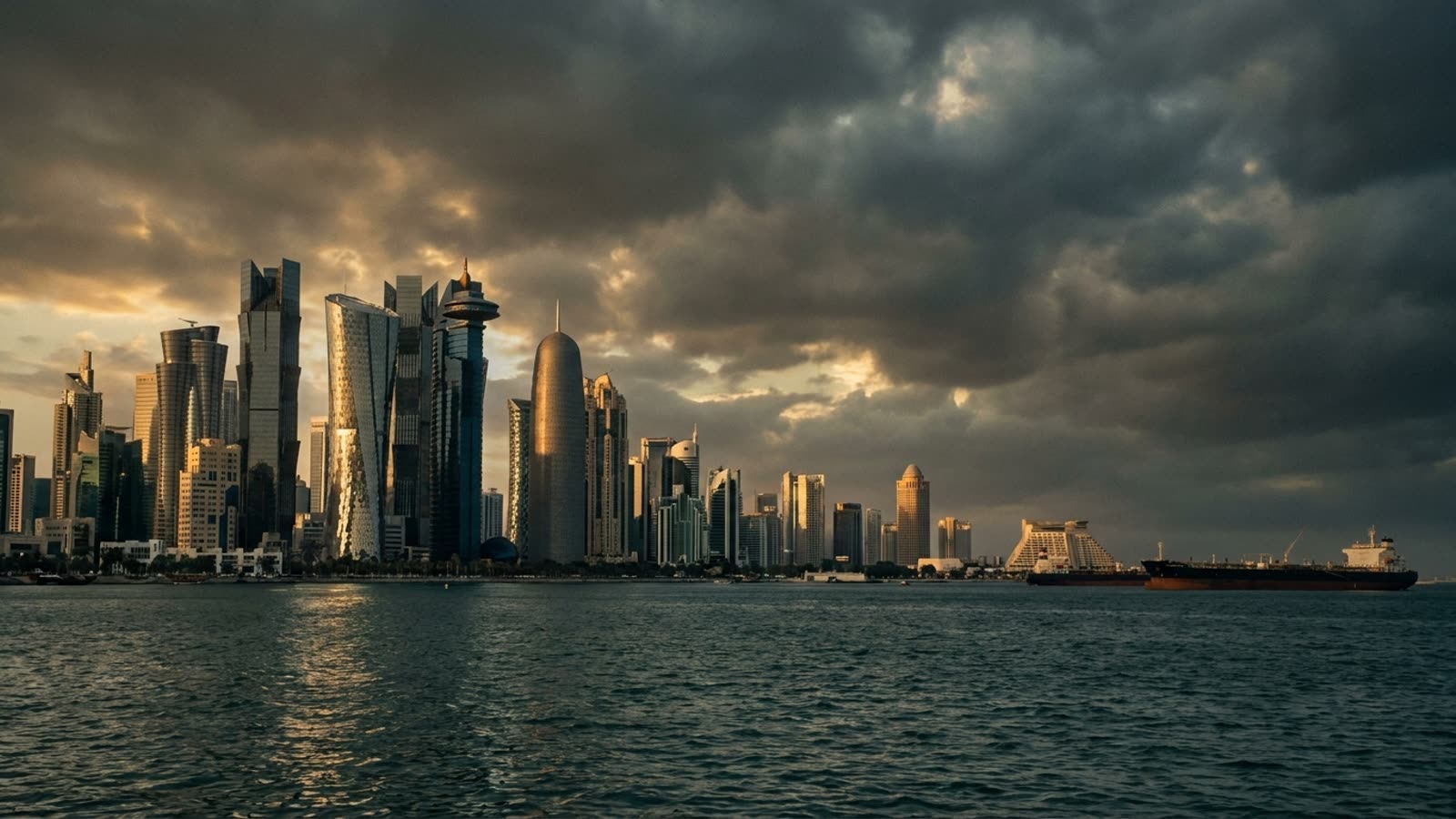
Qatar is discovering that being the world's largest exporter of liquefied natural gas is a blessing until the Strait of Hormuz becomes a shooting gallery.
The emirate's economic predicament is both immediate and existential. Iranian missile and drone strikes have effectively shuttered the shipping lanes through which Qatar moves roughly 80 million tonnes of LNG annually—exports that account for more than half of government revenues and have made Qataris among the wealthiest people on Earth. Tankers are idling. Insurance premiums for Gulf transits have become prohibitive. And the customers Qatar spent years courting in Asia and Europe are scrambling for alternatives, some of which may prove permanent.
The infrastructure trap
Qatar's vulnerability is structural. Unlike Saudi Arabia, which can route oil through Red Sea terminals, Qatar's gas infrastructure points in exactly one direction: out through waters now contested by Iranian forces. The North Field, the world's largest natural gas reservoir, sits just offshore. The processing facilities at Ras Laffan are world-class. But none of it matters if ships cannot safely reach open ocean. The emirate invested hundreds of billions in becoming indispensable to global energy markets, only to find that indispensability cuts both ways.
The pivot that wasn't
The deeper wound may be to Qatar's diversification ambitions. The 2022 World Cup was supposed to announce Qatar's arrival as a global destination for tourism, finance, and business services—a hedge against the inevitable decline of hydrocarbon dependence. Doha poured money into airlines, museums, sports franchises, and gleaming urban infrastructure. The strategy required one thing above all: the perception of stability. That perception is now shattered. Corporate relocations have stalled. Tourism bookings have collapsed. The sovereign wealth fund, while enormous, cannot indefinitely substitute for functioning commerce.
Regional ripples
Qatar's crisis carries implications well beyond its borders. European nations that turned to Qatari LNG after weaning themselves off Russian gas now face renewed supply anxieties. Asian buyers are reconsidering long-term contracts. And the Gulf Cooperation Council, already fractured by years of diplomatic feuds, must contemplate whether collective security arrangements are worth anything when one member faces economic strangulation. The war in Iran is revealing how fragile the Gulf's prosperity has always been—built on stable shipping lanes that were never truly guaranteed.
Our take
Qatar's misfortune is a case study in the limits of small-state strategy. You can accumulate sovereign wealth, host global sporting events, and cultivate diplomatic relationships with every major power, but you cannot change your coordinates on a map. The emirate bet everything on being too important to fail, too connected to isolate, too rich to ignore. It may yet recover—wars end, shipping lanes reopen, customers return. But the myth of Qatar as a post-geographic success story, a nation that transcended the constraints of its neighborhood through sheer financial and diplomatic ingenuity, is finished. Geography, it turns out, still wins.