Most NFT projects from the 2021-2022 boom are functionally dead — their Discord servers silent, their floor prices collapsed to fractions of a percent of peak valuations, their founders quietly pivoting to AI startups. Pudgy Penguins, improbably, is not among them. The collection is trending again on CoinGecko, its native PENGU token drawing renewed attention as the project continues an unlikely transformation from speculative digital collectible into something approaching an actual consumer brand.
The trajectory is instructive. Pudgy Penguins launched in July 2021, sold out its initial mint in minutes, and promptly cratered in value amid community drama and founder disputes. What happened next was unusual: the community essentially staged a hostile takeover. New ownership, led by entrepreneur Luca Netz, acquired the project in 2022 and pursued a strategy that most NFT founders dismissed as beneath them — building a real business.
The Walmart gambit
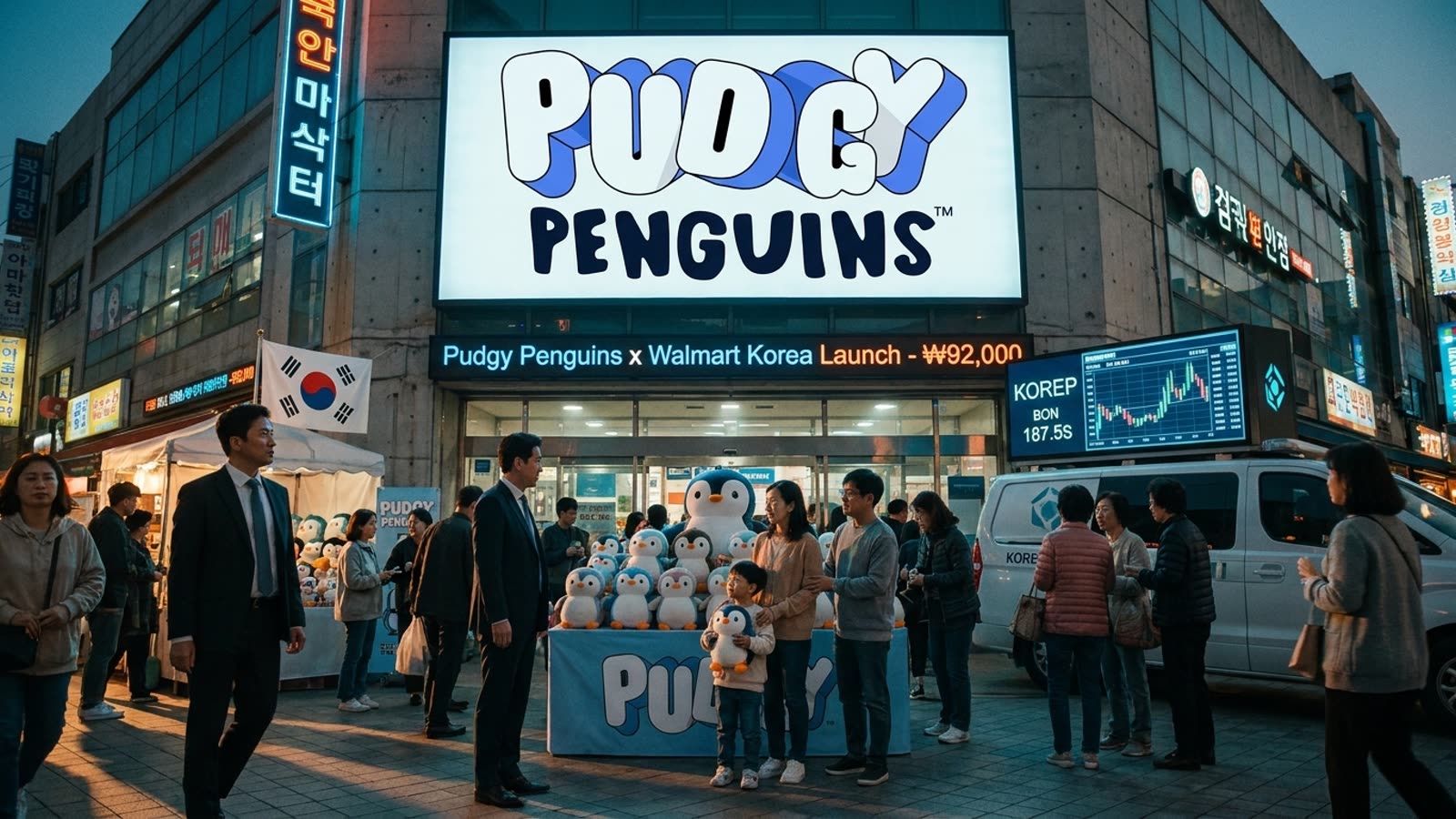
The most visible manifestation of this pivot arrived in late 2023 when Pudgy Penguins plush toys appeared on Walmart shelves. The move was mocked in some crypto circles as a capitulation, a tacit admission that the underlying NFTs could not sustain value on their own. But the toys sold. By mid-2024, the project claimed over two million units moved through retail channels, generating actual revenue rather than relying solely on secondary market royalties that most collections had already abandoned.
The PENGU token, launched in December 2024 on Solana rather than Ethereum, extended this hybrid model. Holders of the original NFTs received airdrops, but the token was designed to integrate with the broader merchandise ecosystem — a loyalty program with blockchain characteristics rather than pure speculation.
Why the renewed interest
The current trending spike appears tied to several factors. The broader crypto market has stabilized after a volatile summer, and retail attention is returning to projects with recognizable brands. Pudgy Penguins' social media presence — particularly on platforms popular with younger demographics — has maintained engagement levels that most NFT collections lost years ago. The project's Instagram account, featuring the cartoon penguins in various scenarios, has accumulated millions of followers who may have no idea the characters originated as blockchain assets.
This is perhaps the most interesting aspect of the Pudgy Penguins case: it suggests that NFT projects might survive not by doubling down on crypto-native features but by treating the blockchain component as infrastructure rather than identity.
Our take
The crypto industry has spent years insisting that digital ownership would revolutionize everything from art to gaming to real estate. Pudgy Penguins offers a more modest but arguably more honest proposition: blockchain technology as a tool for community coordination and intellectual property management, wrapped in a business model that actually generates cash flow. It is not the revolution anyone promised, but it might be the one that survives.