The asset that regulators most wanted to kill is now outperforming nearly everything they left alone.
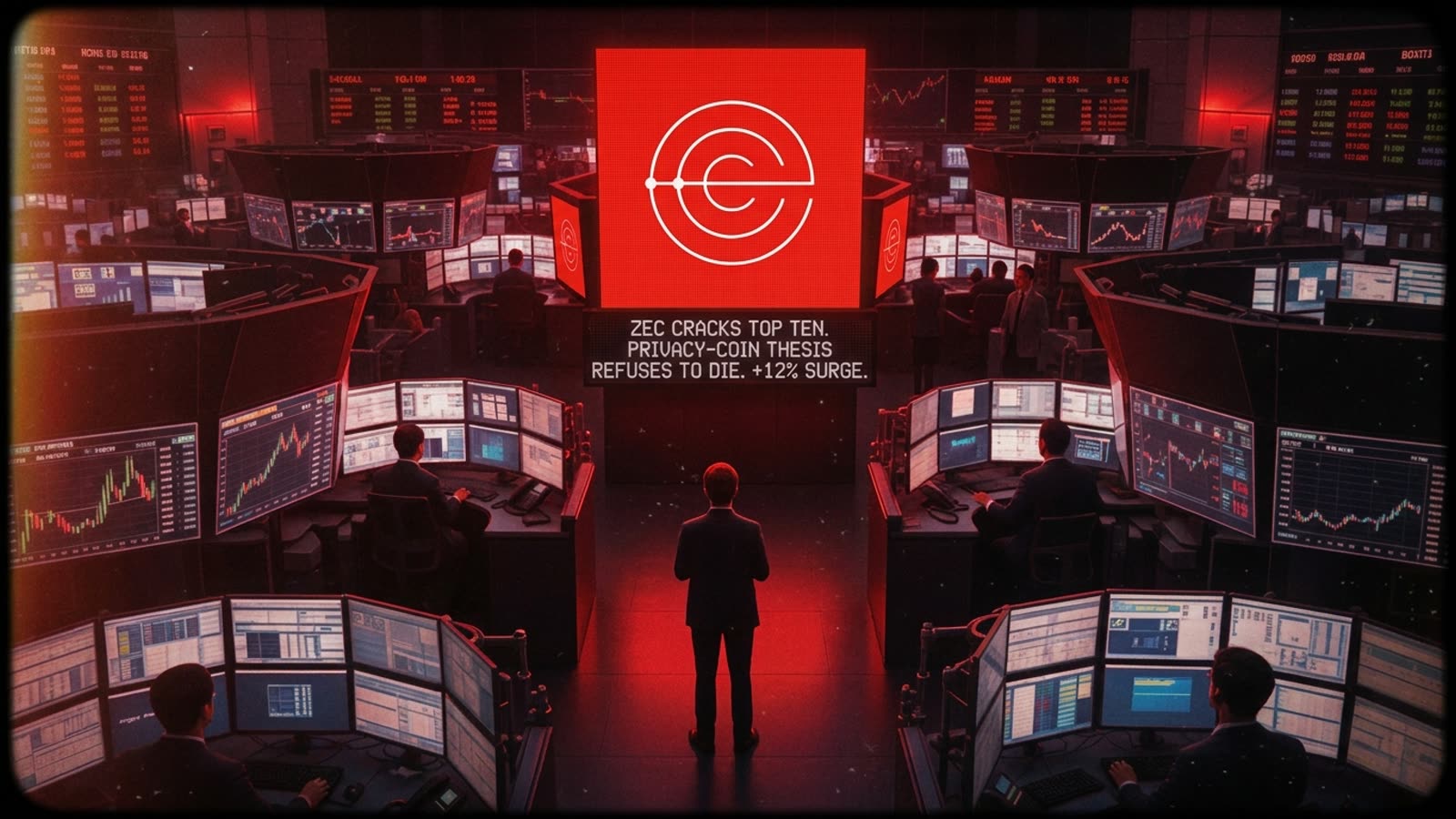
Zcash has climbed into the top ten cryptocurrencies by market capitalisation after a surge of more than ten percent in a single session, capping a year in which the token has roughly quadrupled in dollar terms. The move places ZEC ahead of several tokens that enjoyed far friendlier treatment from the Securities and Exchange Commission, and it reopens a debate the industry assumed was settled: whether privacy-preserving blockchains have any future in a compliance-obsessed market.
The paradox of prohibition
Zcash's rally is difficult to explain through conventional fundamentals. The Electric Coin Company, which stewards the protocol, has not announced a major upgrade. No ETF filing is pending. Exchange delistings, not listings, have been the dominant headline for shielded assets over the past two years. And yet the price keeps rising.
The most plausible explanation is scarcity. When Binance, Kraken, and a string of regional platforms removed ZEC from their spot books, they also removed the easiest avenues for retail selling. Holders who wanted to exit had to move coins to increasingly obscure venues or accept significant slippage. Many simply held. Meanwhile, demand from users who actually want privacy—whether for legitimate reasons or otherwise—has not disappeared; it has merely migrated to decentralised exchanges and peer-to-peer markets where price discovery is less efficient and bid-ask spreads are wider.
A broader privacy-coin bid
Zcash is not alone. Monero, despite a modest pullback in the latest session, remains up substantially over the past year and continues to trade near multi-year highs. Smaller shielded tokens have seen similar, if less dramatic, appreciation. The pattern suggests that a subset of capital is actively seeking exposure to privacy features, and that the pool of available supply is shrinking faster than demand.
This is awkward for regulators who assumed that delisting would starve these networks of liquidity and relevance. Instead, it may have created a kind of synthetic scarcity premium—a perverse incentive structure in which the very act of suppression increases the value of what remains accessible.
Our take
Privacy coins are not going to replace Bitcoin or Ethereum as reserve assets, and their utility for everyday commerce remains limited by the compliance requirements of on- and off-ramps. But the Zcash rally is a useful reminder that markets do not always cooperate with policy intentions. Regulators wanted these tokens to fade into irrelevance; instead, they created a supply squeeze that rewarded the most committed holders. Whether that outcome is desirable depends on your priors, but it is certainly not the one Washington anticipated.