The mathematics of private aviation are almost comically unfavorable. A light jet burns through roughly $3,000 per flight hour in fuel alone. Hangar fees, crew salaries, insurance, maintenance reserves, and the relentless depreciation of an asset that loses value whether it flies or sits — the all-in cost of owning even a modest Citation can approach $1 million annually. For a heavy jet capable of crossing oceans, double or triple that figure. The rational response to these numbers is to fly commercial, ideally in first class, and pocket the difference.
And yet the private aviation market has grown steadily for decades, with fleet sizes expanding even as commercial airlines have made premium cabins increasingly comfortable. The persistence of this economically irrational behavior tells us something important about how the genuinely wealthy think about money — and about what they're actually purchasing when they buy access to a Gulfstream.
The real product is absence
What private aviation sells is not luxury in any conventional sense. The cabins are pleasant but rarely opulent; the catering is good but not revelatory; the seats are comfortable but no more so than a well-appointed first-class suite on Emirates or Singapore Airlines. The product is the absence of everything else: the absence of security lines, of boarding groups, of delays caused by connecting passengers, of the ambient friction that commercial travel imposes on everyone regardless of ticket price.
This is a crucial distinction. A first-class ticket buys you a better experience of the same system everyone else uses. A private jet removes you from that system entirely. You drive onto the tarmac, board immediately, and depart when you're ready. The plane waits for you rather than the reverse. For someone whose time is genuinely worth thousands of dollars per hour — a category that includes fewer people than claim membership — the arithmetic begins to shift.
Fractional ownership and the democratization of inefficiency
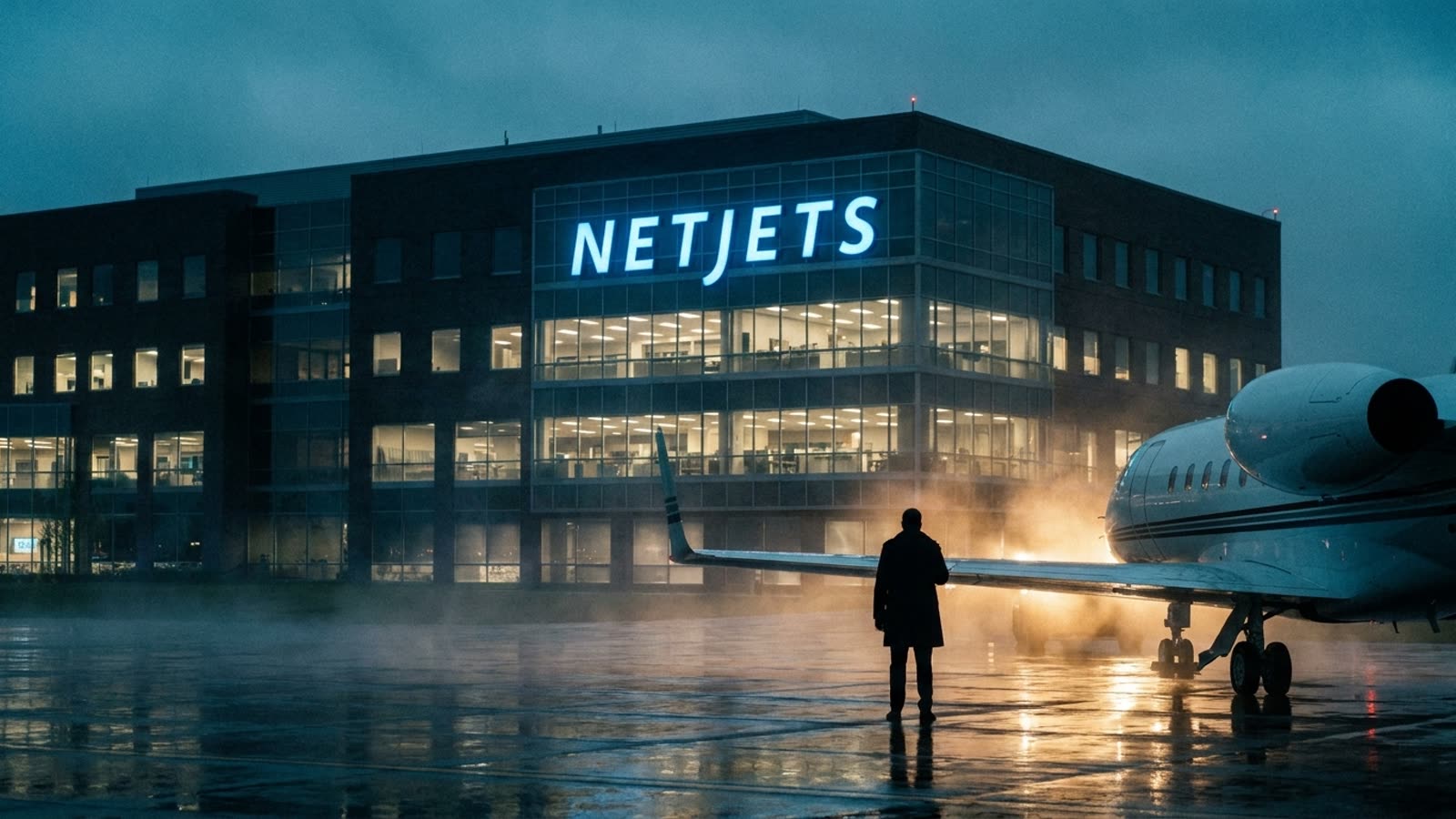
The industry's cleverest innovation has been fractional ownership, pioneered in the late 1980s and now dominated by companies like NetJets and Flexjet. The model allows buyers to purchase a share of an aircraft — typically in increments of one-sixteenth, representing about fifty flight hours annually — and access a fleet rather than a single plane. This spreads the fixed costs across multiple owners while guaranteeing availability.
Fractional programs have expanded the market considerably, bringing private aviation within reach of successful entrepreneurs and executives who could never justify whole ownership. They've also created a new category of aspiration: the fractional share as a milestone of professional success, a membership card to a club that exists primarily in the imagination of those outside it.
Our take
The private jet endures not despite its poor economics but because of them. Conspicuous consumption requires conspicuousness, and there is no more visible way to demonstrate that ordinary constraints don't apply to you than to maintain your own aircraft. The wealthy have always paid premiums to separate themselves from the crowd; private aviation simply makes the separation literal. What looks like irrationality is actually a perfectly rational purchase of something money can reliably buy: the experience of being exempt from systems designed for everyone else.