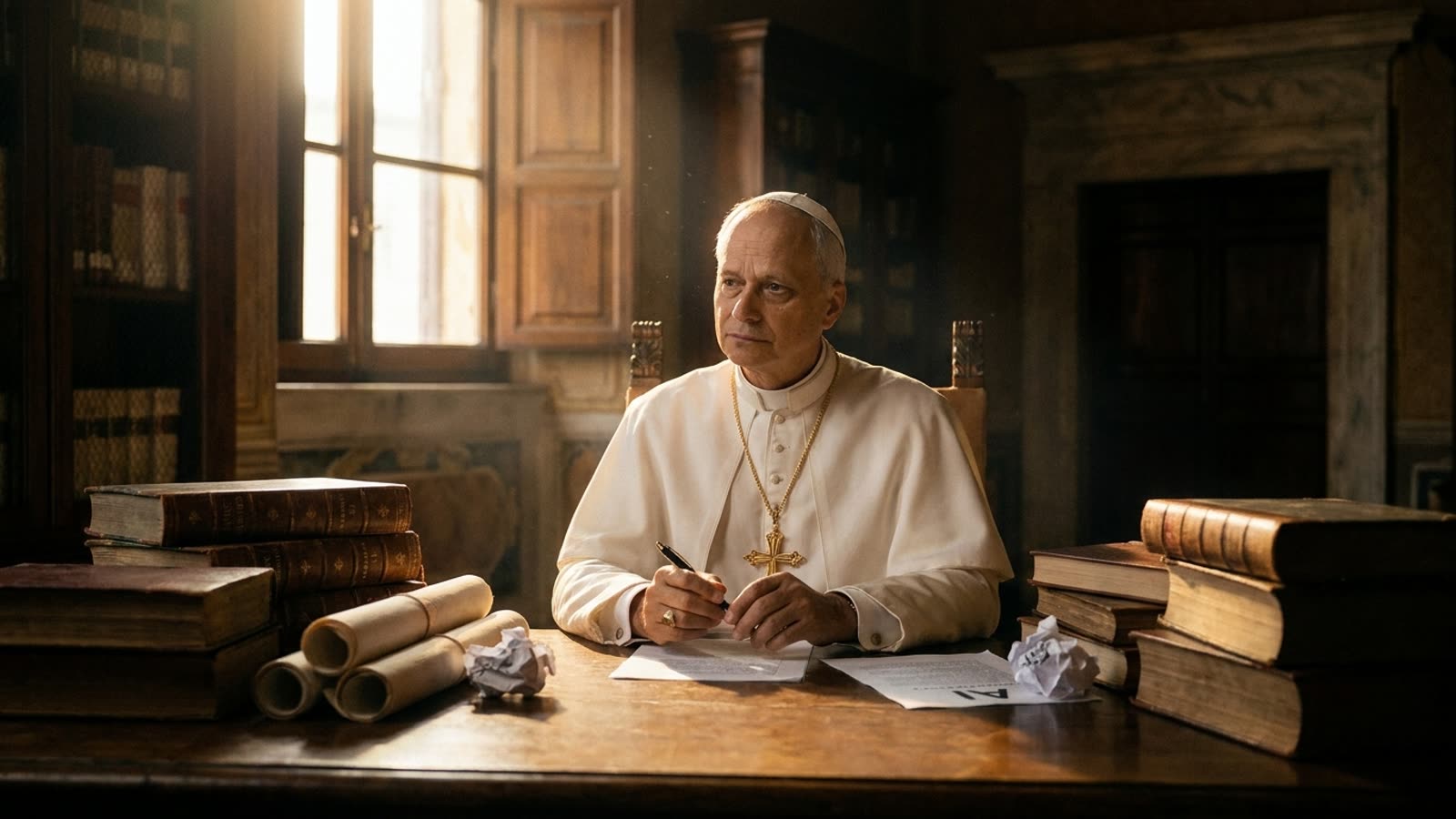
The Vatican has issued its first encyclical on artificial intelligence, and the document is both less and more than the tech industry expected. Less, because it contains no specific policy prescriptions, no calls for regulation, no endorsement of any particular governance framework. More, because it represents something the AI debate has conspicuously lacked: a coherent metaphysical objection to the entire enterprise.
Pope Leo XIV, the former Chicago archbishop elected last year, has produced a text that reads like Augustine arguing with a chatbot. The encyclical, titled Imago Hominis (The Image of Man), runs to some forty pages and never once mentions OpenAI, Anthropic, or any specific company. Instead, it poses a question that Silicon Valley has studiously avoided: what does it mean for human beings if we create entities that can simulate understanding without possessing it?
The theological argument
The encyclical's core claim is deceptively simple. Human beings, in Catholic teaching, possess inherent dignity because they are created in God's image—imago Dei. This dignity is not earned through intelligence, productivity, or capability. It simply is. Artificial intelligence, however sophisticated, cannot possess this dignity because it is not created by God but manufactured by humans.
This might sound like a distinction without a difference to secular ears. But Leo XIV pushes further. The danger, he argues, is not that AI will become conscious. It's that humans will forget why consciousness matters. If we build systems that can pass every behavioral test for understanding, empathy, and creativity, we will inevitably begin treating the tests as the thing itself. The simulation will become the standard.
Why tech should pay attention
The Vatican's audience here is not primarily technologists—it's the 1.4 billion Catholics worldwide who will increasingly interact with AI systems in healthcare, education, and pastoral care. Several Catholic hospital networks have already deployed AI diagnostic tools. Catholic schools are grappling with AI-generated student work. The Church needs a framework, and now it has one.
But the encyclical also represents a sophisticated entry into the AI ethics debate that has been dominated by consequentialist arguments about job displacement, bias, and existential risk. Leo XIV is offering something different: a deontological objection rooted in human nature itself. You cannot optimize your way around it.
The timing is notable. As AI capabilities accelerate and the major labs race toward artificial general intelligence, the question of what makes humans special has become commercially inconvenient. The industry's preferred answer—nothing, really, we're just biological computers—makes the product easier to sell.
Our take
You don't have to be Catholic, or even religious, to recognize that Imago Hominis is asking the right question at the right moment. The AI industry has spent years debating what these systems can do. The Pope is asking what we lose by building them—not economically, but ontologically. It's the kind of challenge that can't be answered with a benchmark or a safety paper. Whether or not you accept his theology, Leo XIV has identified the void at the center of the AI conversation: we have no shared account of human dignity that doesn't reduce to capability. And capability is precisely what we're about to be outperformed on.