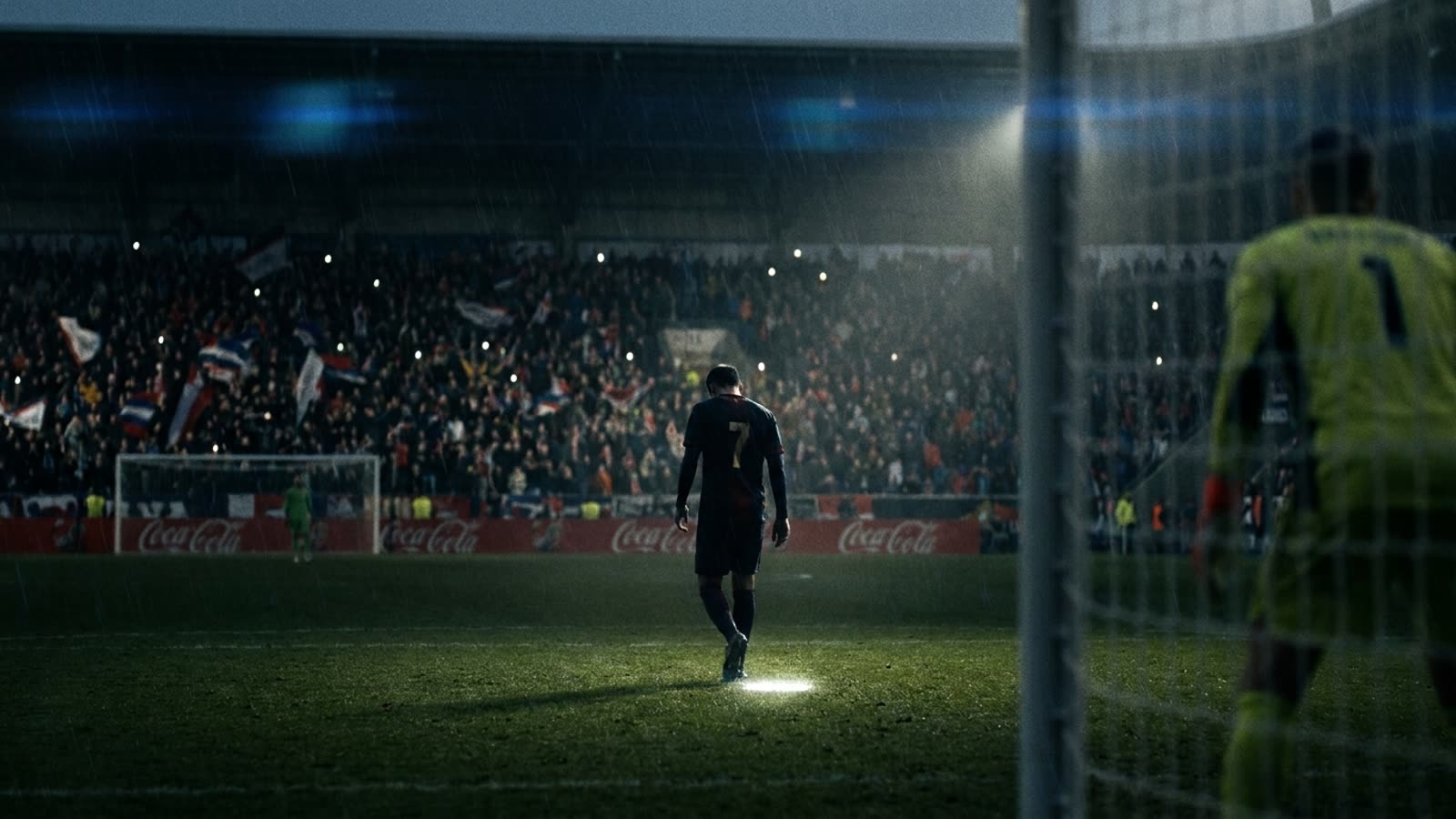
The walk from the center circle to the penalty spot covers roughly fifty meters, yet it has undone more careers than any tactical innovation or managerial decision in football history. In that brief journey, a player transitions from athlete to existentialist, alone with the knowledge that millions will remember exactly what happens next.
The penalty shootout is football's great contradiction: a team sport resolved through individual isolation, a game of flow and creativity decided by the most binary possible outcome. Miss, and you become a national tragedy. Score, and you are merely doing what was expected.
The mathematics of misery
Statistically, penalty shootouts should favor the kicker. From twelve yards, with only a goalkeeper to beat, conversion rates in regular play hover around 75-80 percent. Yet in World Cup knockout shootouts, that figure drops meaningfully. The difference is not distance or technique—it is context. The same player who buries spot-kicks in league matches becomes a different organism when carrying the weight of national expectation.
England's relationship with shootouts has become its own subgenre of sporting trauma. For decades, the pattern repeated with such consistency that it transcended bad luck and entered the realm of collective psychological inheritance. Each new generation of English players arrived at tournaments already burdened by the failures of their predecessors, a self-fulfilling prophecy of twelve-yard doom.
Germany, by contrast, built a reputation for shootout excellence so formidable that opponents often seemed defeated before the first kick. This was not superior technique—German players did not strike the ball differently than their English counterparts. It was superior belief, institutionalized through success and transmitted across generations.
The goalkeeper's impossible calculation
Consider the task facing the goalkeeper. A well-struck penalty travels at speeds that make reaction-based saving essentially impossible. The keeper must commit to a direction before the ball is struck, transforming the contest into an elaborate game of prediction and misdirection. Some keepers study opponents obsessively, cataloging tendencies. Others rely on reading body language in the run-up. A few simply guess and hope.
The best shootout goalkeepers understand that their primary weapon is psychological rather than physical. By delaying, by talking, by standing slightly off-center, they introduce doubt into the kicker's mind. Every additional second of contemplation is a second for anxiety to compound.
Why it persists
Critics have long argued that deciding major tournaments through shootouts is fundamentally unjust—that it reduces the beautiful game to a lottery with marginally better odds than a coin flip. Alternative proposals surface periodically: golden goals, silver goals, progressively removing players until someone scores, even drawing lots.
Yet the shootout endures because it delivers what football administrators crave: definitive resolution wrapped in maximum drama. Television audiences do not change channels during shootouts. Neutral viewers suddenly acquire passionate preferences. The format is cruel precisely because it is compelling, and it is compelling precisely because it is cruel.
Our take
The penalty shootout reveals something football's flowing gameplay conceals: that sport, at its extremes, is not about skill but about the management of fear. Every player walking to that spot possesses the technical ability to score. What separates glory from infamy is the capacity to access that ability while the entire world watches and waits for you to fail. It is not fair, it is not representative of the preceding match, and it is absolutely unforgettable—which is why it will outlast every proposed alternative.