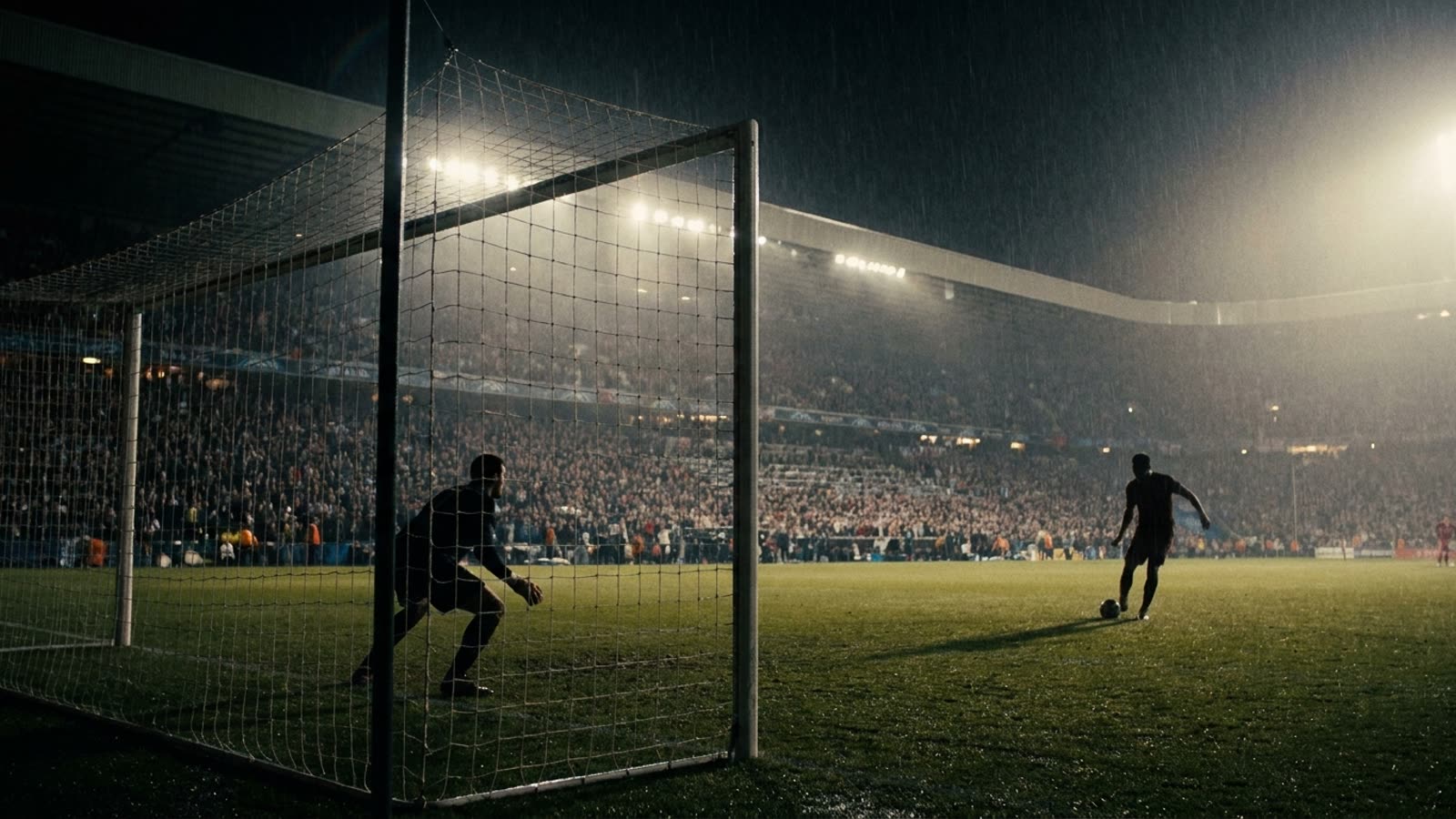
Football prides itself on being the beautiful game, a flowing tapestry of movement and strategy. Then comes the penalty shootout, and all that artistry collapses into something almost unbearably simple: one player, one goalkeeper, twelve yards of grass, and the weight of nations.
The shootout is football's great leveler and its most revealing test. A side can dominate possession, create chances, and play objectively superior football for two hours, only to lose because a twenty-three-year-old's leg trembled at the decisive moment. Critics call this unjust. They are missing the point.
The theater of isolation
Team sports offer cover. A poor pass can be compensated by a teammate's recovery; a missed tackle can be erased by collective pressing. The penalty removes all of this. For the few seconds between the referee's whistle and the ball's contact with boot, the taker exists in total isolation. No teammate can help. No tactical adjustment applies. The crowd noise becomes a kind of silence.
This isolation explains why technically gifted players sometimes fail while less celebrated ones succeed. The shootout does not test who can strike a ball cleanest in training. It tests who can replicate that strike when failure means returning home, when the walk from the center circle to the spot feels like crossing a desert.
Why history repeats
Certain nations have developed reputations in shootouts that border on the mystical. England's struggles became so notorious that they constituted a genuine psychological burden, each new generation inheriting the anxiety of predecessors. Germany, by contrast, built an aura of cold efficiency that itself became a weapon—opponents expected to lose before the first kick was taken.
These patterns are not destiny, but they are not coincidence either. Shootout performance correlates with preparation and, crucially, with cultural attitudes toward failure. Nations that treat a missed penalty as catastrophic personal disgrace tend to produce more misses. Those that normalize the possibility of failure—while still demanding excellence—tend to produce steadier nerves.
The goalkeeper's impossible math
Much attention falls on the taker, but the goalkeeper faces a different kind of torment. The geometry is brutal: a well-struck penalty to either corner is unsaveable if the keeper waits to see direction. So the keeper must guess, must commit before the ball is struck, must accept that being wrong is not failure but probability.
The great shootout goalkeepers understand this math and weaponize it. They make themselves large. They delay their dive by fractions of a second to unsettle the taker. They study opponents obsessively, looking for tells in run-up or eye movement. But ultimately, they accept that their job is to shift probabilities, not guarantee outcomes.
Our take
The penalty shootout is football's most honest moment. It cannot be bought with a larger transfer budget or gamed with a deeper squad. It asks a simple question—can you perform when everything depends on you alone?—and accepts no excuses. Those who call for its abolition in favor of extra time or replays misunderstand what makes the World Cup sacred. The tournament is not merely a test of which nation plays the best football. It is a test of which nation can handle the pressure of wanting something desperately and knowing that failure is permanent. The shootout does not distort this test. It perfects it.