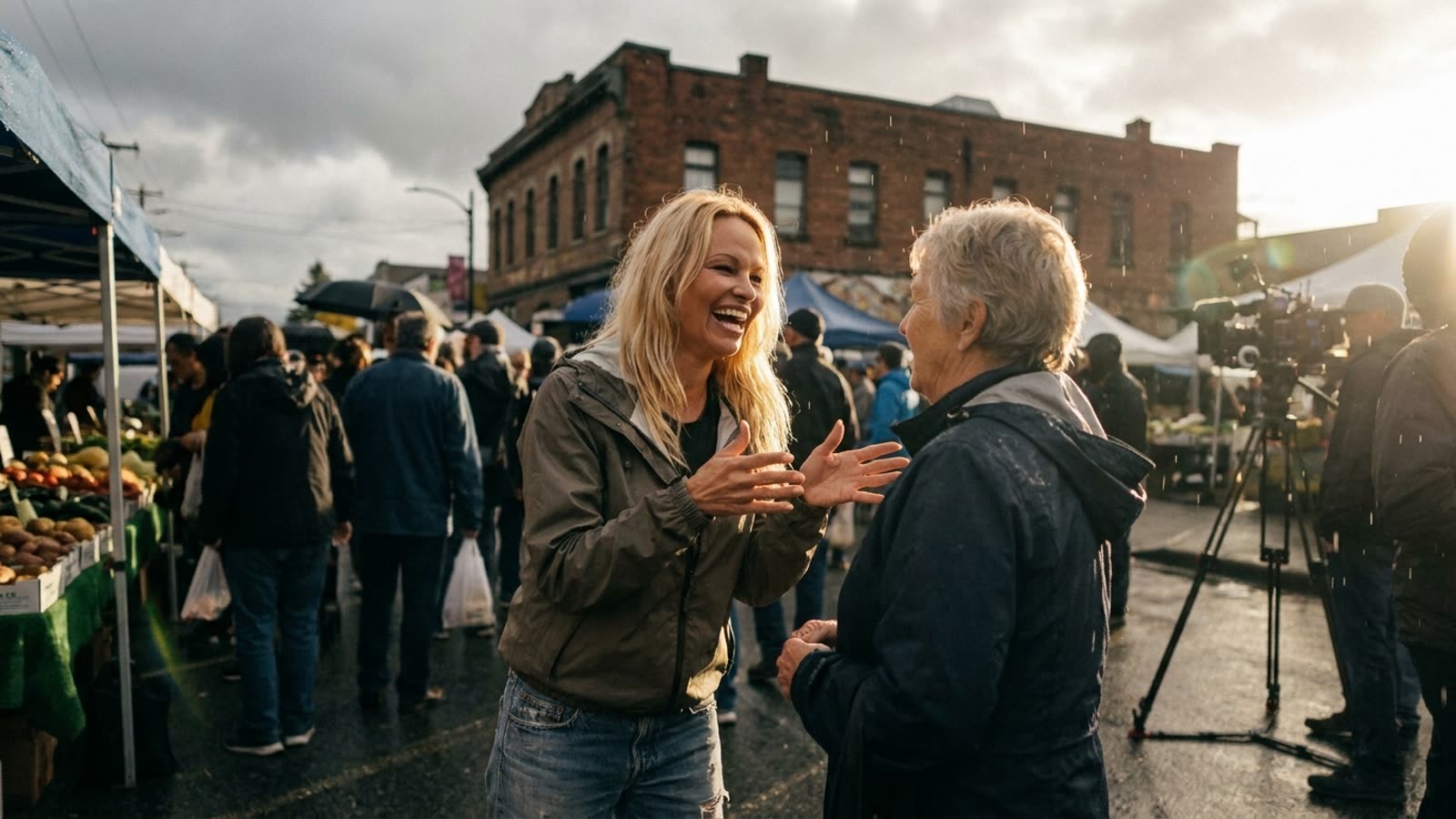
Three years ago, Pamela Anderson walked a Paris Fashion Week red carpet without a trace of makeup, and the fashion press treated it as either a breakdown or a breakthrough. By her 59th birthday this week, the verdict is in: it was a business plan.
Anderson's bare-faced appearances have become her signature, generating more magazine covers, brand partnerships, and cultural commentary than her entire post-Baywatch career combined. What began as a personal choice following the death of her makeup artist has calcified into something more calculated—a positioning strategy that happens to align perfectly with a beauty industry desperate to court women over 50 without patronizing them.
The economics of not trying
The numbers tell a story the aesthetics alone cannot. Women over 50 now control more discretionary spending than any other demographic in the United States, yet beauty advertising still skews overwhelmingly toward the under-40 market. Anderson has slotted herself into this gap with remarkable precision. Her partnerships with brands emphasizing skincare over coverage, her documentary appearances discussing aging without the usual celebrity deflections, her refusal to answer questions about procedures she may or may not have had—all of it reads as authenticity in an industry drowning in filters.
The irony is thick enough to cut. Anderson built her early career on an image so artificial it became iconic: the red swimsuit, the slow-motion run, the Playboy spreads that defined a particular strain of 1990s fantasy. Her current incarnation doesn't reject that history so much as weaponize it. She can afford to go bare-faced precisely because everyone remembers the face she's choosing not to paint.
Why the industry is following
Major beauty conglomerates have taken notice. L'Oréal's recent campaigns featuring women over 60 without heavy retouching, Estée Lauder's pivot toward "skin confidence" messaging, the proliferation of "clean beauty" lines marketed to older consumers—none of this happened in a vacuum. Anderson didn't cause these shifts, but she's become their most visible avatar, a walking proof-of-concept that post-50 beauty marketing doesn't require apology or euphemism.
The celebrity beauty brand industrial complex, which has minted fortunes for women half Anderson's age, has notably not come calling with equity offers. This may be the strategy's one limitation: bare-faced authenticity is difficult to bottle and sell at Sephora. But Anderson appears untroubled. Her recent memoir sold well, her Netflix documentary drew substantial viewership, and her fashion week appearances continue to generate coverage that younger models would envy.
Our take
There's something genuinely subversive about Anderson's late-career turn, even if "subversive" and "brand strategy" make uncomfortable bedfellows. She's demonstrated that a woman can age publicly, refuse the usual accommodations, and remain commercially viable—perhaps even more viable than before. Whether this represents progress or merely a new flavor of commodification depends on your tolerance for ambiguity. At 59, Anderson seems unbothered by the distinction. The rest of the industry is still trying to figure out how to copy her without admitting they're copying her.