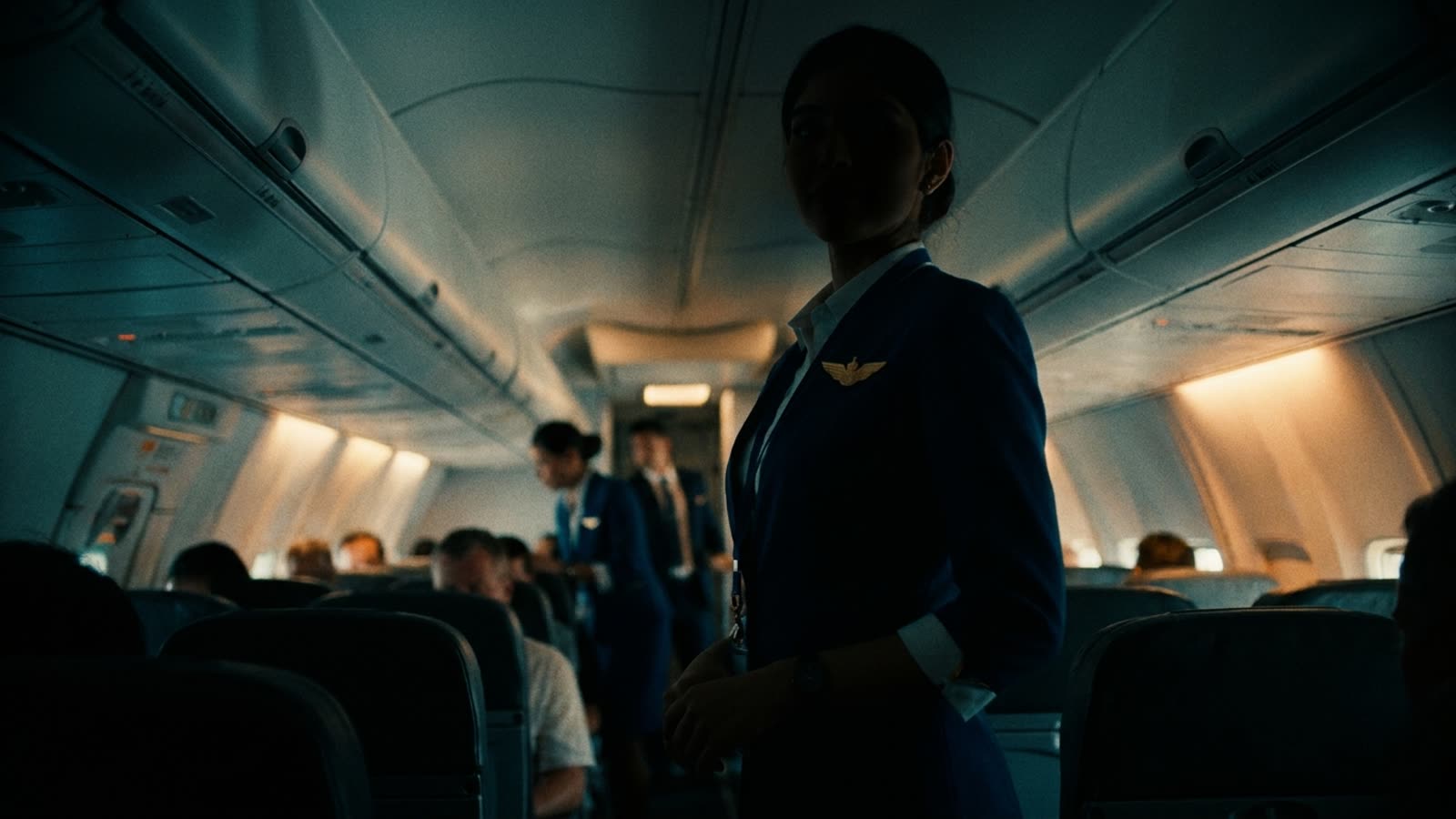
The modern flight attendant exists in a peculiar occupational limbo: too glamorous for labor solidarity, too working-class for professional prestige, and too visible to escape cultural scrutiny. She (and increasingly he) serves drinks, demonstrates oxygen masks, and occasionally subdues violent passengers—a job description that sounds like a fever dream written by someone who couldn't decide between hospitality school and combat training.
Yet the profession endures, and its evolution tracks something deeper than aviation history. It tracks our collective relationship with risk, service, and the performance of calm.
The invention of aerial hospitality
Commercial aviation's earliest cabin attendants were registered nurses, hired in 1930 by Boeing Air Transport (later United Airlines) under the theory that passengers terrified of flying might be soothed by medical professionals. The calculation was shrewd: if someone in a white uniform seemed unworried, perhaps the contraption wouldn't kill you. Within a decade, the nursing requirement vanished, replaced by strict height, weight, and appearance standards. Airlines had discovered that what passengers wanted wasn't medical competence but aesthetic reassurance.
The golden age that followed—roughly the 1950s through early 1970s—transformed flight attendants into cultural icons. Pan Am's stewardesses became symbols of cosmopolitan sophistication, their uniforms designed by couturiers, their grooming standards enforced with military precision. Airlines marketed their cabin crews like luxury goods, competing on the attractiveness and charm of their "girls." The job attracted adventurous young women seeking escape from conventional paths, though the escape came with mandatory weigh-ins and automatic termination upon marriage or pregnancy.
The labor beneath the lipstick
Deregulation in 1978 shattered the glamour economy. As airlines competed on price rather than service, flight attendants became cost centers to be minimized. The profession that once offered middle-class wages and genuine travel privileges devolved into something closer to retail work with worse hours. Unions, long suppressed during the glamour era, finally gained traction—though the profession's gendered history complicated organizing. A job defined by feminine service proved difficult to reframe as serious labor.
Today's flight attendants occupy an uncomfortable position. They are safety professionals trained in evacuation procedures, firefighting, and emergency medical response, yet their public image remains tethered to beverage service and customer complaints. The cognitive dissonance is institutional: airlines train crews for catastrophe while deploying them primarily for snack distribution. The result is a workforce perpetually oscillating between boredom and hypervigilance.
Our take
The flight attendant's true function has never really been service—it has been the management of passenger psychology in an inherently unnatural situation. Humans were not designed to sit in pressurized tubes at 500 miles per hour, surrounded by strangers, with no control over their fate. The calm, competent presence in the aisle exists to make this arrangement feel normal. That airlines have historically dressed this psychological service in the costume of hospitality says less about aviation than about how we prefer our anxieties managed: with a smile, a uniform, and the polite fiction that everything is under control.