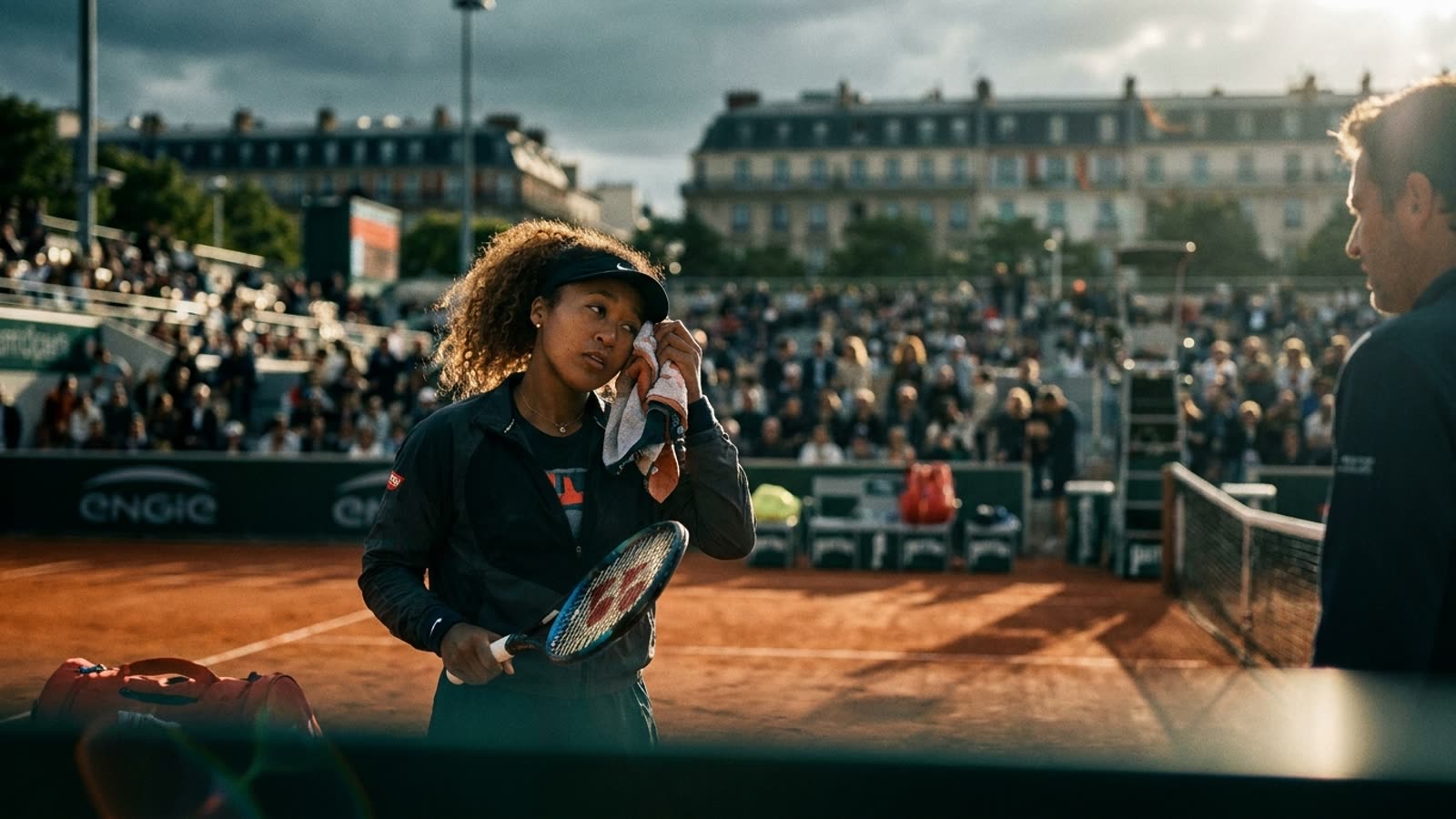
The financial calculus of professional tennis changed materially this week when Naomi Osaka dispatched her quarterfinal opponent to set up a semifinal clash with world number one Aryna Sabalenka. What looks like a compelling athletic narrative is also a live demonstration of how quickly athlete valuations can shift—and how much money was left on the table during Osaka's wilderness years.
Osaka's endorsement portfolio, which once rivaled Serena Williams's in scope and exceeded it in certain Asian markets, contracted significantly between 2023 and early 2026. The four-time Grand Slam champion's decision to step back from competition, combined with inconsistent results upon return, created what sponsorship analysts euphemistically call "brand uncertainty." Translation: companies that had paid premium rates for her face began hedging their bets.
The rehabilitation math
A deep run at Roland-Garros—particularly one featuring a marquee matchup against the dominant force in women's tennis—functions as a reset button. Sports marketing executives estimate that a semifinal appearance at a major adds roughly fifteen to twenty percent to an athlete's near-term endorsement leverage, while a final appearance can double that figure. For Osaka, whose deals with Nike, Louis Vuitton, and various Japanese corporations were renegotiated at reduced terms during her hiatus, the current tournament represents a chance to reclaim eight figures in annual earnings.
The Sabalenka matchup is particularly valuable because it offers narrative symmetry: the composed, media-savvy Osaka against the powerful, occasionally volatile Belarusian who has dominated the tour. Television networks have already adjusted their promotional spending accordingly.
Why clay matters
Osaka's career has been defined by hard-court excellence—her four majors came at the Australian and US Opens. Clay, with its slower pace and premium on grinding baseline play, has historically been her weakest surface. A breakthrough in Paris would rewrite the commercial story entirely, transforming her from a specialist into a complete champion.
The timing also matters. With the 2028 Los Angeles Olympics approaching, sponsors are already positioning for campaigns featuring American and Japanese athletes. Osaka, who represented Japan in Tokyo, holds dual-market appeal that few competitors can match. A strong 2026 season could anchor campaigns worth hundreds of millions in aggregate spend.
Our take
The sports economy runs on attention, and attention follows success. Osaka's talent was never in question; her willingness to compete consistently was. This French Open run answers that question emphatically, and the market will respond accordingly. Whether she beats Sabalenka matters less than the fact that she's on the court, performing at an elite level, with the world watching. The endorsement calls are already being made.