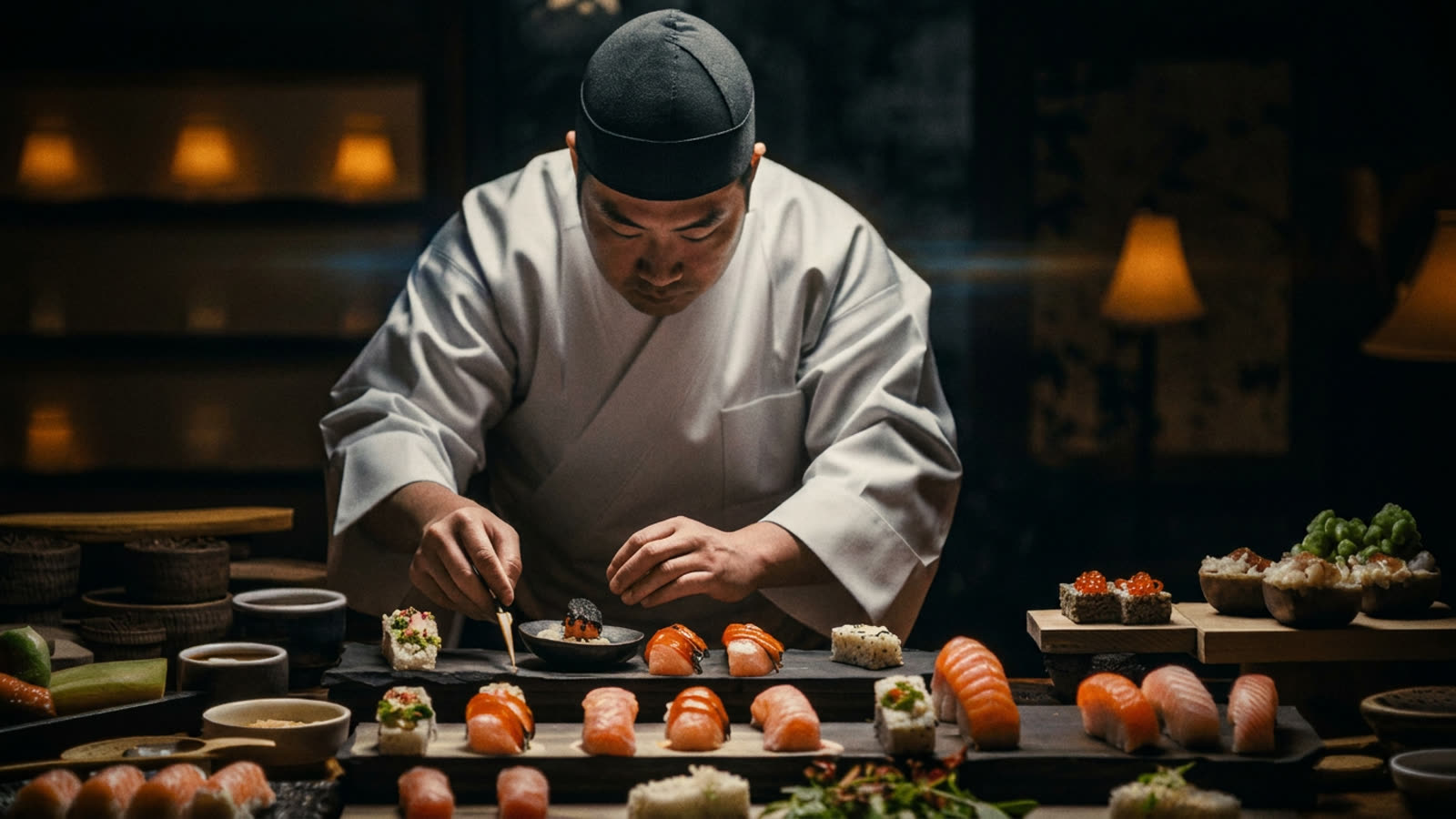
In Tokyo's Ginza district, a diner slides $600 across a hinoki cypress counter and receives no menu in return. This is omakase—literally "I leave it up to you"—and it represents one of the hospitality industry's most paradoxical business models: charging premium prices for the removal of customer choice.
The anti-algorithm meal
While Western restaurants deploy AI to predict preferences and customize every aspect of the dining experience, omakase moves in the opposite direction. The format, which emerged from sushi bars in the Edo period, has evolved into a global luxury phenomenon precisely because it offers what algorithms cannot: genuine surprise and the luxury of not choosing.
The economics are counterintuitive. Traditional restaurant wisdom holds that more choice equals higher satisfaction. Yet omakase establishments command prices that would make French Laundry blush—often $300-800 per person—while explicitly refusing substitutions or preferences. No vegetarian options. No allergies accommodated. No asking what comes next.
The trust premium
What drives someone to pay hundreds of dollars for a meal they cannot control? The answer lies in what luxury researchers call "curated surrender"—the growing desire among affluent consumers to temporarily escape decision fatigue.
The typical omakase customer makes approximately 35,000 decisions per day in their professional life. The meal becomes a two-hour vacation from choice itself. This explains why tech executives, who spend their days optimizing and A/B testing everything, have become omakase's most devoted clientele. The format's growth in Silicon Valley—where new omakase counters seem to open monthly—tracks directly with the rise of decision-making complexity in tech careers.
The performance economy
But omakase is more than expensive sushi theater. It represents a fundamental shift in how luxury hospitality creates value. The chef becomes artist, therapist, and temporary decision-maker. The meal transforms from transaction to relationship.
This intimacy comes at a scale cost. Most omakase restaurants seat 8-12 diners maximum. The math is brutal: to match the revenue of a 100-seat traditional restaurant, each diner must generate 8-10 times the average check. Yet the model works because it sells something increasingly rare: undivided attention from a master craftsperson.
The preparation ritual matters as much as the food. Watching a chef age fish for the optimal number of days, torch nori to exact specification, or explain why this particular sea urchin was harvested under a full moon—these moments justify prices that would seem absurd on a traditional menu.
Our take
Omakase's success reveals an uncomfortable truth about modern dining: we've turned eating into another optimization problem. The rise of dietary restrictions, Instagram food culture, and infinite customization has made every meal a series of micro-negotiations. Omakase offers refuge from this tyranny of choice, but only for those who can afford it. As algorithms get better at predicting what we want, the luxury of not knowing what comes next becomes ever more expensive. The $500 meal with no menu may be peak late-capitalism, but it also represents something deeply human: the desire to trust, to be surprised, and to briefly stop being the CEO of our own dinner plate.