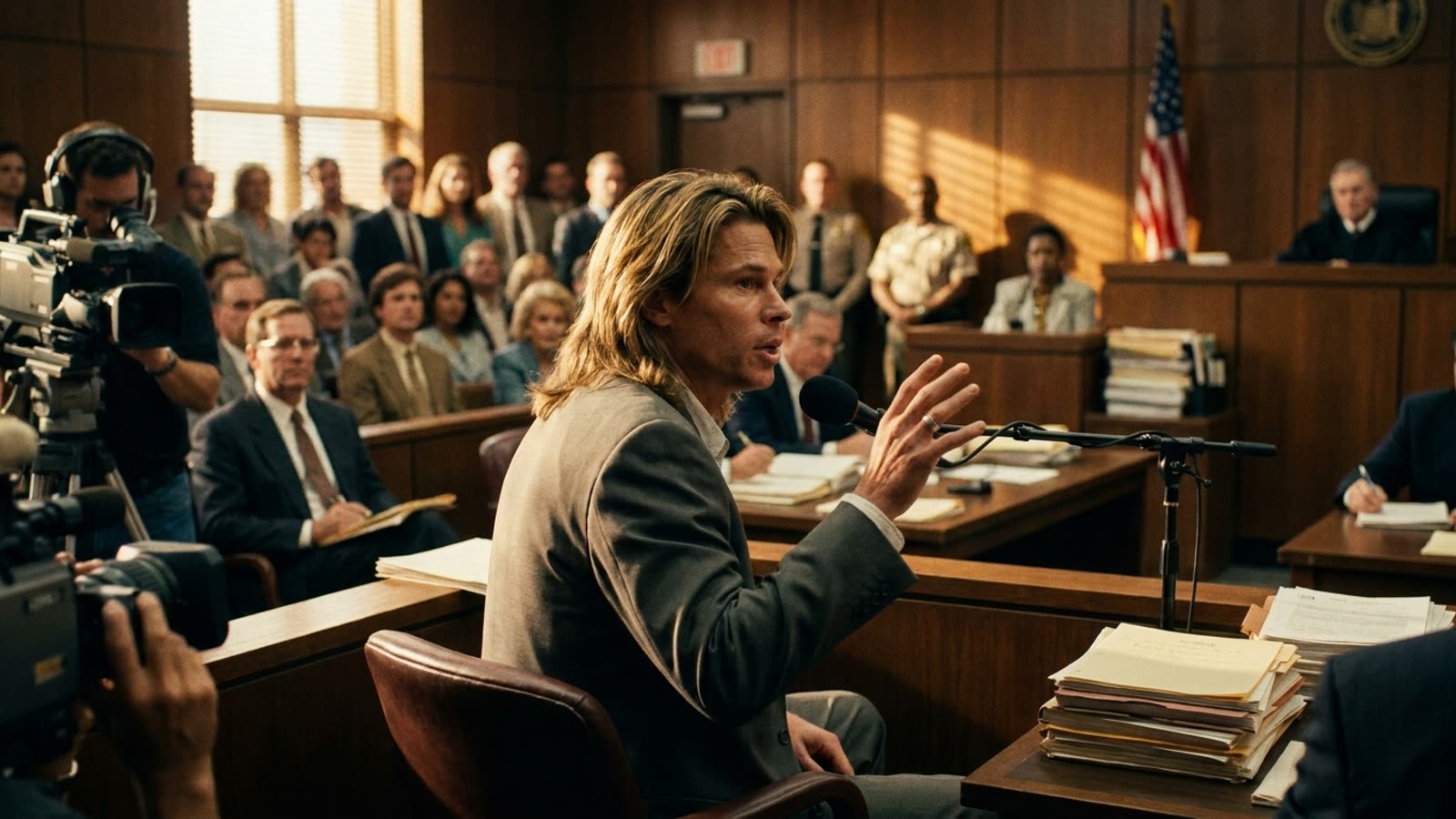
The man who slept in O.J. Simpson's guest house on the night of June 12, 1994, has outlasted nearly every principal from the trial that defined tabloid America. Simpson himself died last year. Marcia Clark writes thrillers. Robert Kardashian's children became a dynasty. But Brian "Kato" Kaelin—the surfer-haired aspiring actor who testified about thumps on his bedroom wall—endures in a stranger register: not quite celebrity, not quite civilian, perpetually available for comment whenever the culture cycles back to Brentwood.
The eternal witness
Kaelin's recent resurfacing follows the familiar pattern. With Simpson's death in April 2024 and the 30th anniversary of the murders now passed, documentary producers and podcast bookers have once again come calling. He obliges. He always obliges. In interviews, Kaelin has refined a persona that splits the difference between earnest reflection and self-aware camp—acknowledging the absurdity of his fame while never quite declining the microphone.
What makes Kaelin singular is not what he saw (very little) but what he represents: the accidental witness elevated by media saturation into a permanent character. He was 35 when he took the stand; he is now in his mid-sixties, still recognizable, still trading on a few hours of testimony delivered when Bill Clinton was president.
The economics of proximity
Kaelin never became a movie star, but he never needed to. Cameos, reality-show appearances, autograph conventions, and the occasional true-crime commentary have sustained a career that exists entirely in the slipstream of someone else's notoriety. It is a peculiarly American arrangement: fame as a byproduct, monetized in perpetuity.
The Simpson case created several such figures—houseguest, limo driver, forensic expert—but Kaelin alone has embraced the role with something approaching enthusiasm. He has appeared on "Celebrity Boot Camp," sold memorabilia, and maintained a social-media presence that leans into the joke without ever puncturing it. The line between self-deprecation and self-promotion is, by now, invisible.
Our take
Kato Kaelin is less a cautionary tale than a proof of concept. In an attention economy, the commodity is not talent or achievement but recognizability, and recognizability can be inherited from proximity to tragedy. Kaelin did nothing wrong—he answered questions, told the truth as he understood it, and went home. That he has spent thirty years converting that accident into a livelihood says less about him than about the market that keeps buying. The trial of the century produced a verdict, a myth, and at least one career that refuses to end. Only one of those outcomes was intentional.