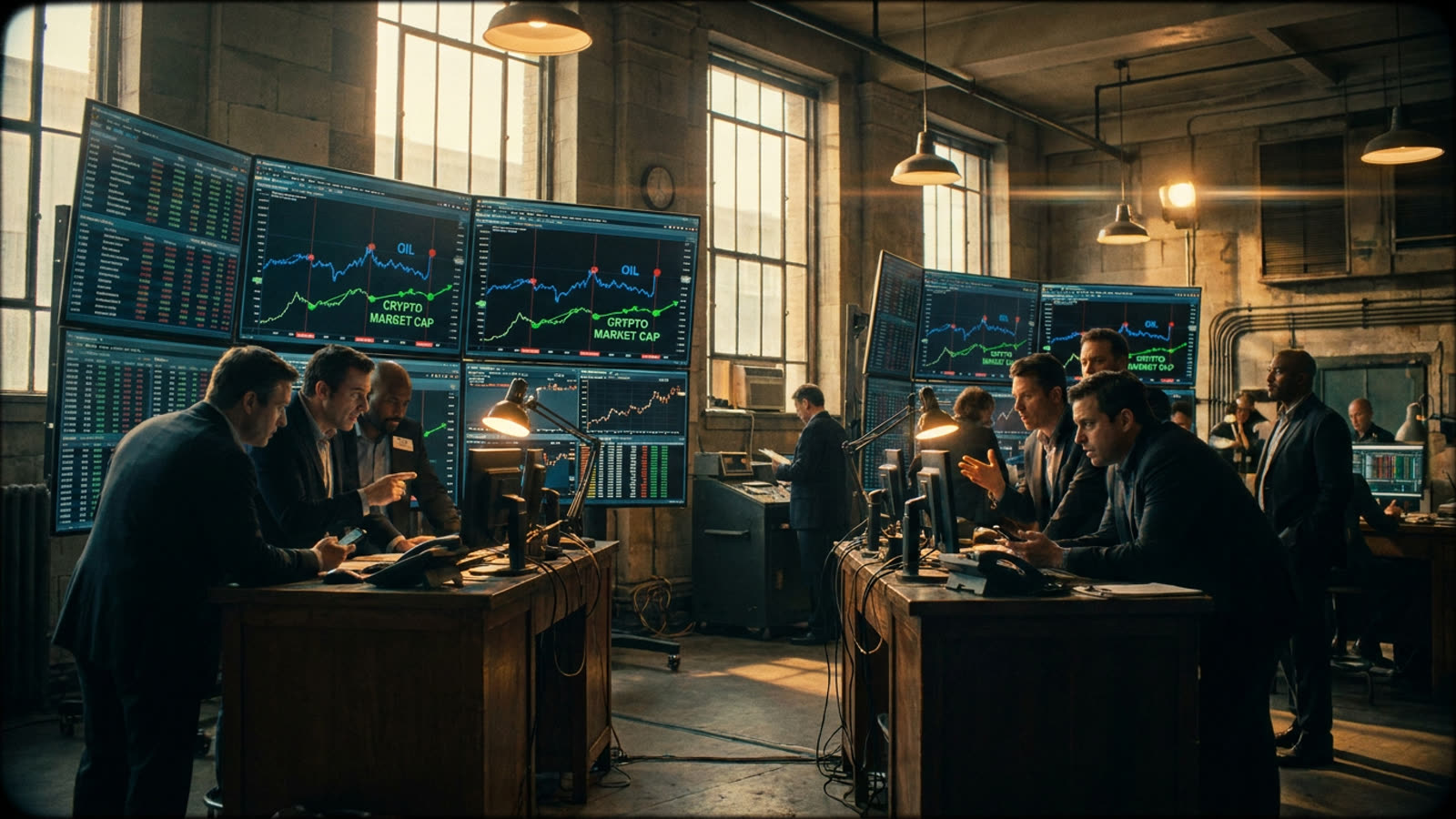
The playbook was supposed to be simple: oil spikes on geopolitical risk, equities wobble briefly, then decouple as traders distinguish between energy winners and losers. That playbook is now in the shredder.
Wednesday marked the third straight session in which rising crude prices—Brent touched $94 again—coincided with broad declines across U.S. equities, Bitcoin, Ethereum, and Solana. The S&P 500 shed another 0.8%, the Nasdaq fell harder, and crypto majors dropped between 3% and 5%. The correlation coefficient between oil and risk assets has flipped from its historical negative relationship to something approaching positive lockstep, but in the wrong direction: when oil rises, everything else falls.
Why the old hedges aren't working
Traditionally, energy stocks and commodity plays served as portfolio ballast during oil shocks. But the current environment—marked by the Iran conflict's disruption of Gulf shipping lanes and OPEC+'s refusal to open the taps—has created a different dynamic. Higher energy costs are now feeding directly into inflation expectations, which in turn are forcing the Federal Reserve to maintain its hawkish posture. The result is a regime where oil gains translate almost mechanically into tighter financial conditions, crushing both growth stocks and speculative assets like crypto.
The Fed's own survey data, released last week, showed inflation expectations drifting higher for the first time in months. That drift has real consequences: it removes the rate-cut catalyst that equity bulls and crypto maximalists had been banking on for the second half of 2026.
The liquidity squeeze beneath the surface
What makes this moment particularly treacherous is the liquidity backdrop. Bitcoin ETFs have now seen four consecutive weeks of outflows, with Citi analysts noting that retail demand has essentially evaporated. Meanwhile, the Saylor-inspired corporate treasury trade—companies loading up on Bitcoin as a reserve asset—has shown cracks, with Strategy's recent sale triggering a wave of copycat liquidations. When the marginal buyer disappears, correlations tighten because the same macro flows dominate every asset class.
Equities face a parallel problem. The IPO pipeline, once expected to reopen aggressively this summer, remains largely frozen. Companies that had hoped to tap public markets are instead extending private rounds or delaying altogether, further concentrating capital in a shrinking pool of liquid names.
Our take
This is not a buying opportunity disguised as a correction. The correlation regime we're witnessing reflects a genuine repricing of the inflation-and-rates outlook, driven by an energy shock that shows no signs of resolving. Until oil stabilizes or the Fed blinks, the phrase "uncorrelated asset" belongs in the same drawer as "transitory inflation." Investors looking for shelter will need to think smaller and more defensive—or simply wait.