The global oil market received a pointed reminder this week that the commodity's price is never more than one missile away from chaos.
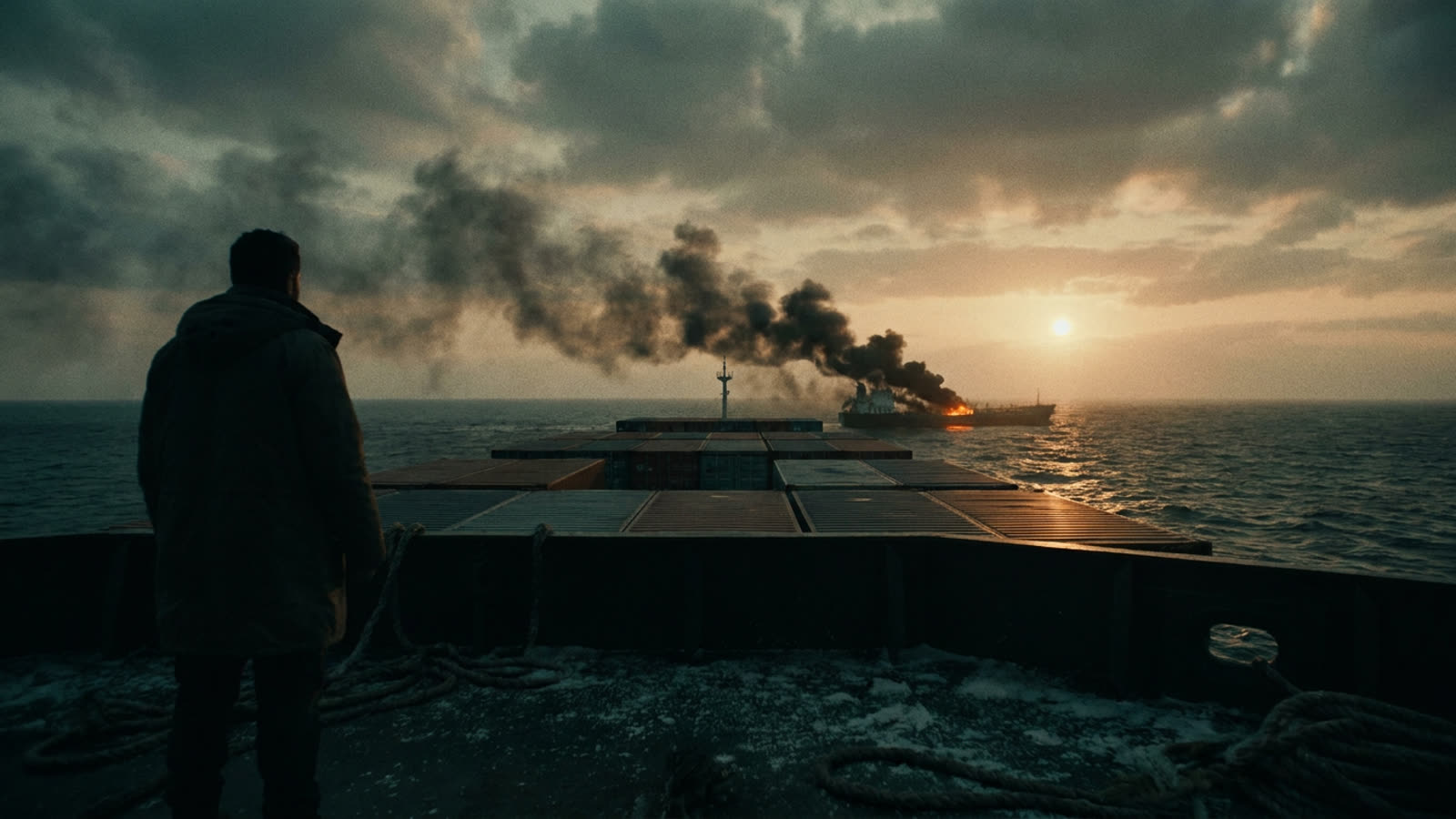
A cargo ship was struck by a projectile near the coast of Oman, sending Brent crude climbing roughly 2% in a single session. No major spill has been reported, and the vessel appears to have avoided catastrophic damage. But the incident occurred in waters adjacent to the Strait of Hormuz—the narrow passage through which approximately one-fifth of the world's daily oil consumption flows—and traders reacted accordingly.
The chokepoint arithmetic
The Strait of Hormuz has long been the energy market's most anxious geography. At its narrowest, the shipping lane measures just 21 miles across, and tankers carrying crude from Saudi Arabia, Iraq, Kuwait, and the UAE must pass through it to reach global markets. Any disruption—whether from military action, piracy, or accident—threatens to remove millions of barrels per day from circulation almost instantaneously.
This latest incident arrives amid elevated regional tensions. Houthi militants have spent months targeting commercial vessels in the Red Sea, forcing many shippers to reroute around the Cape of Good Hope at considerable expense. While the Oman attack has not been formally attributed, it fits a pattern of low-intensity threats that keep risk premiums embedded in crude pricing.
What the price move reveals
A 2% single-day swing may seem modest, but it reflects something important: markets had grown complacent. Brent had been trading in a relatively narrow band as demand forecasts softened and OPEC+ managed supply with unusual discipline. The attack punctured that calm, reminding traders that geopolitical risk never truly disappears—it merely goes dormant.
For consumers, the immediate impact is limited. A $1.50 move in crude does not translate overnight into higher petrol prices. But sustained instability in Gulf shipping lanes would eventually work its way through refining margins and into retail costs, particularly in import-dependent economies across Asia and Europe.
Our take
The world has spent decades talking about energy independence and diversification, yet the Strait of Hormuz remains the single most consequential bottleneck in global commerce. One projectile, one damaged hull, and Brent jumps 2%. The math has not changed since the tanker wars of the 1980s. Until it does, every barrel of oil carries a geopolitical surcharge that no futures contract can fully hedge.