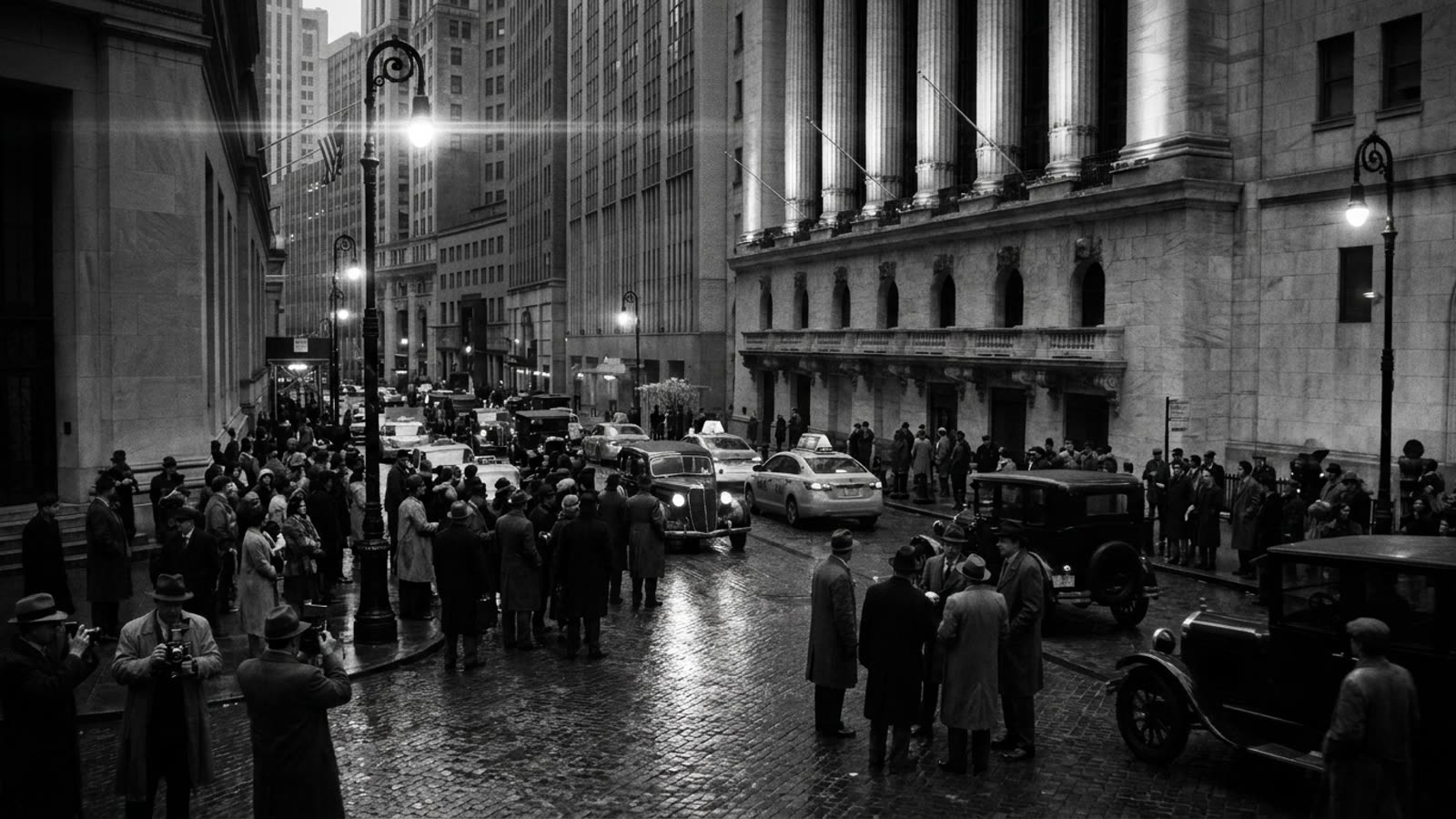
Every generation of investors believes it has transcended the errors of its predecessors. Sophisticated risk models, algorithmic trading, and central banks armed with unlimited balance sheets have supposedly rendered the catastrophic market failures of the past obsolete. The Great Depression, in this telling, is a sepia-toned relic — tragic, yes, but irrelevant to modern finance.
This is precisely the kind of thinking that preceded the crash of 1929.
The anatomy of overconfidence
The 1920s bull market was not built on delusion alone. American industry was genuinely productive. Electrification, automobiles, and consumer credit were transforming daily life. Corporate profits rose. The stock market, people reasoned, was simply reflecting these fundamentals. What they failed to notice was how much of the rally depended on borrowed money.
By the late 1920s, margin debt had ballooned to extraordinary levels. Investors could purchase stocks by putting down as little as ten percent of the price, borrowing the rest from brokers. When prices rose, this leverage amplified gains spectacularly. When prices fell, it amplified losses — and triggered forced selling that accelerated the decline. The crash, when it came in October 1929, was not a single event but a cascading failure. Margin calls begat selling, selling begat more margin calls, and confidence evaporated in weeks.
The policy errors that deepened the wound
The crash itself, devastating as it was, did not cause the Depression. Policy did. The Federal Reserve, worried about speculation and gold outflows, tightened monetary conditions when it should have eased them. Banks failed by the thousands, wiping out savings and contracting credit precisely when the economy needed liquidity. The Smoot-Hawley Tariff of 1930 provoked retaliation from trading partners and collapsed international commerce. Each decision made sense in isolation to the officials who made it. Together, they transformed a severe recession into a decade-long catastrophe that reshaped global politics.
The lesson is not that crashes are inevitable — though they are — but that the response matters enormously. A financial panic becomes a depression when policymakers prioritize orthodoxy over pragmatism, when they mistake symptoms for causes, and when they allow fear to dictate austerity at the worst possible moment.
The echoes that never quite fade
Subsequent crises have rhymed uncomfortably with 1929. The dot-com bubble featured the same conviction that a technological revolution justified any valuation. The 2008 financial crisis involved leverage hidden in complex instruments rather than simple margin accounts, but the mechanism — borrowed money amplifying losses until the system seized — was identical. In each case, participants insisted that this time was different, that new tools and new knowledge had eliminated the old risks.
The Depression also established patterns that persist in subtler ways. The tension between letting markets clear and intervening to prevent contagion remains unresolved. The political consequences of prolonged economic suffering — the rise of extremism, the erosion of institutional trust — are not historical curiosities but recurring features of severe downturns.
Our take
The Great Depression is not ancient history; it is a stress test that modern economies have never fully passed. We have better tools now — deposit insurance, flexible exchange rates, central banks willing to act as lenders of last resort — but the underlying human tendencies remain unchanged. Leverage still accumulates in good times. Confidence still curdles into panic. And policymakers still face the temptation to fight the last war rather than the current one. The crash of 1929 does not predict the next crisis, but it does illuminate the conditions that make crises worse. Ignoring it is not sophistication. It is amnesia with a price tag.