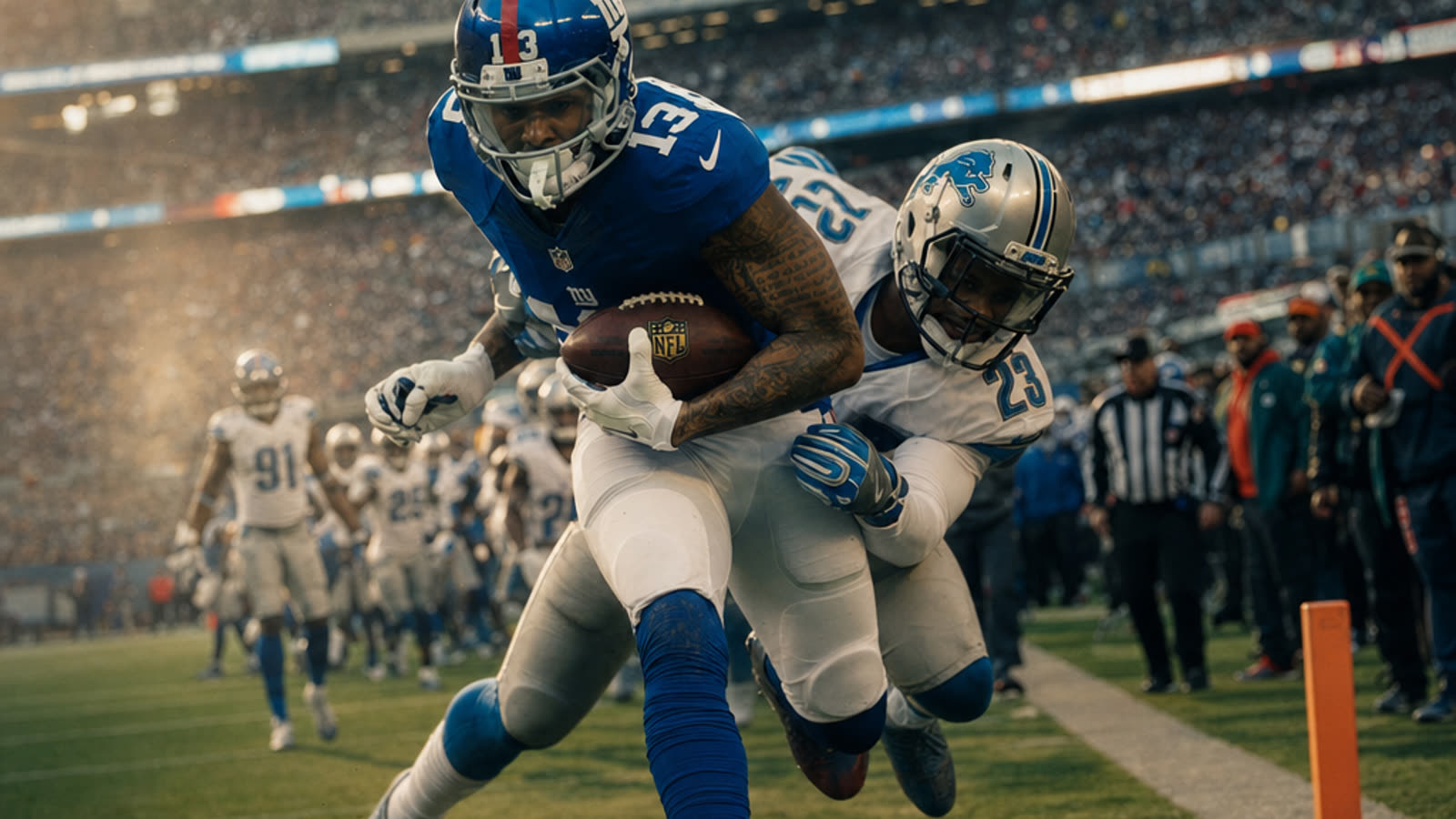
A decade ago, Odell Beckham Jr. made perhaps the most famous catch in NFL history, a one-handed snag against the Dallas Cowboys that transcended sport and turned him into a cultural phenomenon. This week, he signed with the Minnesota Vikings' practice squad after being released by the New York Giants, the very franchise where he became a star. The symmetry is almost too neat, and entirely depressing.
Beckham's journey from generational talent to journeyman has been gradual enough that each step down feels explicable in isolation. The trade to Cleveland. The torn ACL in Super Bowl LVI, suffered while helping the Rams win a championship. The free agency limbo. The brief, forgettable stint with the Ravens. The return to New York that lasted all of four games. Now Minnesota, where he will practice with the team but may never see the field on Sundays.
The economics of diminished returns
Practice squad salaries in 2026 run approximately $17,500 per week for veterans, a figure that sounds comfortable until you remember Beckham once signed a five-year, $90 million extension with the Giants. The financial calculus has inverted entirely. Teams are no longer paying for what Beckham might do; they are hedging against injury to their actual receiving corps with a recognizable name who knows NFL playbooks and will not embarrass anyone in meetings.
The Vikings, sitting at 4-1 and harboring genuine playoff aspirations, have Justin Jefferson, Jordan Addison, and a functional offense. They do not need Beckham. But having him available costs almost nothing and provides insurance against catastrophe. It is a perfectly rational football decision that happens to involve a player whose talent once seemed limitless.
What remains of fame
Beckham is 33, which is not ancient for a receiver but is old enough that the ACL tear he suffered four years ago has likely taken whatever burst remained. The NFL is a young man's league that chews through bodies with industrial efficiency, and receivers who rely on separation rather than size tend to age poorly. Beckham was never a possession receiver; he was a creator, a highlight waiting to happen. Without the athleticism that made those highlights possible, he is simply a veteran with good hands and institutional knowledge.
The Giants' decision to release him after four games tells you everything. This is an organization that drafted him, traded him, watched him win a Super Bowl elsewhere, and then brought him back for a sentimental reunion. They saw him in practice every day for a month and concluded he was not worth a roster spot. Sentiment has limits.
Our take
There is no shame in Beckham's trajectory, only the ordinary cruelty of professional athletics. Bodies break, speed fades, and the league moves on to the next spectacular young receiver making impossible catches. The practice squad is not a graveyard; it is a waiting room, and Beckham has earned the right to sit there as long as teams will have him. But let us not pretend this is anything other than what it is: the long goodbye of a player who was once impossible to ignore and is now easy to overlook.