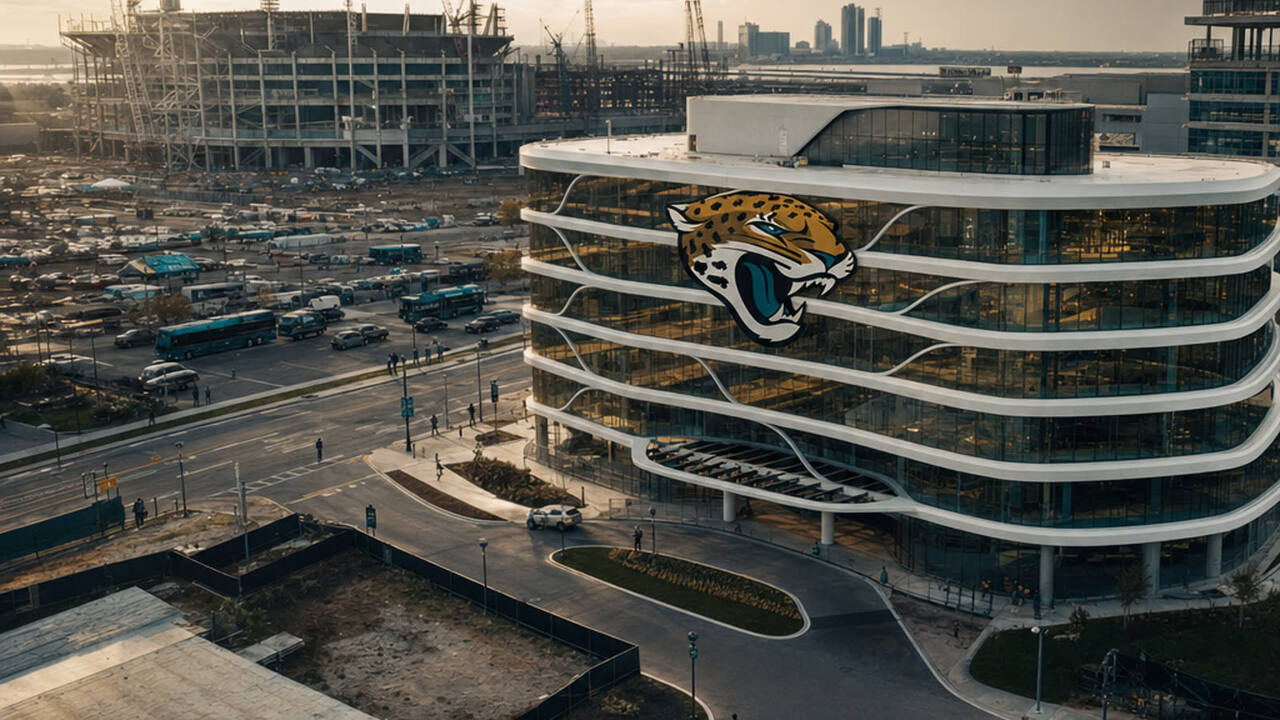
The Jacksonville Jaguars have always occupied an awkward corner of the NFL's imagination—a small-market franchise in a league that worships television ratings and stadium atmosphere, perpetually rumored to be on the verge of relocation. Now the franchise has made that liminal status official, announcing that 26 of their next 30 regular-season games will be played away from TIAA Bank Field.
This is not a scheduling quirk. It is a deliberate experiment in franchise geography, one that transforms the Jaguars into something the NFL has never quite seen: a team that exists primarily as a visitor.
The London question finally has an answer
For years, the Jaguars have served as the NFL's primary ambassador to London, playing annual games at Wembley and Tottenham Hotspur Stadium. Owner Shad Khan has repeatedly denied relocation rumors while simultaneously investing in London infrastructure and cultivating a British fanbase. The new schedule reveals the strategy was never about denial—it was about normalization.
By playing the overwhelming majority of their games on the road, the Jaguars are conditioning their organization, their players, and their remaining Jacksonville fans to accept that home is wherever the team happens to land. The psychological shift matters more than the logistical one. A franchise that plays everywhere belongs nowhere, which means it can eventually belong anywhere.
What this means for the players
NFL rosters are already transient by design, but the Jaguars are now asking players to embrace a lifestyle that resembles a traveling circus more than a professional sports team. The competitive disadvantages are obvious: no home-field advantage to speak of, constant travel fatigue, families left behind for weeks at a time. The Jaguars will need to compensate with either money or a particular type of player—mercenaries comfortable with rootlessness, or veterans chasing rings who view Jacksonville as a waystation rather than a destination.
The league's collective bargaining agreement was not designed for this arrangement, and the NFL Players Association will be watching closely for grievances related to travel burdens and quality-of-life provisions.
Our take
The NFL has spent decades pretending that franchise relocation is a last resort rather than a business strategy. The Jaguars are calling that bluff. By making Jacksonville a home in name only, the franchise is demonstrating that modern professional sports teams are brands first and civic institutions second. The question is not whether Jacksonville loses the Jaguars—it is whether anyone will notice when they are finally gone.