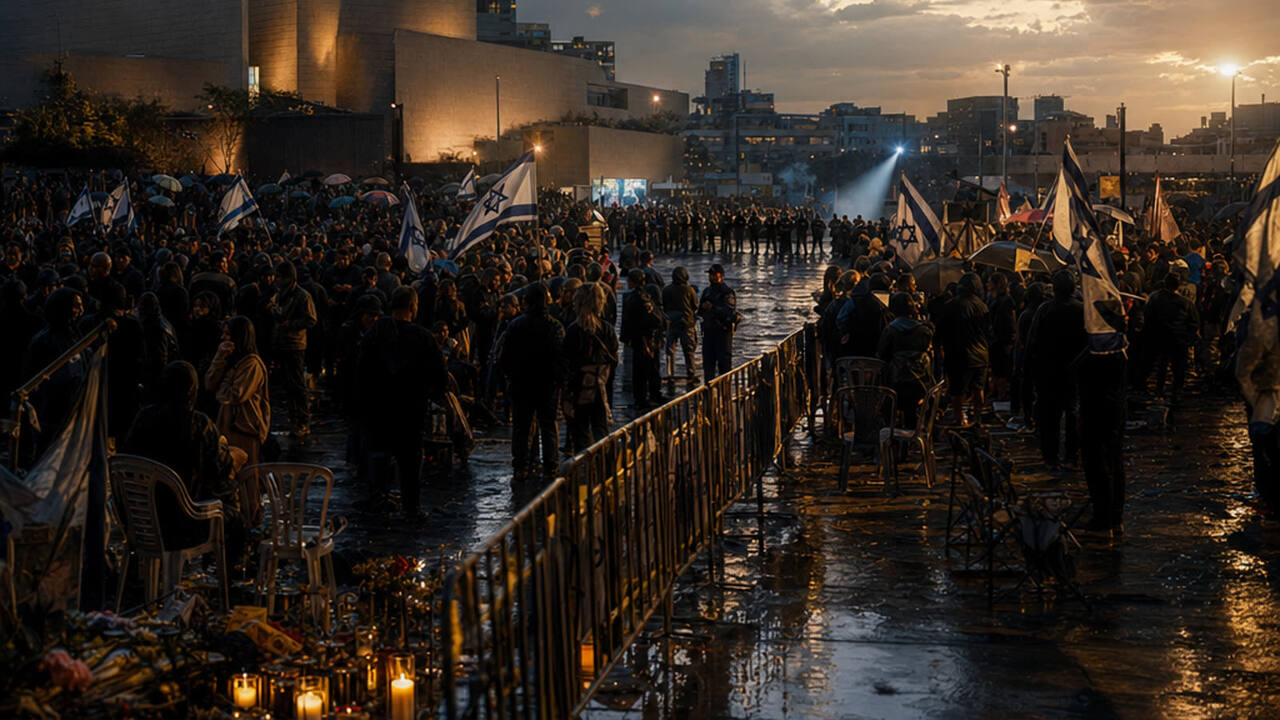
Three years after Hamas militants killed approximately 1,200 people and took over 250 hostages in the deadliest attack on Israeli soil, the nation finds itself unable to grieve in unison. Memorial ceremonies across the country on Monday were shadowed by protests, political recriminations, and the unresolved fate of hostages still held in Gaza — a wound that refuses to close because the war that followed remains ongoing.
The October 7, 2023 attack reshaped Israeli politics, society, and its relationship with the world in ways that continue to unfold. What was supposed to be a day of national unity has instead become a mirror reflecting how fractured Israel has become.
A nation divided at its moment of mourning
In Tel Aviv's Hostages Square, families of those still held in Gaza gathered not merely to remember but to accuse. Their message to Prime Minister Benjamin Netanyahu's government has grown sharper with each passing month: bring them home, whatever the cost. Counter-demonstrators, meanwhile, argued that any deal with Hamas rewards terrorism and endangers future generations.
The split runs through Israeli society like a fault line. Polls consistently show majorities supporting a hostage deal, yet Netanyahu's coalition partners have threatened to collapse the government if he agrees to terms Hamas would accept. The result is paralysis dressed as resolve.
The Gaza campaign's long shadow
The military response to October 7 has itself become a source of division. What began as a mission to destroy Hamas and recover hostages has stretched into a grinding campaign that has killed tens of thousands of Palestinians, displaced nearly the entire population of Gaza, and drawn international condemnation including from traditional allies.
Israel's supporters argue the campaign is existentially necessary; critics contend it has achieved neither of its stated objectives while inflicting catastrophic humanitarian costs. Three years on, Hamas remains functional enough to hold hostages, and the question of what comes after — who governs Gaza, who rebuilds it, who secures it — remains unanswered.
Our take
Anniversaries are supposed to offer closure, or at least perspective. October 7's third anniversary offers neither. Israel is caught between the trauma of the attack and the moral weight of its response, between the imperative to recover its citizens and the political calculations that have kept them captive. The protesters and the mourners, the hawks and the doves, are all grappling with the same impossible question: how does a nation heal from a wound it keeps reopening? Three years is long enough to know that military force alone won't answer it.