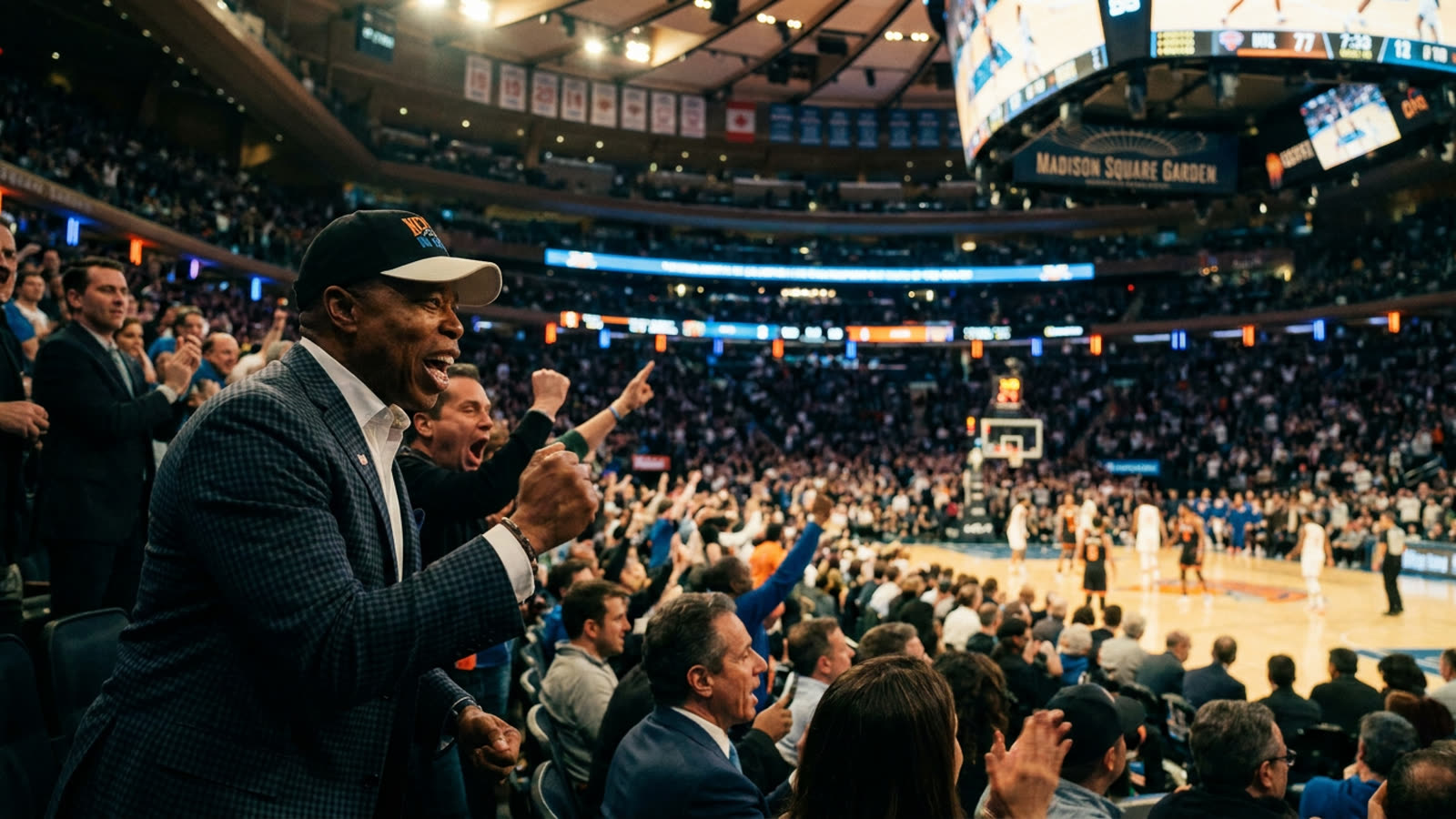
There is no surer sign that a sports franchise has transcended athletics than when local government starts adjusting municipal code around its schedule. On Sunday, New York City Mayor Eric Adams signed an executive order temporarily repealing residential noise ordinances and outdoor gathering restrictions during Knicks playoff games—effectively telling eight million people that sleep is optional until a championship is decided.
The order, which Adams announced with characteristic showmanship from the steps of City Hall while wearing a vintage Patrick Ewing jersey, suspends enforcement of the city's 10 p.m. noise curfew on nights when the Knicks play in the Finals. Bars may remain open with outdoor speakers. Block parties require no permit. The NYPD has been instructed to exercise "maximum discretion" regarding noise complaints filed between tip-off and two hours after the final buzzer.
The politics of playoff fever
Adams, whose approval ratings have bobbed between mediocre and dire for most of his tenure, has discovered what mayors from Boston to Philadelphia learned long ago: nothing rehabilitates a struggling administration quite like a championship run. The Knicks haven't won a title since 1973, and the city's collective nervous system has been vibrating at an unsustainable frequency since they dispatched the Celtics in the Eastern Conference Finals.
The mayor's office framed the order as an acknowledgment of "civic reality"—a phrase that does a lot of heavy lifting. The reality, presumably, is that noise complaints were going unanswered anyway, that officers were declining to break up jubilant crowds, and that formalizing the chaos was preferable to pretending anyone could enforce normalcy.
Historical precedent, or the lack thereof
New York is not the first city to bend its rules for basketball. Philadelphia loosened open-container enforcement during the Sixers' 2001 Finals run. Cleveland declared a municipal holiday after the Cavaliers' 2016 championship. But a blanket suspension of noise ordinances—effectively deputizing every sports bar and rooftop party as a legitimate civic gathering—ventures into uncharted territory.
The legal basis is shakier than Adams's office might prefer. Executive orders typically address emergencies or administrative procedures, not the selective non-enforcement of standing law. Civil liberties attorneys have already noted that residents who genuinely need quiet—shift workers, the elderly, parents of infants—have no recourse until the series concludes. The city's response has been to suggest earplugs.
Our take
This is governance as vibes, and honestly, it might work. Adams has spent years trying to convince New Yorkers that he understands their city's id; suspending bedtime for basketball is the most fluent thing he's said in that language. The Knicks are three wins from ending a 53-year drought, and if they pull it off, no one will remember the noise complaints. If they lose, Adams will have given his constituents permission to grieve loudly. Either way, he's correctly identified that New York in June 2026 is not a city interested in rules. The question is whether that's leadership or surrender.