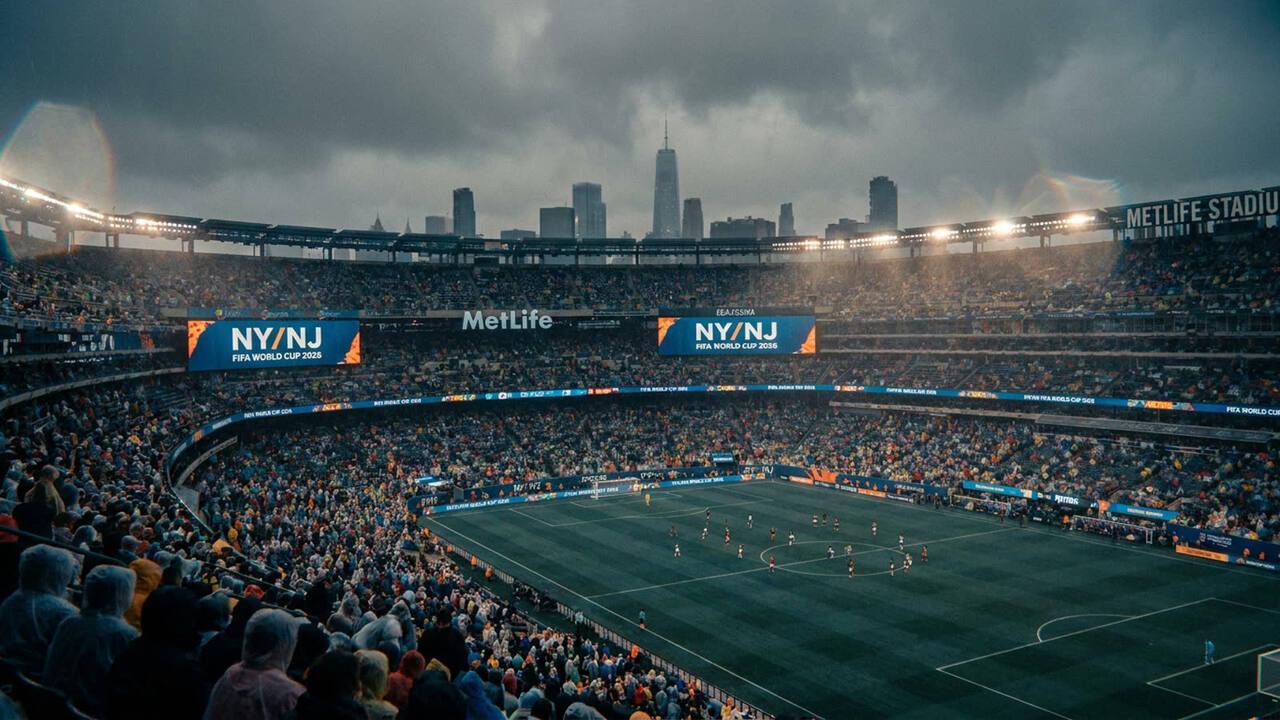
The 2026 World Cup final will be played in East Rutherford, New Jersey, inside a stadium that sits eleven miles from Times Square. Yet when the world tunes in, they will see banners reading 'New York/New Jersey,' a bureaucratic compromise that satisfies no one and erases the host state from the most-watched sporting event on Earth.
This is not a new grievance for New Jersey. The Statue of Liberty stands on Liberty Island, which belongs to New Jersey by geography but to New York by popular imagination. The Giants and Jets play their home games in the Meadowlands, then call themselves New York franchises. Now FIFA has formalized the arrangement: the state that built the infrastructure gets the traffic, and the neighbor gets the credit.
The branding calculus
FIFA's decision to use 'New York/New Jersey' as the host city designation reflects a familiar tension between marketing logic and geographic truth. New York is a global brand; New Jersey is a punchline. Tournament organizers calculated that international visitors searching for 'World Cup New York' would find their way to MetLife Stadium, while 'World Cup New Jersey' might send them to Atlantic City by mistake.
The compromise satisfies neither camp. New Jersey officials wanted sole billing for a stadium that sits unambiguously within their borders. New York boosters resent sharing credit for an event they are not technically hosting. The slash in 'New York/New Jersey' is doing a lot of work — it acknowledges a truth while refusing to commit to it.
A pattern of erasure
New Jersey's identity crisis predates the World Cup by centuries. The state functions as New York's bedroom and Philadelphia's backyard, a corridor between places that register more vividly in the American imagination. Its residents commute to other states' skylines, root for other states' teams, and explain their origins by naming the nearest recognizable city.
The World Cup final offered a rare chance to reverse the dynamic. For ninety minutes plus stoppage time, the eyes of the planet would focus on East Rutherford. Instead, the moment will be credited to a geographic fiction — a hyphenated entity that exists only in FIFA press releases and airport signage.
Our take
New Jersey deserves better, but it will not get it. The state's curse is proximity to a city so famous that it warps the space around it. MetLife Stadium will host the biggest match in football history, and the broadcast will say 'New York.' This is not a snub so much as a confirmation: in the global imagination, New Jersey remains the place you drive through to get somewhere else. The World Cup will not change that. It will simply put the erasure on a very large screen.