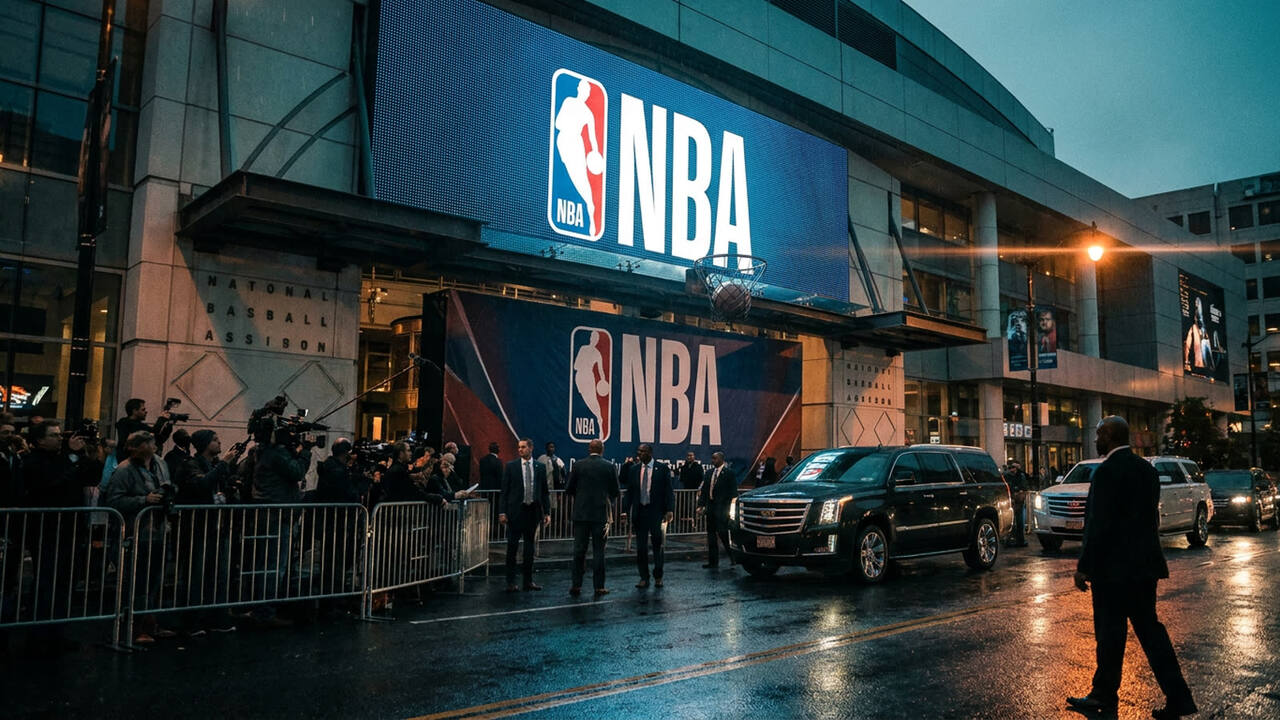
The confetti from the championship parade has scarcely been swept away, and yet the NBA's real season—the one conducted in hotel suites, over encrypted messages, and through intermediaries who insist they're "not speaking on behalf of" anyone—is already in full swing. The 2026 draft arrives Thursday, and the intelligence emerging from front offices suggests this week will be unusually chaotic, even by the league's standards of performative secrecy.
What we're hearing: teams with lottery picks are fielding calls from contenders desperate to add young talent without surrendering future flexibility. The calculus has shifted. After several years of teams hoarding draft capital like survivalists stockpiling canned goods, there's a growing sense that the right veteran, acquired at the right moment, matters more than the theoretical upside of a teenager who might develop in three years—or might not.
The pick-swap economy
The Aaron Wiggins deal that sent the versatile wing from Oklahoma City to Atlanta for draft considerations was instructive, not for its magnitude but for its timing. The Thunder, fresh off another deep playoff run, are signaling they're willing to convert depth into future assets. Atlanta, meanwhile, continues its patient rebuild under a front office that has learned—perhaps too well—the value of optionality. The trade itself was minor; the message was not. Expect more of these "housekeeping" moves before Thursday's opening selection.
Several teams are reportedly exploring scenarios where they move up in the draft by packaging multiple future firsts, a strategy that fell out of fashion after a few spectacular failures but is now being reconsidered. The logic: this draft class, while not historically deep, contains several players whose floor is higher than their ceiling is spectacular. For a team that needs contributors rather than projects, that's attractive.
The veteran market stirs
Parallel to the draft maneuvering, conversations about established players are accelerating. Teams that missed the playoffs are weighing whether to stay the course or blow it up. Teams that lost in the first round are asking whether incremental improvement is enough. And teams that came close—tantalizingly, agonizingly close—are wondering what one more piece might cost.
The names circulating are the usual suspects: players entering the final years of contracts, veterans on rebuilding rosters who deserve better, young talents whose development has stalled in crowded rotations. What's different this year is the urgency. The league's competitive middle class has expanded, and the gap between "playoff team" and "championship contender" feels narrower than it has in years. That compression is making general managers aggressive.
Our take
The NBA offseason has become its own spectator sport, a parallel entertainment product where the drama of potential trades generates as much engagement as actual basketball. This is by design—the league benefits from year-round relevance—but it also reflects something genuine: in a salary-cap sport with max contracts and restricted free agency, the margins are thin, and front offices know that one clever move can alter a franchise's trajectory for a decade. Thursday's draft will produce highlights, but the real action is happening in the conversations we're not supposed to know about. The machinery never stops.