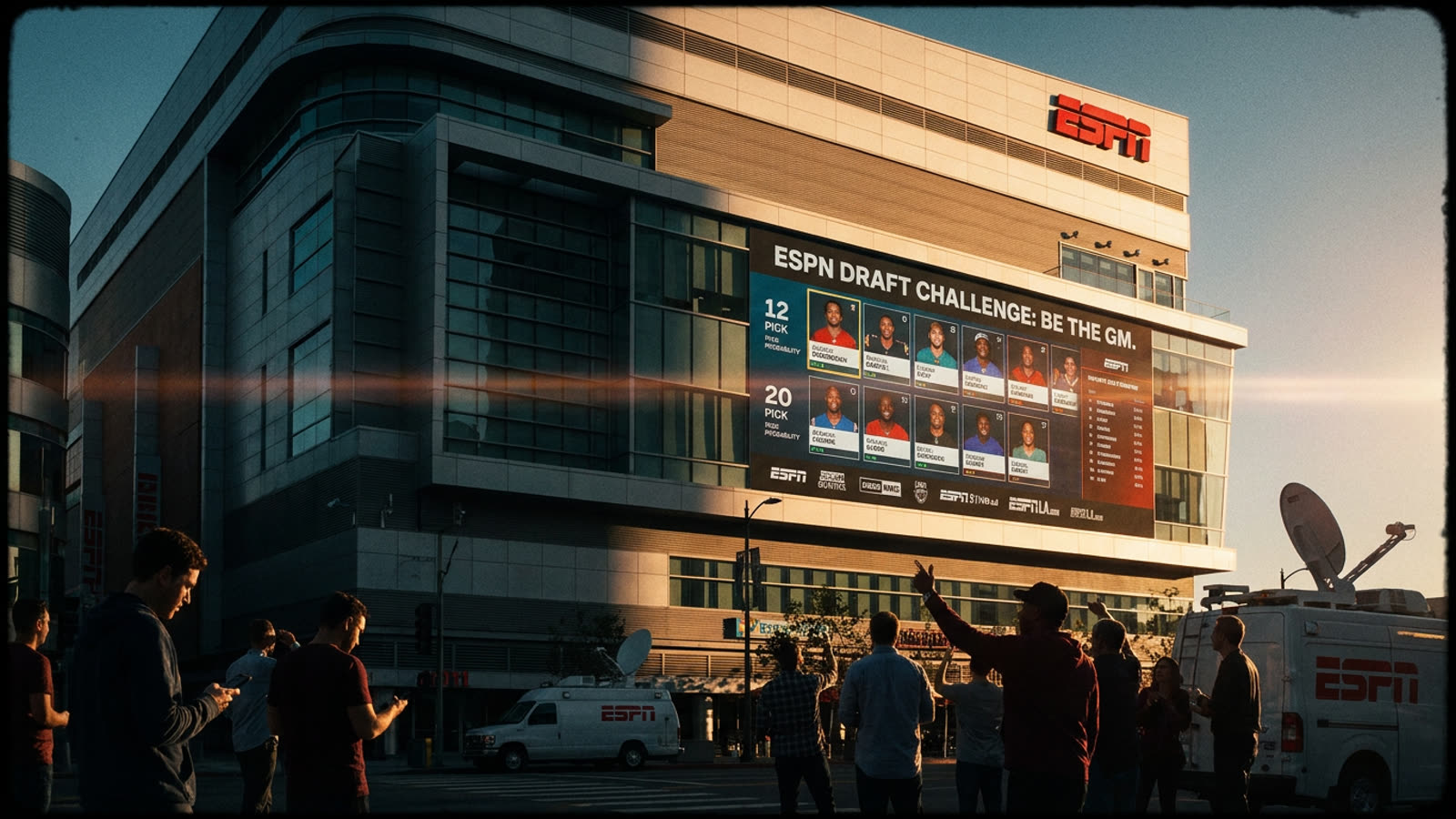
The mock draft simulator has become the sports media equivalent of a casino floor—designed to keep you clicking, theorizing, and returning for one more spin of the algorithmic wheel. ESPN's latest NBA draft simulator, which allows users to make picks as a general manager across all 58 selections, represents the maturation of a format that has quietly reshaped how fans consume the pre-draft period.
What began as simple projection lists has evolved into interactive experiences that generate remarkable engagement metrics. Users don't just read about who might go where; they construct elaborate scenarios, share their results on social media, and return repeatedly as the underlying projections shift based on workouts, combine measurements, and the rumor mill's daily churn.
The participation economy
The shift from passive consumption to active participation mirrors broader trends in entertainment. Streaming services learned that viewers want to influence outcomes; sports media has absorbed the same lesson. A mock draft simulator transforms the reader from audience member to protagonist, even if the simulation's outcomes are algorithmically constrained.
The timing is strategic. With the 2026 draft approaching and the withdrawal deadline having just passed, the prospect pool is finally fixed. Cooper Flagg's decision to remain in the draft, alongside the other top-100 talents now committed, gives simulators their complete dataset. The engagement window between now and draft night is the most valuable real estate on the sports media calendar.
What the data reveals
These tools aren't just entertainment—they're research instruments. Aggregate user behavior reveals consensus thinking that can diverge meaningfully from expert projections. When thousands of amateur GMs consistently select a prospect earlier than analysts project, it signals market inefficiency or, alternatively, collective wishful thinking by fanbases.
Media companies have learned to mine this data. User selections inform content strategy, highlighting which prospects generate the most interest and which teams' fanbases are most actively engaged. The simulator is simultaneously product and focus group.
Our take
The gamification of sports media is neither cynical nor accidental—it's an honest acknowledgment that modern fans want agency, however illusory. ESPN's simulator succeeds because it scratches the same itch as fantasy sports: the desire to test one's judgment against outcomes. That the outcomes here are fictional until draft night hardly matters. The engagement is real, the data is valuable, and the model will only proliferate. Every major sport will have its simulator equivalent within the decade. The question isn't whether fans will play along, but whether they'll remember a time when they didn't.