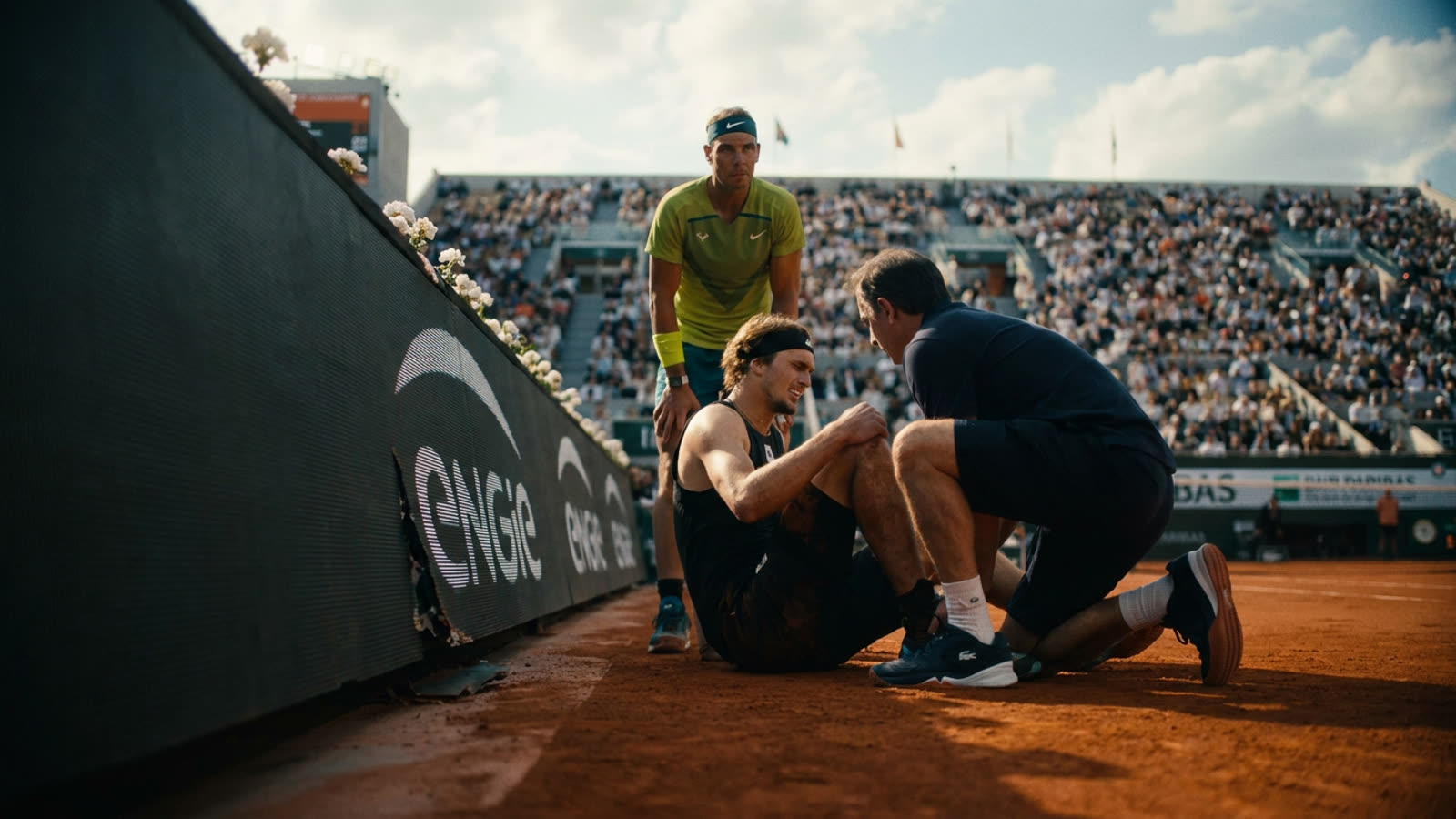
The second week of the French Open should be about the tennis. Instead, the conversation at Roland Garros has turned to the advertising boards ringing its famous clay courts — specifically, their apparent tendency to injure the players who slide into them.
Multiple competitors have reported injuries after collisions with the LED advertising hoardings that line the baselines and sidelines, drawing pointed criticism from players and coaches who argue that the tournament's commercial infrastructure has become a physical hazard. The boards, which generate substantial revenue for the French Tennis Federation, sit closer to the playing surface than at some other major venues, and the clay court game — with its emphasis on sliding movement — makes contact far more likely than on hard courts or grass.
A design that invites collisions
Clay court tennis is defined by the slide. Players routinely extend their bodies several feet beyond the baseline to retrieve balls, their momentum carrying them toward the advertising perimeter. At Roland Garros, the runoff space between the court and the boards is tighter than many players would prefer, a consequence of the venue's historic footprint and the premium placed on courtside seating and sponsorship visibility.
The physics are unforgiving: a player sliding at full extension on clay cannot stop on command. When the boards are positioned aggressively, contact becomes a matter of when, not if. The injuries reported this fortnight have ranged from cuts and bruises to concerns about more serious joint and muscle damage — the kind that can derail a tournament or, worse, a season.
The commercial calculus
Grand Slam tournaments are expensive to produce and enormously lucrative when executed well. Courtside advertising is among the most valuable real estate in sports, visible in every camera angle and impossible for viewers to ignore. The French Tennis Federation, like its counterparts at the other majors, has financial obligations that extend far beyond the fortnight — player prize money, facility maintenance, youth development programs, and the general upkeep of French tennis infrastructure.
None of which is a satisfying answer to a player who has just torn a hamstring sliding into a Rolex sign. The tension between commercial optimization and athlete welfare is not unique to tennis, but the sport's individual nature makes it particularly acute: there is no team to absorb an injury, no substitute to send in. A player hurt by a facilities issue loses income, ranking points, and potentially months of competitive fitness.
Our take
Roland Garros has spent the better part of a decade renovating its grounds, adding a retractable roof to Court Philippe-Chatrier and expanding its footprint. The tournament clearly has the capacity and the budget to rethink its courtside layout. That it has allowed advertising boards to become a recurring injury vector suggests a failure of prioritization, not resources. The French Open's prestige rests on its players; protecting them should not require a public relations crisis to become a priority.