The United States now observes more than 1,500 "national food days" annually, a calendar so cluttered with manufactured celebrations that you could theoretically honor a different snack every six hours. National Smoothie Day, which falls on June 21st, is among the more successful of these inventions — successful enough that major chains offer discounts, influencers post their "signature blends," and wellness brands treat it as a genuine cultural moment rather than what it is: a promotional vehicle dressed in activewear.
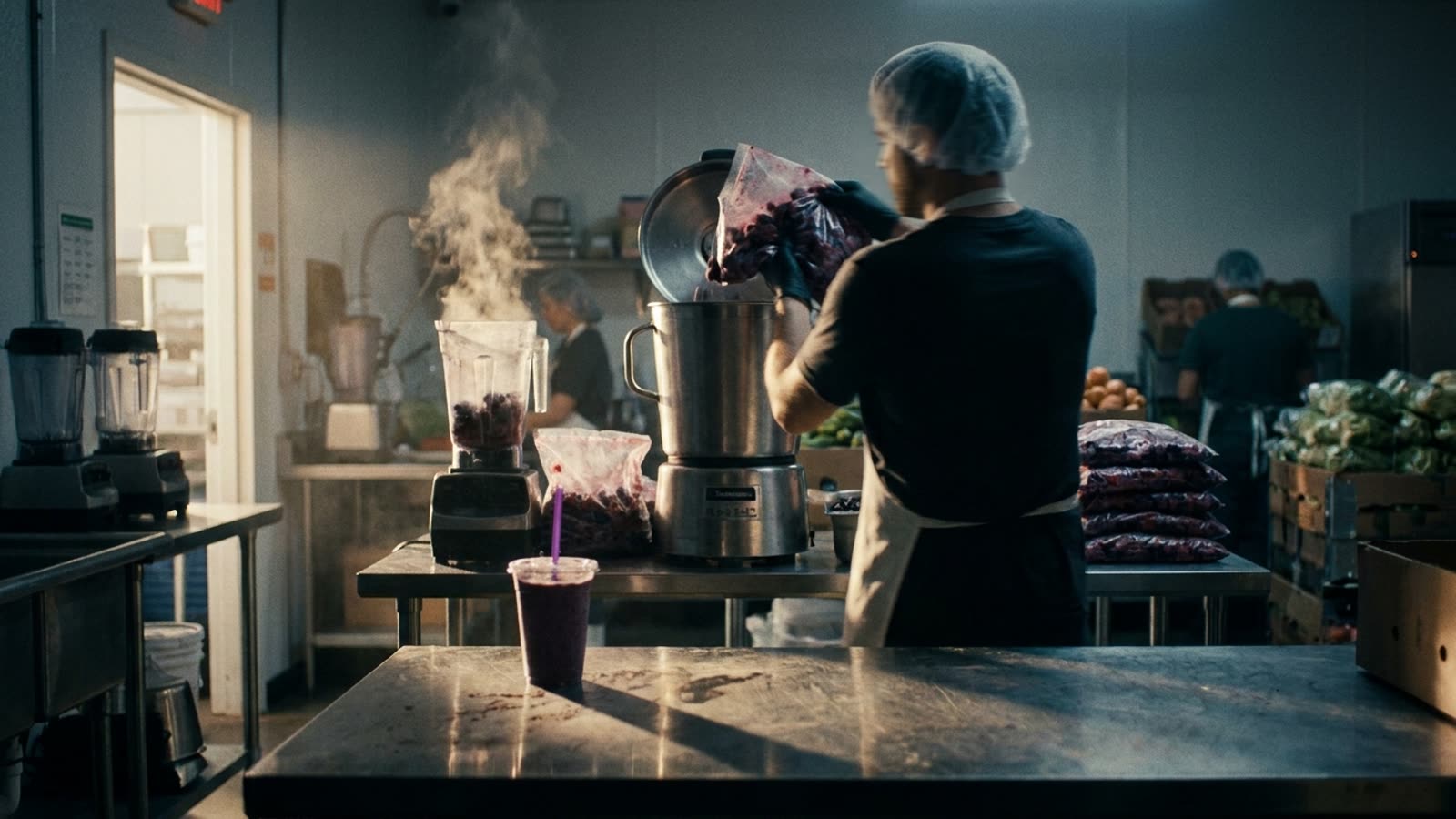
The smoothie itself is, of course, innocent. Fruit, ice, perhaps some yogurt — there is nothing objectionable about the product. What fascinates is the apparatus that has grown around it, the way an ordinary kitchen appliance became a signifier of virtue, and how the wellness industry learned to monetize the simple act of not chewing.
The economics of blended aspiration
The American smoothie market generates roughly $3 billion annually, a figure that reflects not just consumer demand but decades of careful positioning. Smoothie King, Jamba, and their competitors have successfully convinced a generation that purchasing a $9 cup of pulverized mango represents a health decision rather than a dessert one. The average commercial smoothie contains more sugar than a can of Coca-Cola, but it arrives in a cup decorated with images of yoga poses and mountain vistas, so we process it differently.
This is the genius of wellness marketing: it sells permission. The smoothie is not merely a beverage but an alibi, proof that you are the kind of person who prioritizes self-care, who makes thoughtful choices, who deserves the acai.
The influencer-industrial feedback loop
National Smoothie Day has become a reliable content engine for lifestyle influencers, who treat it with the same reverence once reserved for actual holidays. The formula is consistent: a carefully styled kitchen counter, a high-end blender, ingredients arranged with the precision of a Dutch still life, and a caption about "nourishing from within." The posts perform well because they offer something increasingly rare — a vision of domestic life that is both aspirational and achievable. You cannot afford the influencer's house, but you can buy her protein powder.
The brands understand this exchange perfectly. They seed products to creators, who generate content that functions as advertising while maintaining the aesthetic of personal recommendation. The consumer scrolls, feels inadequate, purchases a $40 bag of collagen peptides, and the cycle continues.
Our take
There is no shame in enjoying a smoothie, or even in celebrating a made-up holiday devoted to one. But National Smoothie Day is worth examining precisely because it is so benign, so cheerfully transparent in its commercial origins. It reminds us that the wellness industry's great innovation was not inventing new products but inventing new reasons to buy old ones. The smoothie has existed for decades; what changed is the story we tell ourselves while drinking it. That story is worth $3 billion a year, and counting.