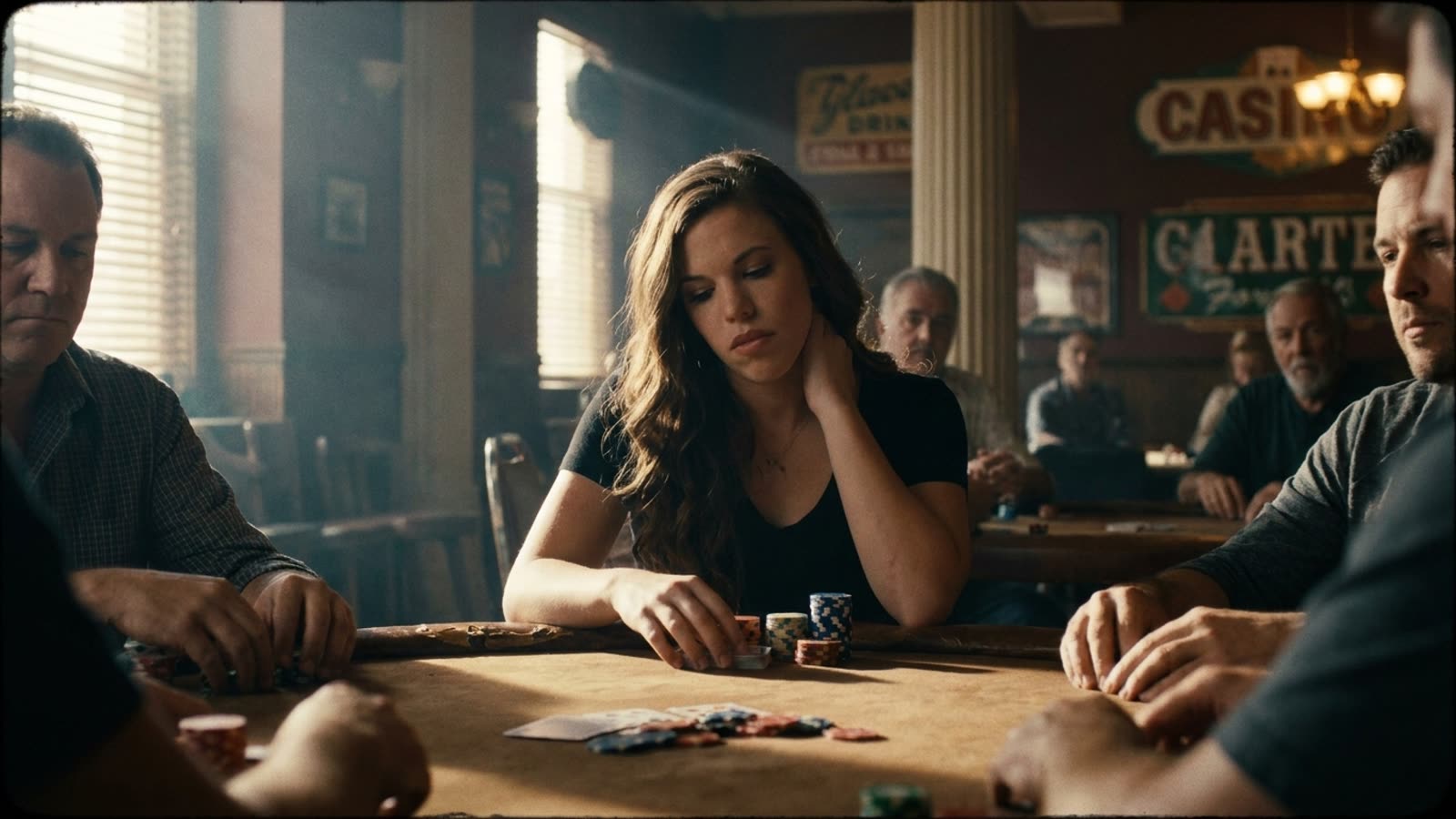
The photographs circulating this week show Katie Morgan at a poker table in what appears to be a high-end casino setting, chips stacked neatly, bikini on display, smile calibrated to that precise frequency between playful and professional. It's the kind of content that would have been unremarkable fifteen years ago, when Morgan was a fixture on HBO's late-night programming and the adult entertainment industry's most mainstream-friendly face. What makes it interesting now is everything it represents about the strange economics of fame in 2026.
Morgan, who turns 45 this year, has executed one of the quieter but more successful pivots in entertainment. She hasn't disavowed her past—the hundreds of adult films, the Howard Stern appearances, the surprisingly charming HBO documentary series that made her a genuine cultural curiosity in the mid-2000s. Instead, she's simply expanded the definition of what a Katie Morgan appearance means.
The economics of controlled exposure
The poker world has long served as a halfway house for celebrities seeking legitimacy without abandoning their edge. Shannon Elizabeth, Jennifer Tilly, and various athletes have all discovered that the felt offers something rare: a meritocratic arena where past notoriety becomes atmospheric rather than definitional. Morgan's presence at tables—she's been photographed at various events over the past two years—suggests she's read the same playbook.
What's clever about her approach is the calibration. The bikini shots aren't accidental; they're strategic. She's not pretending to be someone she wasn't. She's simply aged into a different bracket of the same game. The explicit content that built her name has given way to suggestive content that maintains it. It's the difference between selling a product and licensing a brand.
Why this works in 2026
The cultural moment favors Morgan's particular skill set. The OnlyFans economy has normalized the idea that adult content creators are entrepreneurs rather than cautionary tales. The destigmatization hasn't been complete—it never is—but it's been sufficient to create space for figures like Morgan to operate in daylight.
Moreover, the nostalgia industrial complex has reached the early 2000s. The same demographic that discovered Morgan on HBO at 2 a.m. during college is now in their forties, possessed of disposable income and a fondness for the cultural artifacts of their youth. Morgan isn't just selling her present; she's monetizing a very specific slice of millennial memory.
Our take
There's something almost admirable about Morgan's refusal to follow the expected script—no tearful redemption arc, no performative regret, no pivot to wellness influencing or mommy blogging. She's simply continued being Katie Morgan, adjusted for inflation and platform shifts. In an era when every celebrity reinvention seems to require a podcast and a therapy-speak vocabulary, her straightforward approach feels almost radical. She bet on herself twenty years ago, and she's still at the table, chips intact. That's not nothing.