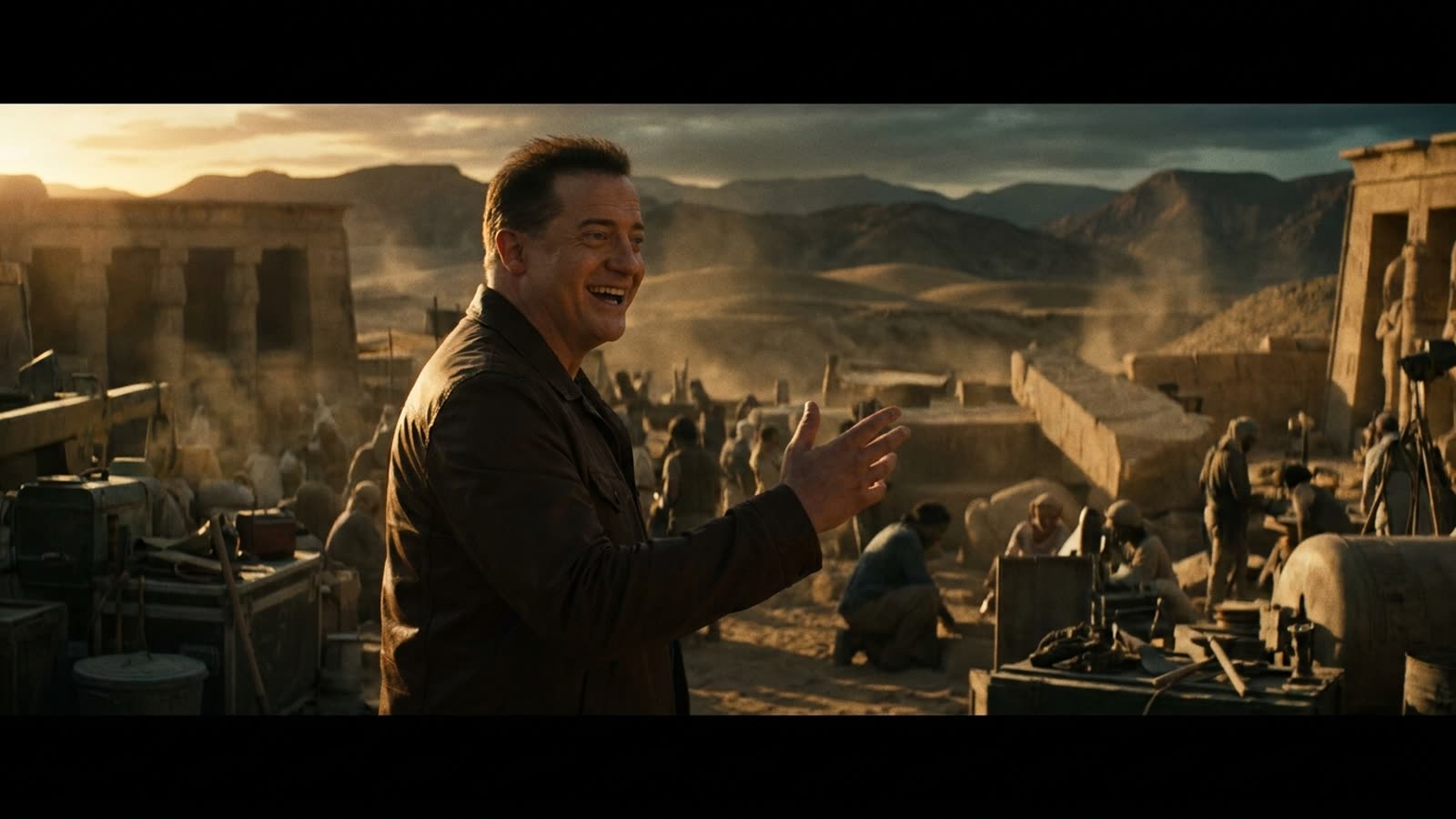
The fourth installment of Universal's Mummy franchise now has a name—The Mummy: The Book of the Dead—and with it, a clear statement of intent: the studio is betting that audiences in 2027 will pay for the same thrills they bought in 1999. Brendan Fraser and Rachel Weisz are reprising their roles as Rick and Evie O'Connell, joined by John Hannah and a new cast that includes Michael Johnston. The film is slated for release next year, and if early industry chatter is any indication, it will open to the kind of numbers that make sequels inevitable and originality optional.
The announcement arrives at a moment when Hollywood's appetite for legacy sequels has become less a trend than a structural feature of the business. Studios have learned that nostalgia is a remarkably efficient marketing tool: it pre-sells the concept, reduces the risk of audience confusion, and—crucially—appeals to viewers who grew up with the originals and now have disposable income and children of their own. The Mummy franchise, which grossed nearly $1.5 billion across its first three films, is a textbook case.
Fraser's second act
For Brendan Fraser, the return is personal as well as professional. His career, once synonymous with blockbuster charm, went quiet for much of the 2010s before a dramatic resurgence that culminated in an Academy Award for The Whale. Fraser's willingness to revisit Rick O'Connell is not merely a payday; it is a signal that he is comfortable enough with his legacy to re-enter the arena that made him famous. The casting of Weisz, who has spent the intervening years building a formidable résumé of prestige projects, suggests Universal is serious about recapturing the chemistry that made the original films work.
The IP industrial complex
The title itself—The Book of the Dead—is a nod to the franchise's Egyptian mythology, but it also functions as a kind of meta-commentary. Hollywood, after all, has become expert at resurrecting the dead: dormant franchises, retired characters, even deceased actors rendered in digital form. The question is no longer whether audiences will accept these resurrections, but how long the cycle can sustain itself before diminishing returns set in. For now, the answer appears to be: longer than anyone expected.
Our take
There is nothing inherently wrong with a legacy sequel, and Fraser and Weisz are talented enough to make The Book of the Dead worth watching. But the relentless recycling of proven IP does raise a question the industry seems uninterested in answering: what happens to the next generation of original stories when every greenlight meeting starts with the phrase "remember when"? Universal is betting that nostalgia will keep the box office humming. They are probably right. Whether that is cause for celebration or concern depends on how much you value surprise.