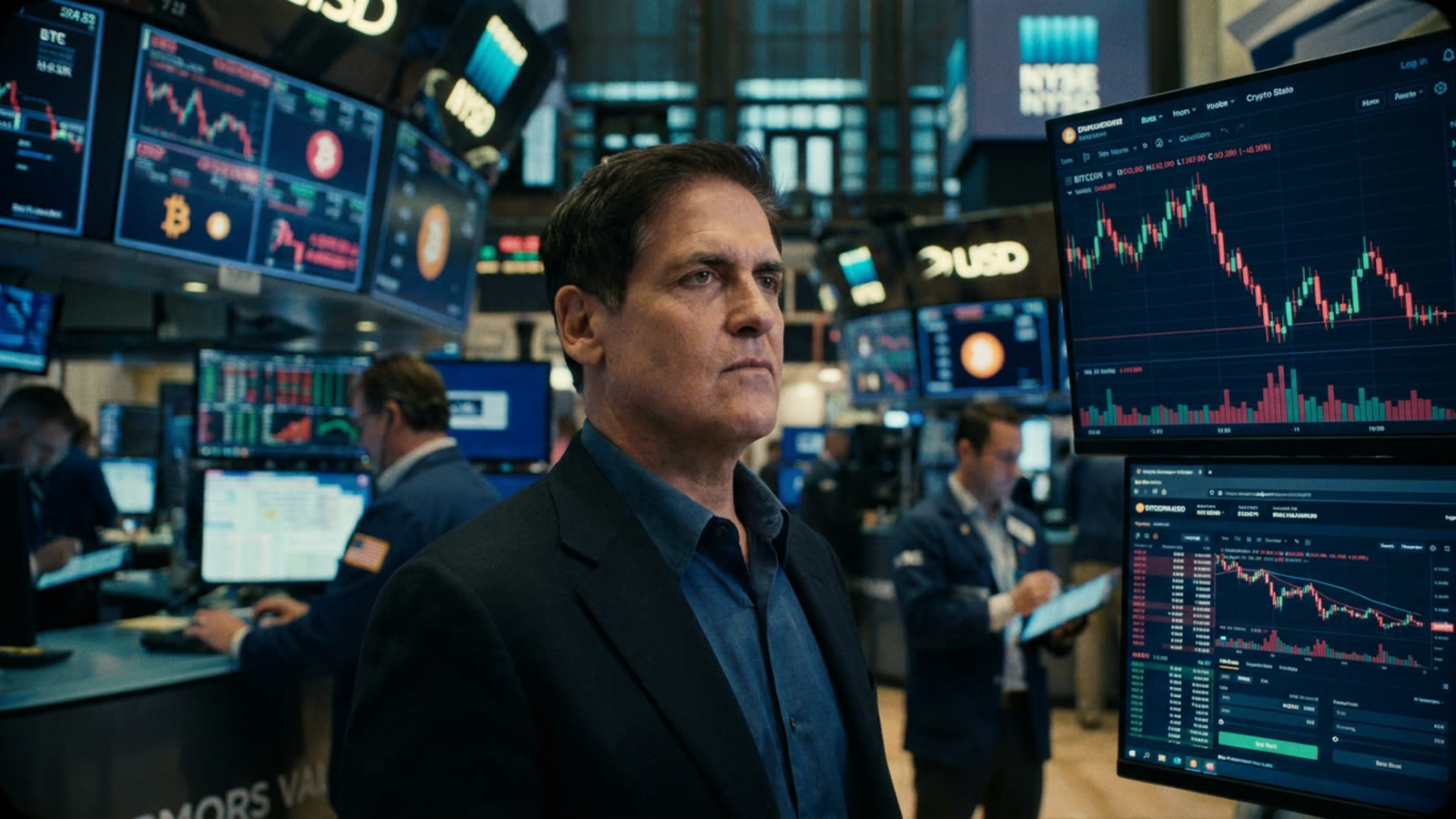
Mark Cuban has joined the growing ranks of sophisticated investors who bought the Bitcoin thesis and sold the reality. The billionaire entrepreneur, whose portfolio has ranged from NBA franchises to pharmaceutical startups, recently disclosed that he has offloaded most of his Bitcoin holdings after the asset's persistent correlation with risk assets left him disillusioned with its purported role as a portfolio hedge.
The timing is particularly pointed. Bitcoin has just slipped below $75,000 for the first time in a month, with nearly $1 billion in crypto liquidations cascading through the market. For an asset class that spent years marketing itself as digital gold—uncorrelated, inflation-resistant, immune to the whims of central bankers—the continued pattern of selling off in tandem with equities during stress events represents something close to an identity crisis.
The hedge that wasn't
Cuban's frustration echoes a critique that has quietly gained traction among institutional allocators. Bitcoin's correlation with the Nasdaq has remained stubbornly elevated through multiple market cycles, rising precisely when diversification would matter most. The 2022 drawdown saw Bitcoin collapse alongside growth stocks. The 2024 regional banking stress produced similar synchronized selling. And now, amid renewed macro uncertainty, the pattern persists.
This is not a technical failure but a narrative one. Bitcoin advocates spent years constructing an elaborate intellectual framework positioning the asset as a hedge against monetary debasement, geopolitical instability, and systemic financial risk. The problem is that actual market behavior has repeatedly contradicted this framework. When fear spikes, Bitcoin sells off with everything else—often more violently.
What Cuban's exit signals
Cuban is not a crypto skeptic by nature. He has invested in numerous blockchain projects, accepted cryptocurrency for Dallas Mavericks merchandise, and generally maintained a posture of engaged curiosity toward the space. His departure from Bitcoin specifically—while presumably maintaining exposure to other digital assets—suggests a targeted disappointment with Bitcoin's particular value proposition rather than a wholesale rejection of crypto.
This distinction matters. The Bitcoin maximalist position has always rested on the asset's unique monetary properties: fixed supply, decentralization, censorship resistance. But these properties, however genuine, have not translated into the uncorrelated return profile that would justify a meaningful allocation in a diversified portfolio. Cuban appears to have concluded that holding Bitcoin for its hedge characteristics is simply not supported by the evidence.
Our take
Cuban's exit is less about one billionaire's portfolio decisions than about the slow-motion collapse of Bitcoin's most ambitious narrative. The asset may yet find its footing as a speculative vehicle, a store of value in specific jurisdictions with unstable currencies, or a technological curiosity worth a small allocation. But the vision of Bitcoin as a macro hedge—the thing you own precisely because it zigs when everything else zags—has been tested repeatedly and found wanting. The smartest money is starting to notice.