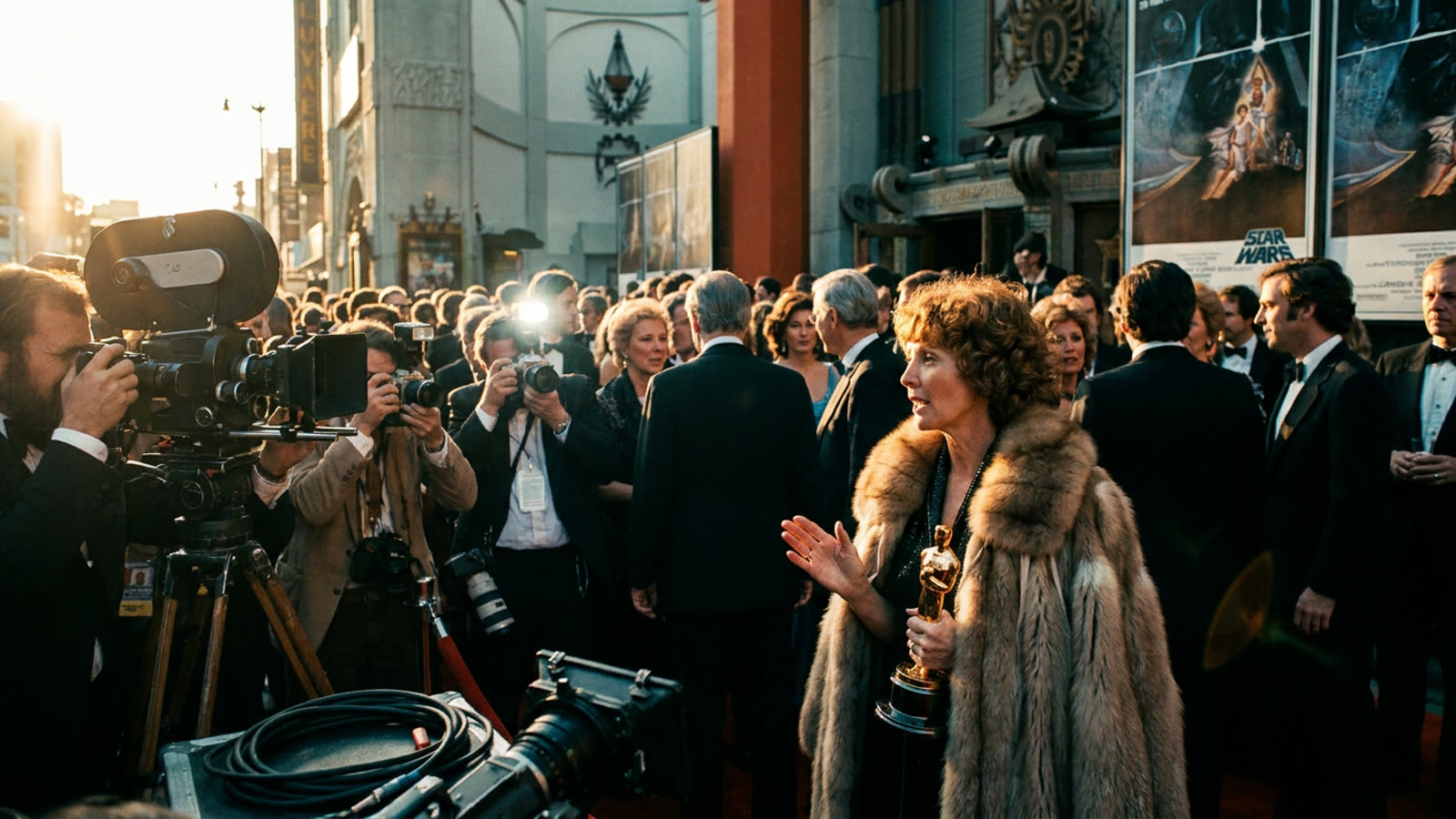
There is a particular kind of Hollywood injustice reserved for women who work in post-production: their contributions become invisible the moment the credits roll. Marcia Lucas, who won the Academy Award for Best Film Editing on Star Wars in 1978 alongside Richard Chew and Paul Hirsch, has spent nearly five decades watching her ex-husband receive sole credit for a film she fundamentally rescued in the cutting room.
The renewed attention to Marcia's role—sparked by recent retrospectives and a growing chorus of film historians—represents something more significant than belated credit. It marks a reckoning with how Hollywood has systematically minimized the technical artisans who transform raw footage into coherent storytelling, particularly when those artisans are women who happened to be married to the director.
The edit that created an empire
By most accounts, including George Lucas's own early admissions, the first cut of Star Wars was a disaster. The pacing dragged, the emotional beats landed flat, and the climactic Death Star trench run—now one of cinema's most iconic sequences—simply did not work. Marcia restructured the finale, intercutting between Luke's X-wing assault and the ticking clock of the battle station approaching the Rebel base. She fought to keep scenes that established character warmth and argued successfully against her husband's more clinical instincts.
The result grossed $775 million worldwide in 1977 dollars and launched a franchise now valued in the tens of billions. Marcia's Oscar sits in a display case somewhere; her name rarely appears in Lucasfilm's official commemorations.
The divorce and the disappearing act
When the couple divorced in 1983, Marcia received a reported $50 million settlement and something far more valuable to George: her silence. She retreated from public life entirely, granting no interviews, writing no memoirs, allowing the narrative of Star Wars as a singular vision to calcify into accepted history.
This erasure was not accidental. As Lucasfilm built its mythology—through documentaries, anniversary editions, and theme park attractions—Marcia's contributions were systematically downplayed. The 1997 Special Editions, the prequels, the Disney acquisition: each milestone offered opportunities to acknowledge her work, and each passed without meaningful recognition.
Our take
Hollywood loves a Great Man narrative, and George Lucas—with his flannel shirts and his billions and his ranch in Marin County—fits the template perfectly. But Star Wars was always a collaborative achievement, and Marcia Lucas's editing was not incidental to its success; it was foundational. The current reassessment of her legacy is welcome, if decades overdue. One hopes she is somewhere unbothered, collecting residuals, and thoroughly uninterested in the discourse. She has already proven her point—it just took the rest of us 49 years to notice.