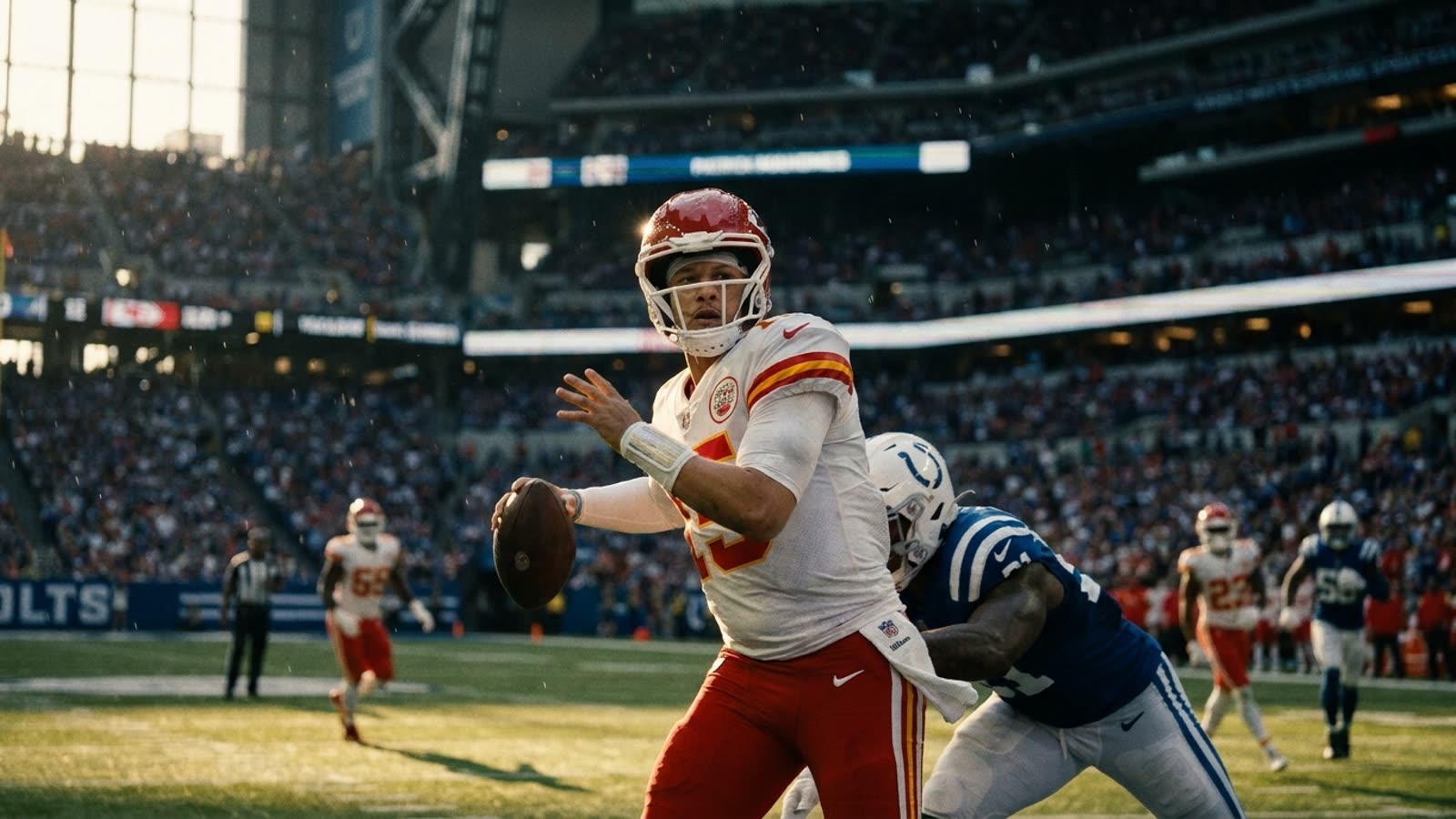
The most boring story in football is also the most important: Patrick Mahomes showed up to work on time.
The Kansas City Chiefs held their first organized team activity of the offseason this week, and there was their franchise quarterback, helmet on, throwing passes, looking entirely like a man who has won three Super Bowls and sees no reason to stop. In an era when star players skip voluntary workouts as a matter of course—treating OTAs as optional suggestions rather than professional obligations—Mahomes' presence carries meaning beyond the merely symbolic.
The attendance gap
Voluntary workouts have become a philosophical battleground in the modern NFL. Players' associations counsel rest and recovery. Agents worry about injury risk in meaningless May sessions. Veterans with leverage often stay home, conditioning privately while younger teammates compete for roster spots.
Mahomes operates differently. His attendance at OTAs has been consistent throughout his career, and the trickle-down effect on Kansas City's culture is measurable. When your best player treats optional sessions as mandatory, the definition of optional shifts for everyone else. The Chiefs have maintained remarkable roster continuity in part because their quarterback sets expectations that transcend the collective bargaining agreement.
Dynasty maintenance
Kansas City's sustained excellence has become so routine that it barely registers as news. The Chiefs have appeared in five of the last seven Super Bowls, winning three. They have not had a losing season since 2012. They have not missed the playoffs since drafting Mahomes. The organizational competence required to maintain this run—navigating salary cap constraints, replacing departed stars, adjusting schemes—is extraordinary and largely invisible.
The 2026 offseason brought the usual challenges: key free agents testing the market, draft picks needing integration, a coaching staff requiring continuity amid external interest. Through it all, the constant remains Mahomes, now entering his tenth NFL season at 30 years old, still firmly in his prime, still showing up when he doesn't have to.
The succession question
Every dynasty eventually ends, and the NFL's salary structure ensures that quarterback-driven empires face particular pressure. Mahomes' contract—restructured multiple times to create cap flexibility—represents both Kansas City's greatest asset and its most significant constraint. The team has repeatedly sacrificed future flexibility to maximize present competitiveness, a reasonable bet when your quarterback is the best in the league.
The question hovering over every Chiefs offseason is when this calculus changes. Mahomes shows no physical decline. His arm remains elite, his mobility sufficient, his processing speed unmatched. But the margin for error shrinks annually as the cap consequences of his deal compound. Kansas City's front office has threaded this needle with remarkable skill, but the thread grows thinner each year.
Our take
There is something almost tedious about the Chiefs' excellence, which is itself a testament to how thoroughly they have dominated their era. Mahomes at OTAs is not news in the traditional sense—it is confirmation that the status quo persists, that the league's best team remains its best team, that the dynasty shows no cracks. Other franchises chase chaos and hope it resolves into competence. Kansas City simply does the work, starting in May, with their quarterback leading the way. The rest of the NFL should find this profoundly annoying.