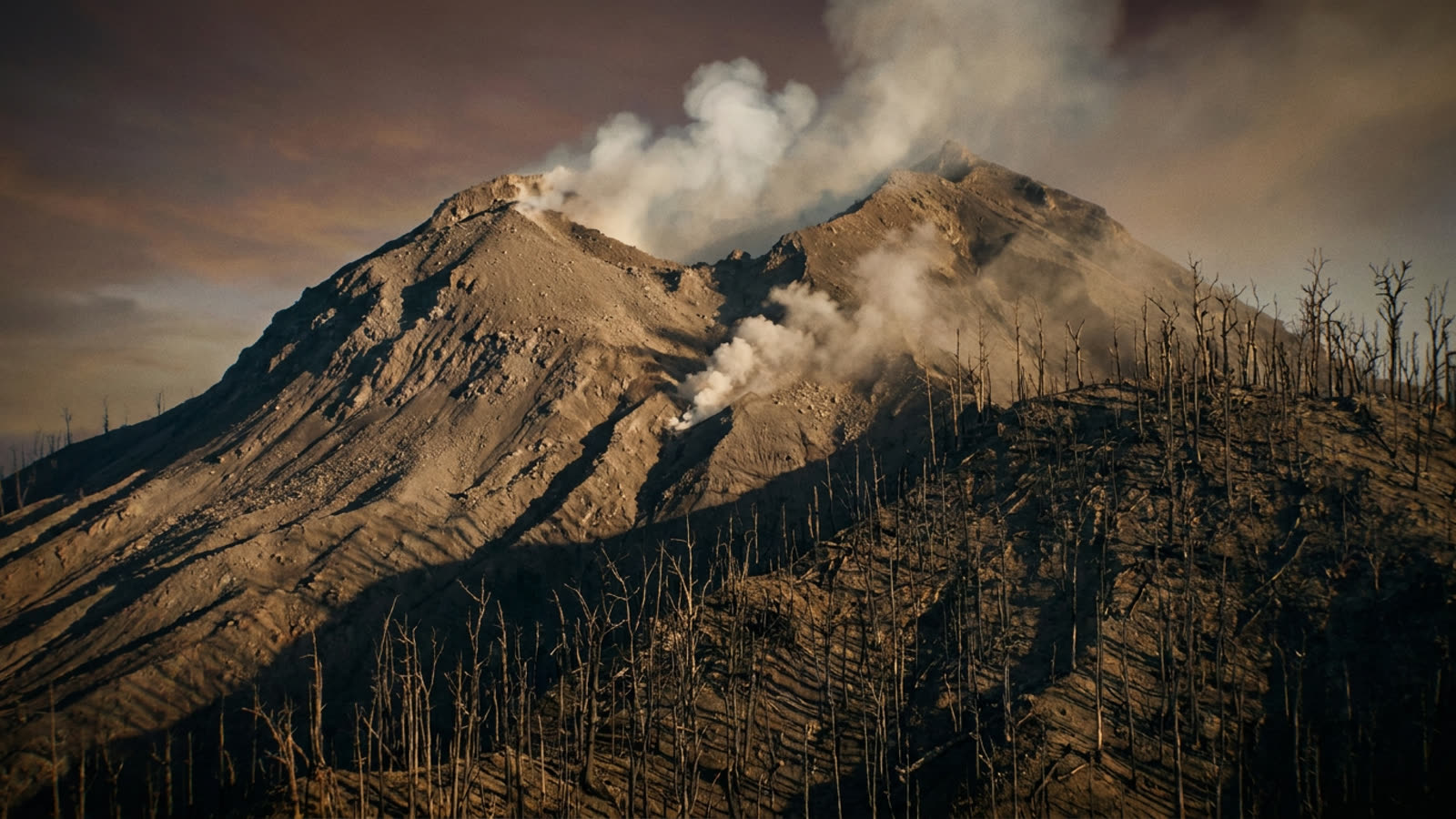
Mount Lewotobi Laki-Laki on Indonesia's Flores Island erupted violently before dawn on Friday, killing at least three people and injuring dozens more as hot ash, rocks and pyroclastic debris rained down on villages clustered around its base. Indonesia's Volcanology and Geological Hazard Mitigation Centre said the eruption sent an ash column roughly five kilometres into the sky and triggered the country's highest alert level for the second time in less than a year.
Local disaster officials told Antara news agency that the dead were found in homes inside the exclusion zone, where residents had quietly returned after earlier evacuations were lifted. More than 4,000 people have again been moved to shelters in Larantuka and neighbouring districts, and flights in and out of nearby Maumere airport were suspended after the ash drift drifted across regional air corridors.
Lewotobi has been in an active phase since late 2024, when a similar eruption killed nine people and displaced thousands across East Flores. Geologists say the volcano's twin-peaked system, which shares magma plumbing with the neighbouring Lewotobi Perempuan cone, has become one of the most closely watched in the Ring of Fire. Satellite monitoring from the US Geological Survey had flagged fresh thermal anomalies in the days before Friday's blast.
Indonesia sits on a chain of more than 120 active volcanoes and routinely ranks among the world's most earthquake- and eruption-prone nations. President Prabowo Subianto's office said emergency response teams from BNPB, the national disaster agency, were being deployed alongside military engineers, and that medical supplies were being flown from Jakarta. Cash assistance for displaced families is expected to be announced within days.
Scientists warn the volcano's activity may continue for weeks. Pyroclastic flows — fast-moving avalanches of superheated gas and rock — remain the primary risk, with several villages permanently abandoned after last year's disaster. Aid groups say rebuilding trust with communities unwilling to leave ancestral land is as critical as any geophysical monitoring.
Our take
Lewotobi is a reminder that Indonesia's geological hazards never truly subside — they cycle. The harder problem isn't the science, it's convincing families to stay away from farms and homes that sit inside an active blast zone. Expect more evacuations, and more painful choices, before this eruption is done.