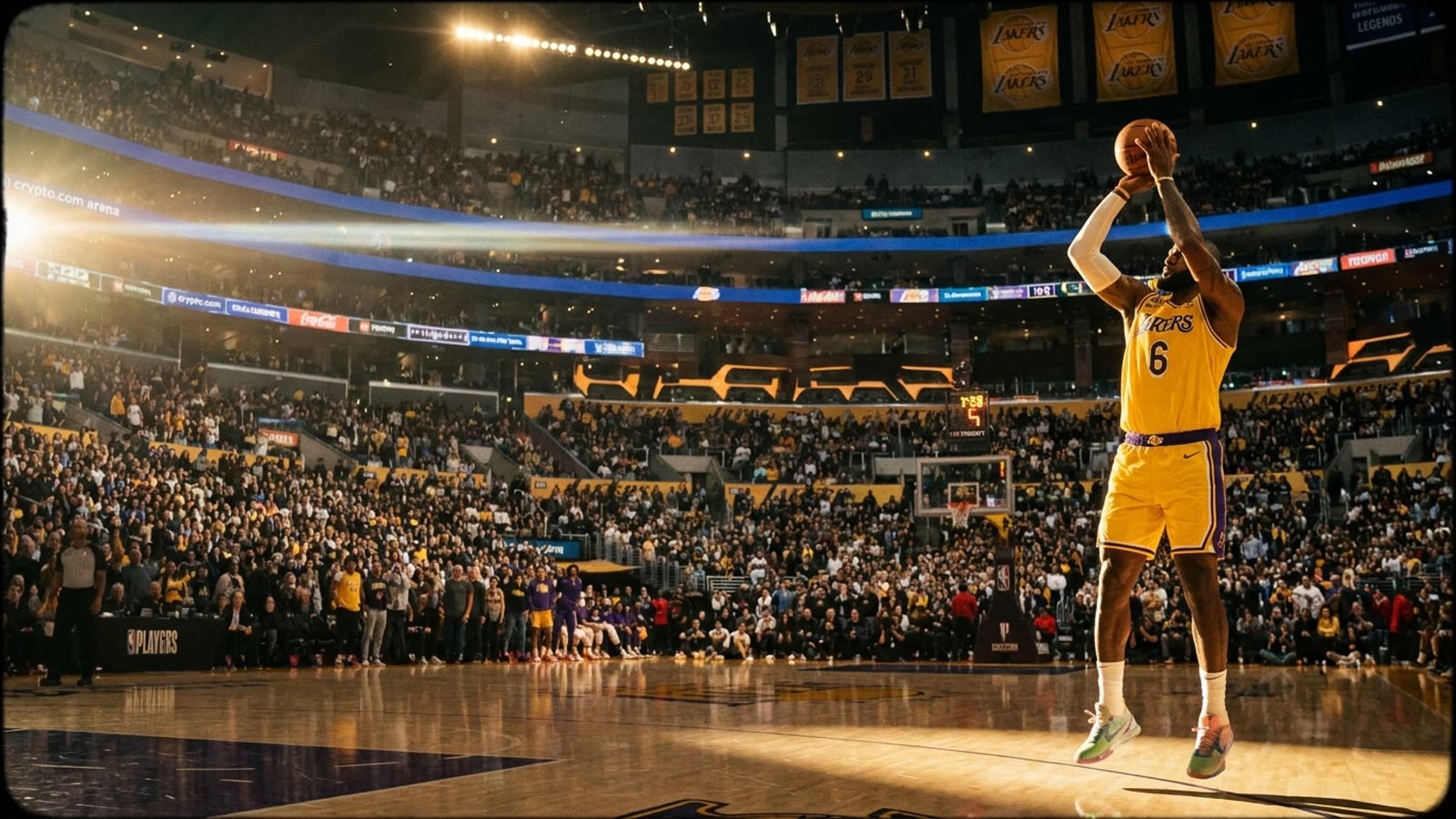
The King has abdicated his throne in Los Angeles, and for once the drama is real rather than manufactured by the annual rumor mill.
LeBron James has informed the Lakers he intends to play elsewhere next season, according to multiple reports — a decision that lands like a grenade in an already volatile NBA free-agency period. At 41, James remains a top-fifteen player in the league, which means his departure is not merely symbolic. Whatever team lands him inherits both a legitimate playoff accelerant and the gravitational pull of the most scrutinized athlete of his generation.
The Los Angeles chapter, closed
James arrived in L.A. in 2018 with championship expectations and delivered exactly one — the pandemic-bubble title in 2020 that will forever carry an asterisk in bar arguments, if not in the record books. What followed was a cascade of injuries, roster miscalculations, and the slow realization that Anthony Davis's brilliance would never be durable enough to carry the franchise alone. The Lakers made the playoffs twice more but never advanced past the conference finals. For a player who measures his legacy in rings, that is insufficient.
The relationship soured gradually. James publicly questioned roster construction; the front office responded with moves that felt reactive rather than strategic. The arrival of his son Bronny last season was supposed to be a feel-good coda; instead, it underscored how much the franchise had become a LeBron vanity project rather than a contender. The decision to leave is, in some ways, an act of professional self-preservation.
Where he lands matters enormously
The obvious destinations — Golden State, Miami, Cleveland redux — each carry narrative weight, but the basketball calculus is more complicated. James needs a team with defensive infrastructure, capable three-point shooting, and a front office willing to mortgage flexibility for a two-year championship window. The Warriors tick some boxes but face their own cap constraints. Miami's culture would welcome him back, but the Heat are mid-rebuild. Cleveland, improbably, might be the best fit: Donovan Mitchell, Evan Mobley, and Jarrett Allen form a core that could genuinely contend with James as the connective tissue.
What he will not do is accept a diminished role. James's game has aged gracefully — his court vision and decision-making remain elite — but his ego has not shrunk. Any suitor must understand they are acquiring a player-coach-general-manager hybrid who will reshape their organization in his image.
The Lakers' uncertain future
Los Angeles now faces an identity crisis. Davis, when healthy, is a top-ten player, but he has never demonstrated the leadership or durability to be a franchise cornerstone. The Lakers have few draft assets, limited cap flexibility, and a fan base accustomed to contention. New head coach J.J. Redick was hired in part to manage the James-Davis partnership; with James gone, his mandate is unclear.
The franchise will pivot to the youth movement it has resisted for years, but the Western Conference is unforgiving. Oklahoma City, Denver, Minnesota, and Dallas are all younger and deeper. The Lakers may be staring at a genuine rebuild — a concept foreign to a franchise that has won seventeen championships.
Our take
LeBron leaving the Lakers is neither tragedy nor triumph; it is simply the logical endpoint of a partnership that achieved less than it promised. James will chase one more ring somewhere, and he might even get it. But the more interesting story is what this reveals about the modern superstar's relationship with franchises: loyalty is a marketing slogan, not a business strategy. The Lakers will survive, as they always do, but the James era will be remembered as a qualified success at best — one title, one bubble, and a lot of unfulfilled potential.